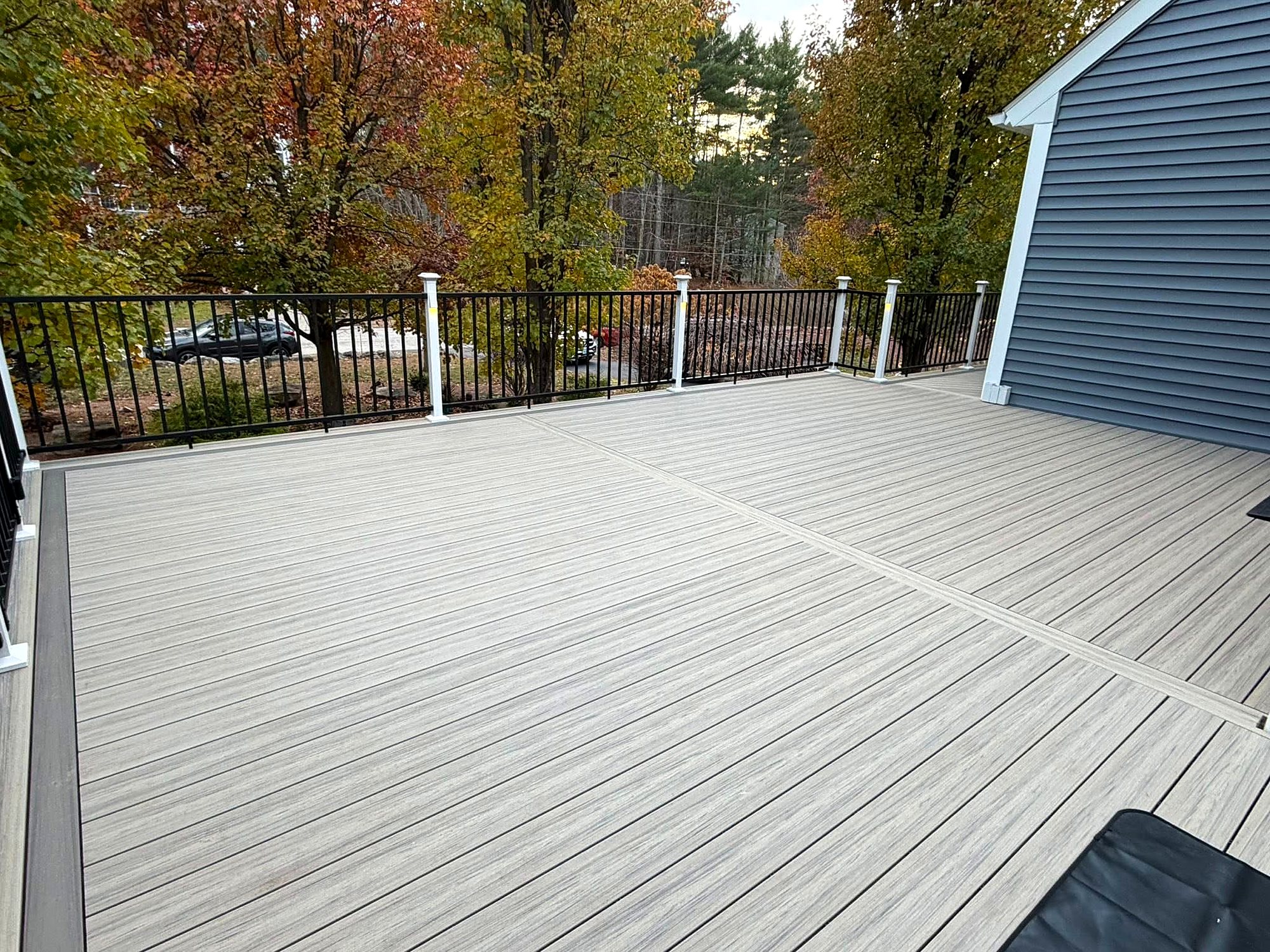
How long does a deck last? Most decks last anywhere from about 10 to 50 years, and the building material explains most of that spread. According to Trex’s deck lifespan guide, pressure-treated wood decks typically last 10 to 15 years, while Trex composite decks last 25 to 50 years depending on the product line. In Central Texas, intense sun, long stretches of heat, and shifting clay soil can push any deck toward the short end of its range if it isn’t built and maintained for local conditions.
Typical Deck Lifespan by Material
When people ask “how long does a deck last,” they usually mean the boards they walk on. But a deck is really two systems: the surface (decking, railings, stairs) and the structure underneath (joists, beams, posts, footings, and the ledger that attaches it to the house). Each wears out on its own timeline.
The ranges below are general estimates. Manufacturer figures assume proper installation and routine care, and real-world results in Austin vary with sun exposure, drainage, and how well the deck was framed.
| Material | Typical lifespan | Upkeep | Central Texas notes |
|---|---|---|---|
| Pressure-treated pine | About 10–15 years (per Trex) | High: cleaning, staining, sealing | Grays, checks, and splinters quickly in full sun if left unsealed |
| Cedar | Varies widely with upkeep | High: cleaning and regular sealing | Naturally resists decay, but it is soft and still needs UV protection |
| Composite (Trex Enhance, Trex Select) | About 25 years or more; Trex cites 25–50 years by line | Low: soap-and-water cleaning | Backed by 25-year (Enhance) and 35-year (Select) fade and stain warranties |
| Trex Transcend | Top of the composite range | Low | Backed by a 50-year limited residential warranty |
| Wood framing under any deck | Depends on moisture control and ventilation | Periodic inspection | Often the part that decides when the whole deck must be replaced |
That last row matters more than most homeowners expect. Most composite decks, including most Trex decks, sit on pressure-treated wood framing. Trex notes that wood decks typically rot first where the boards meet the substructure, and that joists and beams can rot if they aren’t protected or ventilated. A 50-year board on a poorly protected frame won’t give you a 50-year deck.
What Shortens a Deck’s Life in Austin
Austin’s climate is hard on outdoor structures in ways that are different from colder parts of the country. Freeze-thaw cycles are less of an issue here. Sun, heat, sudden heavy rain, and soil movement do most of the damage.
UV exposure and heat
Months of strong sun break down wood fibers at the surface and burn through stain and sealer faster than the label on the can might suggest. Unprotected boards dry out, crack along the grain, and cup. South- and west-facing decks with no shade age the fastest. Composite boards hold up far better to UV, but they still benefit from periodic cleaning so dirt and pollen don’t bake into the surface.
Moisture at the ledger
The ledger board, where the deck bolts to your house, is one of the most important structural connections on any attached deck. When water gets trapped between the ledger and the house, it can rot both the ledger and the house framing behind it. That damage is usually hidden until it’s advanced, which is why ledger problems are among the most serious findings in a deck inspection.
Poor flashing and joist protection
Flashing is the metal or membrane barrier that sheds water away from the ledger and the house. Missing, damaged, or improperly lapped flashing is a common cause of early rot. On the framing itself, Trex lists skipping joist tape as a construction mistake because it lets moisture seep into the tops of the joists, right where screws penetrate the wood.
Clay soil movement
Many neighborhoods around Austin, especially east of I-35 and in parts of Round Rock, Pflugerville, and Hutto, sit on expansive clay that swells when wet and shrinks during drought. That seasonal movement can shift footings and posts, leaving a deck out of level, loosening connections, and opening gaps at the house. Footing depth and design matter a lot on these soils.
Low clearance, poor drainage, and splash
Decks built close to the ground with little airflow underneath stay damp longer. Sprinklers that hit the deck every morning, downspouts that dump onto the framing, and pool splash all add moisture that wood framing would rather not see.
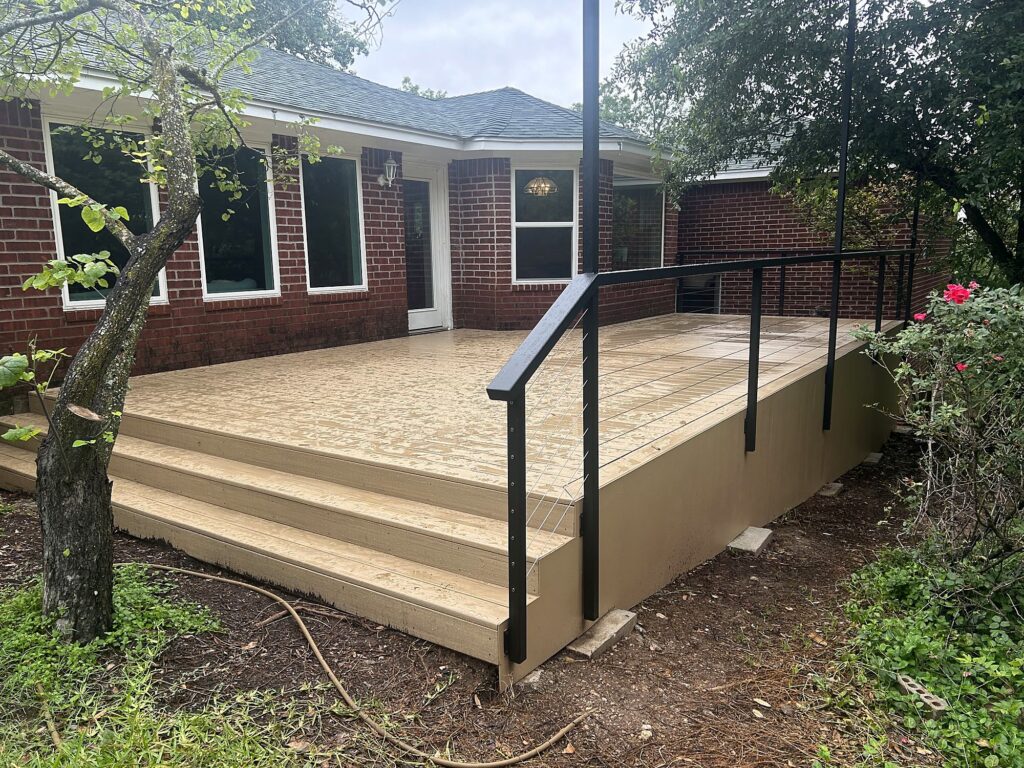
How Long Does a Deck Last With Good Maintenance?
Maintenance won’t turn a pine deck into a 50-year structure, but it often decides whether a wood deck reaches the top or the bottom of its range. The habits that make the biggest difference are simple:
- Keep wood sealed. Reapply stain or sealer when water stops beading on the surface. In full Austin sun, that can be more often than you’d guess.
- Clean twice a year. Remove leaves, pollen, and dirt that hold moisture against the boards and feed mold and mildew.
- Clear the gaps. Debris packed between boards blocks drainage and keeps the tops of joists wet.
- Manage water. Redirect sprinklers and downspouts away from the deck and keep the ground underneath sloped to drain.
- Tighten and replace fasteners. Popped nails and loose screws let water in and can become trip hazards.
- Inspect the structure yearly. Check the ledger, posts, and stairs, not just the boards.
Composite decks need far less work on the surface, but the frame underneath still deserves the same annual look. If you prefer the look of real wood, a well-built wood deck with a consistent sealing schedule can serve you well for years.
Signs It’s Time to Repair vs. Replace
A deck rarely fails all at once. The question is whether the problems are isolated or spread through the structure. A screwdriver is a useful tool here: if it sinks easily into a board or joist, that wood is soft and likely rotting.
Usually repairable
- A handful of cracked, cupped, or splintered boards
- Loose or popped fasteners
- A wobbly railing post or loose baluster
- Worn or loose stair treads
- Faded or peeling stain on otherwise solid wood
- One small soft spot with sound framing around it
Often points to replacement
- Rot in multiple joists, beams, or posts
- Damage or rot at the ledger connection, or a ledger that is pulling away from the house
- A deck that sags, bounces, or sways noticeably when you walk on it
- Posts that have shifted, sunk, or lifted, leaving the deck out of level
- Heavily rusted or corroded joist hangers, bolts, and connectors
- Widespread soft spots across the surface
If you see any structural warning signs, stop using the affected area and have it inspected. Our deck repair team can tell you whether a targeted fix makes sense or whether replacement is the safer and more cost-effective path. Replacement work in Austin may require a permit, so check with the City of Austin Development Services Department or have your contractor confirm what applies to your project.
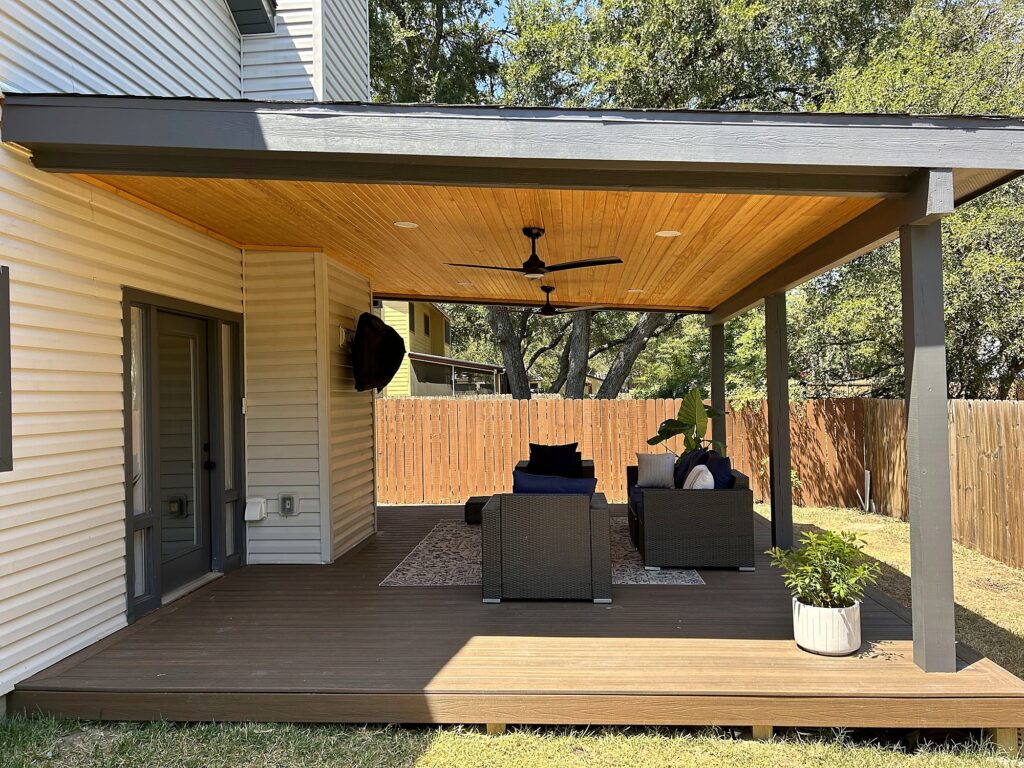
Resurfacing: A New Deck on a Sound Frame
There’s a middle option many homeowners don’t know about. If the framing is solid but the surface is worn out, you can replace just the decking, stairs, and railings. This is called resurfacing, and it can give an older deck a completely new look and a much longer-lasting surface without tearing out the structure.
Resurfacing makes the most sense when:
- An inspection confirms the joists, beams, posts, footings, and ledger are in good shape
- The deck’s size, height, and layout still work for how you use it
- You want to move from high-maintenance wood boards to composite
Switching materials isn’t always a simple board swap. Composite manufacturers publish their own joist-spacing and framing requirements, and an older wood frame may need added joists, blocking, or joist tape before new boards go down. A contractor should check this before quoting. Learn more about composite deck resurfacing or our full wood-to-composite deck replacement service if the frame needs more work.
Building a Deck That Lasts in Central Texas
If you’re building new or replacing a failed deck, a few choices go a long way toward a longer service life in this climate:
- Choose a durable surface. Capped composite such as Trex Transcend resists fading, staining, and moisture far better than bare wood.
- Protect the frame. Proper ledger flashing, joist tape, and corrosion-resistant fasteners and connectors protect the part of the deck you can’t easily replace.
- Design footings for the soil. On expansive clay, footing design is not the place to cut corners.
- Allow airflow. Leave room for ventilation under low decks, and use vented skirting rather than sealing the underside closed.
- Add shade. A patio cover or pergola cuts UV exposure on part of the deck and makes it more usable in summer.
The right answer depends on your budget, how long you plan to stay in the home, and how much upkeep you’re willing to do. A good contractor will walk through those trade-offs with you instead of steering you toward one material.
Ready to Find Out How Much Life Your Deck Has Left?
Green Hill Remodeling has built and repaired decks across Austin, Round Rock, Cedar Park, Georgetown, and the surrounding area for more than 15 years. We’re licensed and insured, and we’ll give you a straight answer on whether your deck needs repair, resurfacing, or replacement. Request a free on-site estimate or call (737) 529-4322.
Frequently Asked Questions
Trex puts the typical lifespan of a pressure-treated deck at about 10 to 15 years. In Central Texas, a pine deck in full sun that isn't sealed regularly can show cracking, cupping, and splintering well before that. Consistent cleaning, resealing when water stops beading, and good drainage under the deck help it reach the upper end of that range.
Generally, yes. Trex estimates 25 to 50 years for its composite decking, depending on the product line, compared with 10 to 15 years for pressure-treated wood. Keep in mind that most composite decks sit on wood framing, so the frame's condition, flashing, and joist protection still determine how long the whole deck lasts.
Often you can. If an inspection shows the joists, beams, posts, footings, and ledger are solid, resurfacing replaces only the decking, stairs, and railings. When switching from wood to composite, the frame may need added joists or blocking to meet the manufacturer's spacing requirements, so have a contractor check it first.
A quick homeowner check every spring is a good habit: look for soft wood, loose railings, rusted connectors, and gaps at the house. Get a professional inspection if the deck is more than about 10 years old, if you notice bounce or sagging, or before you resurface or sell the home.
Shade helps. A patio cover or solid roof reduces UV exposure and keeps rain off part of the surface, which slows fading, drying, and cracking on wood boards. The frame still needs proper flashing and drainage, though, and the cover itself must be designed and attached correctly so it doesn't add new water problems.