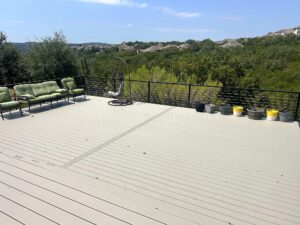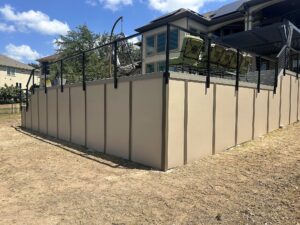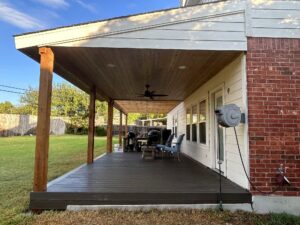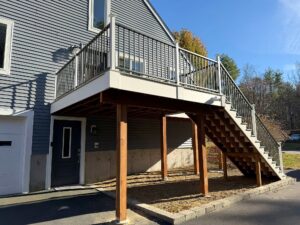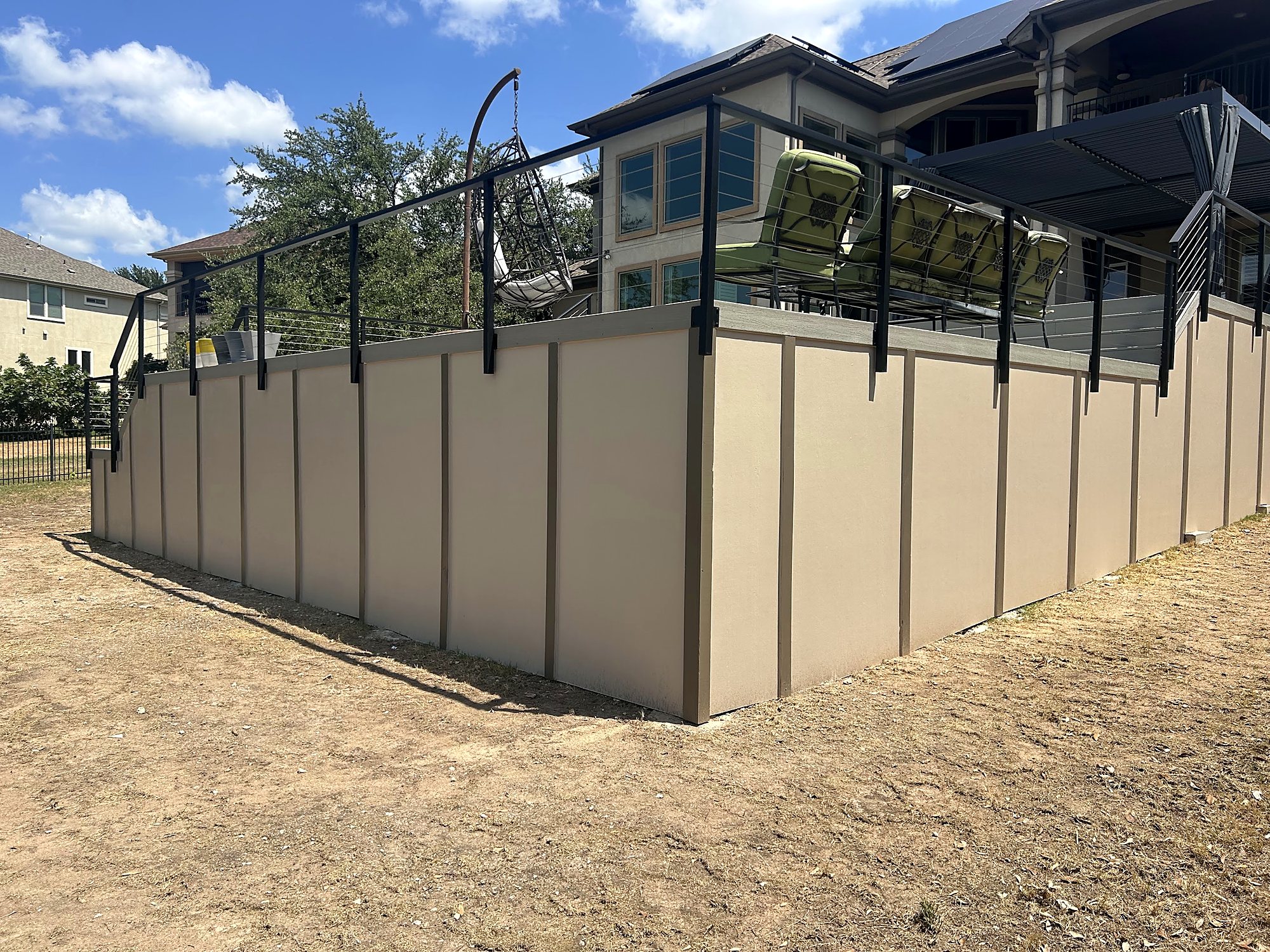
In Texas heat, the composite vs wood decking decision comes down to a tradeoff. Composite resists fading, rot and insects with far less upkeep, while wood costs less upfront and is easy to refinish. Every deck gets hot in full sun, so board color, shade and the right product line matter as much as the material itself.
Here is how the two compare on the issues Austin homeowners actually run into: heat underfoot, UV, moisture, termites, maintenance, lifespan and cost.
What Central Texas Weather Does to a Deck
Few climates test decking harder. Summers bring long runs of triple-digit afternoons and intense UV. Spring storms dump heavy rain, humidity swings back and forth, and a west- or south-facing deck can sit in direct sun for most of the day.
Any material you choose has to handle four things year after year:
- Heat: how hot the surface gets and how comfortable it is to walk on.
- UV: how fast color fades and the surface breaks down.
- Moisture: how the boards react to rain, humidity and wet leaves.
- Insects: termites and wood-boring pests that are common across Texas.
Heat Underfoot: Composite vs Wood Decking on Bare Feet
This is usually the first question we hear, and the honest answer is that every deck gets hot in full summer sun. Darker boards get hotter than lighter ones, whatever they are made of. Traditional composite has a reputation for running hotter than wood, especially in dark colors, because the dense boards absorb and hold heat.
Manufacturers have responded. Trex says its Transcend Lineage line, built with what it calls SunComfortable Technology, reduces heat buildup by up to 35 degrees compared with its original boards, based on lab testing that simulates full summer sun. All seven Lineage colors (Island Mist, Rainier, Carmel, Biscayne, Jasper, Salt Flat and Hatteras) use it. In the more affordable Trex Enhance line, Trex lists five colors with heat-mitigating technology: Cinnamon Cove, Golden Hour, Honey Grove, Pebble Beach and Tide Pool.
Trex is also clear that these boards still get hot when high temperatures and sun combine, and it advises against extended skin contact, especially for young children. The most effective heat plan combines several steps:
- Choose a lighter board color.
- Use a heat-mitigating board line where the budget allows.
- Shade the main seating area with a pergola or patio cover.
- Keep sandals or an outdoor rug handy on the hottest afternoons.
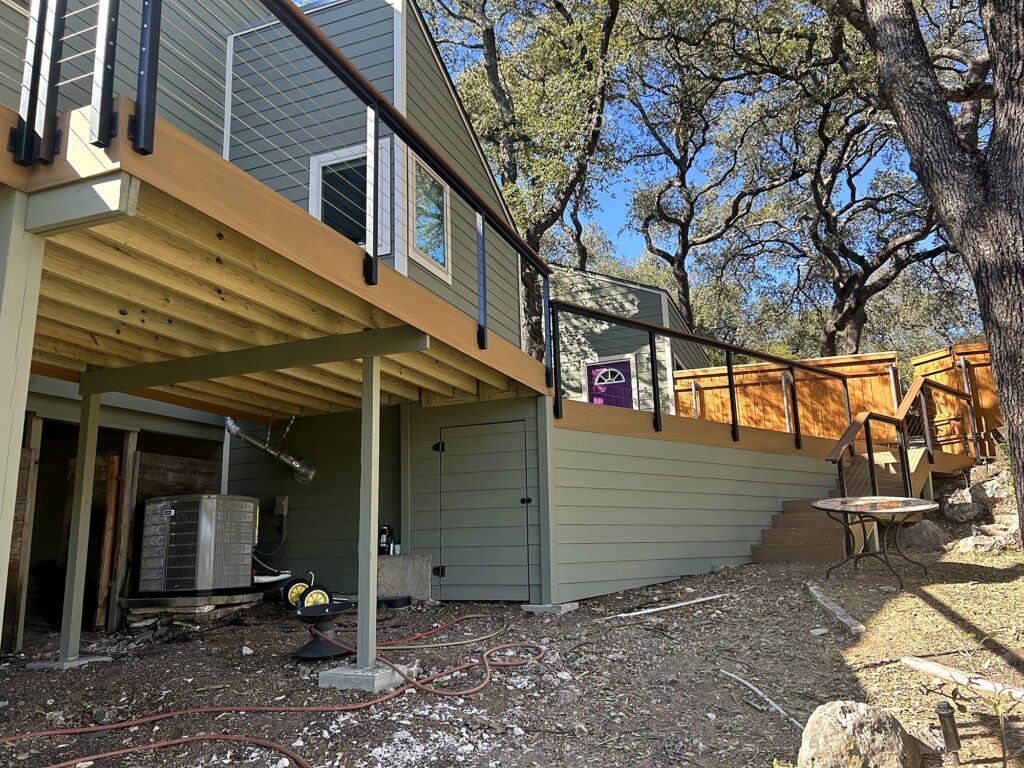
UV Fading and Color Over Time
UV light breaks down the surface of unprotected wood. Left alone, cedar and pressure-treated pine weather to a silvery gray and develop surface checks, the small cracks that open as boards dry. A quality stain slows that process, but in strong Texas sun it has to be reapplied on a regular schedule.
Modern capped composite boards have a protective outer shell designed to resist fading and staining. Trex backs its lines with long warranties: a 25-year limited residential fade and stain warranty on Enhance, 35 years on Select, and a 50-year limited residential warranty on Transcend. Those terms are a good sign of how each line is expected to hold color in the sun.
Moisture, Mold and Termites
How wood handles water and insects
Wood absorbs water. Repeated wet-dry cycles can cause cupping, splitting and, where water sits, rot, especially at board ends and around fasteners. Pressure-treated pine is chemically treated to resist rot and termites, and cedar has some natural resistance. Neither is immune, and damaged or poorly drained areas are the most vulnerable.
How composite handles them
Capped composite boards do not soak up water the way wood does, and Trex markets its decking as resistant to rot and termites. That does not make composite carefree. Pollen, leaves and dirt left in place can hold moisture and grow mold or mildew on the surface, particularly in shady, humid corners. Regular cleaning takes care of it.
Don’t forget the framing
On most composite decks, the structure underneath is still pressure-treated lumber. Good drainage, correct board spacing, solid footings and periodic inspections of joists and beams matter no matter which boards go on top.
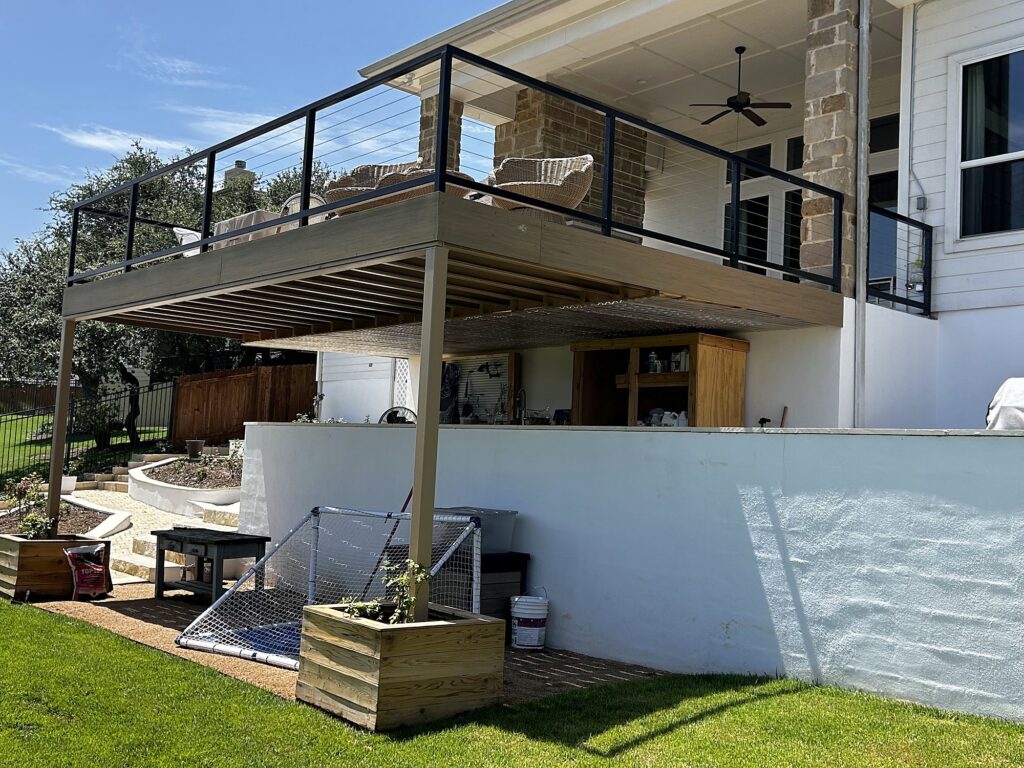
Maintenance Schedules Side by Side
Maintenance is where the two materials differ most in day-to-day ownership.
Wood deck maintenance
- Sweep regularly and clear debris from between the boards.
- Deep-clean once a year, typically in spring.
- Reapply stain or sealer every few years, and more often on decks in full sun.
- Check for loose fasteners, raised nails, splinters and soft spots.
- Replace cracked or rotted boards as they appear.
Composite deck maintenance
- Sweep regularly and clear the gaps between boards.
- Wash with soap, water and a soft brush a couple of times a year.
- Clean up grease and food spills promptly, especially near the grill.
- Inspect the framing, railings and stairs along with the rest of the house.
Over ten or fifteen years, that difference adds up to a lot of weekends and a lot of stain.
Lifespan and the Cost Tradeoff
Wood costs less upfront. Composite costs more on day one but saves on stain, sealer and replacement boards over time. The 2025 Cost vs. Value Report shows the starting gap for Austin: for the same 16-by-20-foot deck with stairs, a bench, a planter and railings, it lists an average job cost of $14,807 in pressure-treated wood and $22,613 in composite.
How long a wood deck lasts depends heavily on upkeep, sun exposure and drainage. A deck that gets cleaned and sealed on schedule can serve for many years, while a neglected one can deteriorate much sooner. Composite lines carry long manufacturer warranties, from 25 to 50 years across the Trex lines above.
If you plan to stay in your home for the long haul, composite’s lower upkeep works in its favor. If you expect to sell in a few years, wood’s lower entry price may be the better fit.
Composite vs Wood Decking at a Glance
| Factor | Wood (pressure-treated pine or cedar) | Capped composite (such as Trex) |
|---|---|---|
| Heat underfoot | Gets hot in full sun; dark stains run hotter | Gets hot in full sun; heat-mitigating colors run cooler than older boards |
| Upfront cost | Lower | Higher |
| Routine upkeep | Yearly cleaning plus stain or sealer every few years | Soap-and-water cleaning a couple of times a year |
| UV and fading | Grays and checks without stain | Resists fading; backed by fade and stain warranties |
| Moisture and rot | Treated or naturally resistant, but can rot over time | Boards resist moisture; framing is usually still wood |
| Termites | Treatment helps; not immune | Boards marketed as termite-resistant |
| Splinters | Possible as boards weather | Splinter-free surface |
| Look | Real wood grain; can be restained any color | Wood-look grain in set factory colors |
| Repairs | Boards can be sanded, refinished or swapped | Damaged boards are replaced, not refinished |
When Wood Is the Better Pick
Composite is not automatically the right answer. Wood often makes more sense when:
- Your budget is fixed, and you would rather build a larger or better-designed deck in wood than a smaller one in composite.
- You plan to sell within a few years.
- The deck sits mostly in shade, so fading and surface heat matter less.
- You love the look and feel of real wood and do not mind a staining routine.
- You want the freedom to change the color later by restaining.
We build wood decks in pressure-treated pine and cedar, and starting with wood does not lock you in. When the boards wear out, a wood-to-composite replacement can often reuse framing that is still sound.
When Composite Makes More Sense
Composite earns its higher price on decks in full sun, around pools and hot tubs, and for homeowners who want to spend weekends using the deck rather than maintaining it. If that sounds like you, our composite deck installation team can show you board samples in person, including premium options like Trex Transcend, so you can compare color and surface feel before you decide.
Ready to settle the composite vs wood decking question for your own yard? Request a free on-site estimate or call (737) 529-4322. We will look at your sun exposure, layout and budget and price both options side by side.
Frequently Asked Questions
It can get hot in direct summer sun, and so can wood. Lighter colors and heat-mitigating lines such as Trex Transcend Lineage stay noticeably cooler than older, darker composite boards, but no deck stays cool at peak afternoon heat. Shade from a pergola or patio cover, plus sandals on the hottest days, makes the biggest real-world difference for bare feet.
Capped composite is built to last for decades, and Trex lines carry warranties of 25 to 50 years depending on the line. A wood deck's life depends far more on upkeep: regular cleaning, sealing and board replacement extend it, while neglect in strong sun and rain shortens it. In both cases, the framing underneath needs to stay in good shape.
The composite boards themselves are marketed as termite-resistant, but most composite decks sit on pressure-treated wood framing. Treated lumber resists termites without being immune, so it still pays to keep soil and mulch away from posts, avoid standing water under the deck, and have the joists and beams checked during routine inspections or whenever you notice soft spots.
Pressure-treated pine is the more economical choice and is treated to resist rot and insects, which suits framing and budget decks. Cedar costs more but offers a warmer color, a finer grain and some natural resistance, though it is a softer wood that dents more easily. Both need regular cleaning and sealing to hold up in Central Texas sun.
Often, yes, if the framing is structurally sound and the joist spacing meets the composite manufacturer's requirements. Many older decks need added joists or repairs before new boards go on. Rot, sagging, loose connections at the house or undersized footings mean the frame should be rebuilt instead. An on-site inspection will tell you which route your deck needs.