Home/Services/Custom Deck Building/Wood & Cedar Decks
Green Hill Remodeling builds custom wood decks across Austin and the Hill Country in pressure-treated pine and cedar. We frame to the adopted building code, use corrosion-rated fasteners made for treated lumber, and leave you with a sealing schedule that holds up to Texas sun. Call (737) 529-4322 for a free on-site estimate.
Wood Decks
Wood is still one of the most popular deck materials in Central Texas for good reason: it looks warm, it often stays cooler underfoot than dark composite, and it costs less up front. It also asks more of the builder. Board selection, joist spacing, fastener chemistry and the timing of the first coat of stain all decide whether a wood deck looks good for years or starts cupping and graying after its first August.
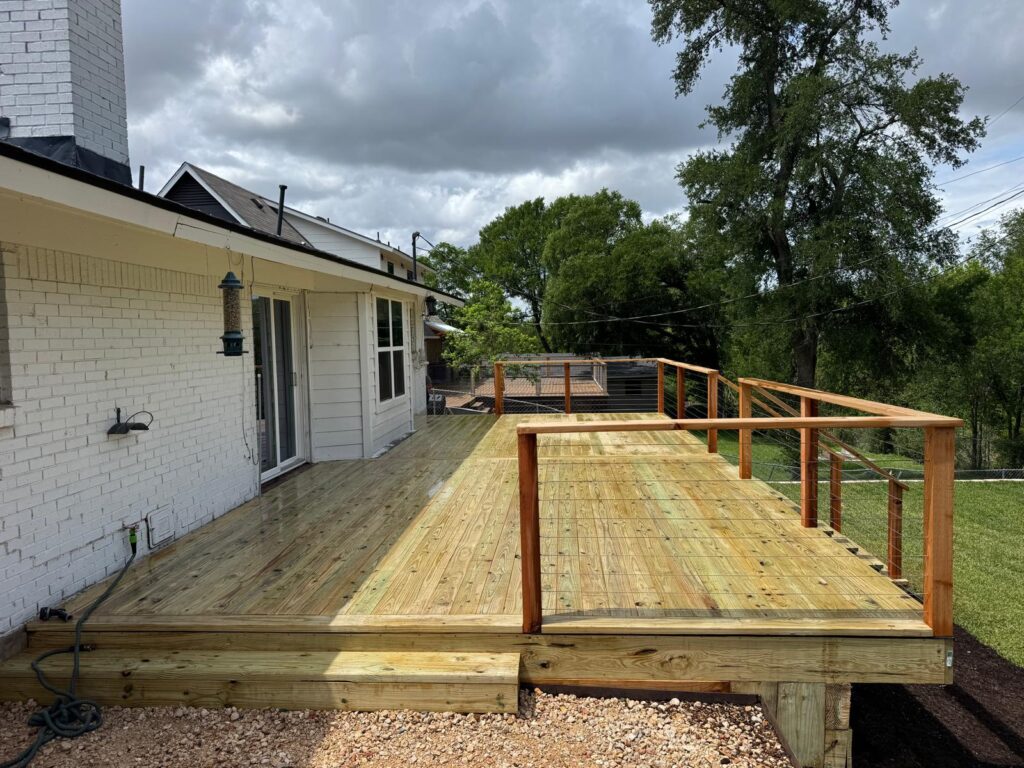
Our crews build new pressure-treated decks with matching wood railings, cedar decks for homeowners who want a richer grain, and hybrid builds that pair a treated-pine frame with cedar on the surfaces you see and touch. Every project gets a dedicated project manager, so one person tracks your lumber order, inspections and punch list from the first stake in the ground to the final walkthrough.
With more than 15 years of building across Austin, Round Rock, Cedar Park, Dripping Springs and the surrounding Hill Country, we know how clay soil heaves, how live oaks drop leaves and acorns into board gaps, and how quickly UV bleaches unprotected wood. That experience shows up in details you won't notice on day one but will appreciate every summer after that.
Why Choose Wood
Wood rewards careful construction. These are the advantages our clients notice most once the deck is finished and in daily use.
Natural wood typically absorbs less heat than dark composite boards, so bare feet and pets fare better on a July afternoon in Austin.
Cedar brings tight grain, warm color and a light aroma, while pressure-treated pine takes stain evenly for a uniform, classic finish.
A damaged or split board can be swapped out and stained to blend in, with no hunting for a discontinued composite color years later.
Wood cuts and joins cleanly, which makes picture-frame borders, built-in benches, planters and custom wood railings straightforward to add to the plan.
Pressure-treated framing resists decay and termites, and cedar's natural oils add a measure of rot resistance on the surfaces you see.
Wood usually costs less to install than composite, which can leave room in the budget for lighting, wider stairs or a shade structure.
Species and Builds
The right species depends on how you use the deck, how much sun it gets and how much upkeep you're comfortable with.
The workhorse of Texas decks. It is strong, widely available and treated against rot and termites. We specify ground-contact-rated lumber for posts and framing near soil, and stain only after the wood has dried enough to absorb it.
Lighter, more dimensionally stable and naturally resistant to decay, with a rich reddish tone. It is softer than pine, so it can dent under furniture legs, and it needs regular sealing to keep its color from silvering.
A popular middle ground. Treated pine handles the structure you never see, while cedar decking, railings and fascia give the finished deck its look. You get toughness below and better appearance where it counts.
Matching wood railings with balusters spaced so a 4-in. sphere can't pass through, per the IRC, plus deck skirting that hides the framing while leaving enough airflow to keep the underside dry.
Penetrating semi-transparent stains with UV inhibitors tend to hold up best on Central Texas decks. Solid stains hide more grain but can peel on horizontal boards, so they usually work better on railings and trim.
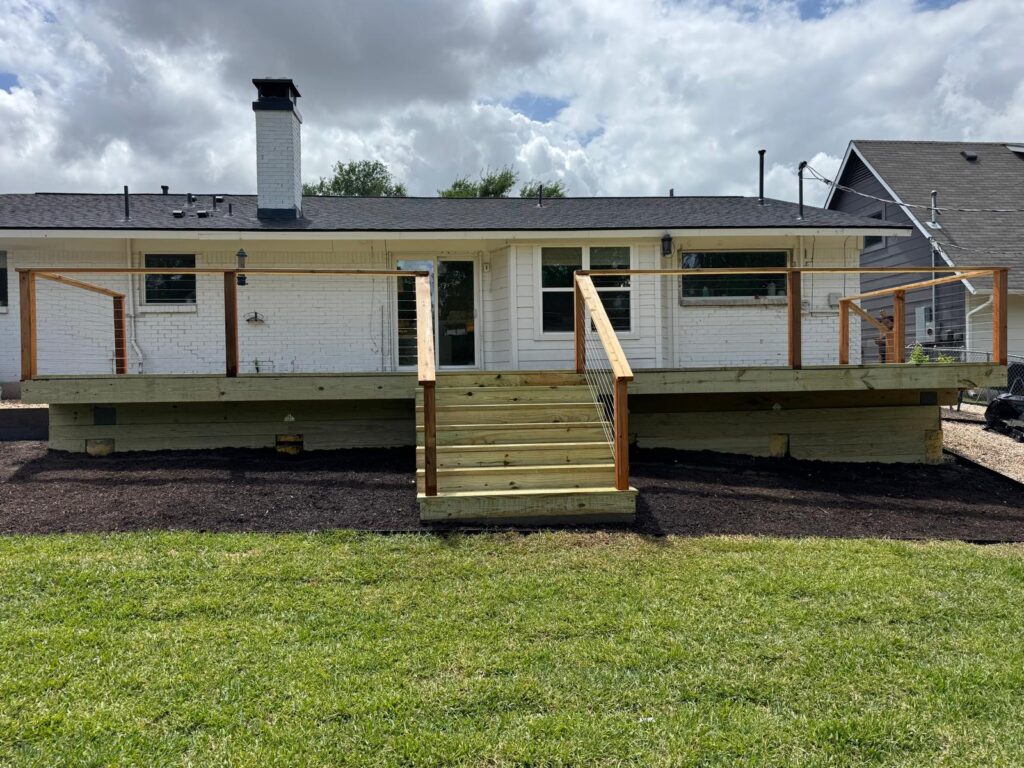
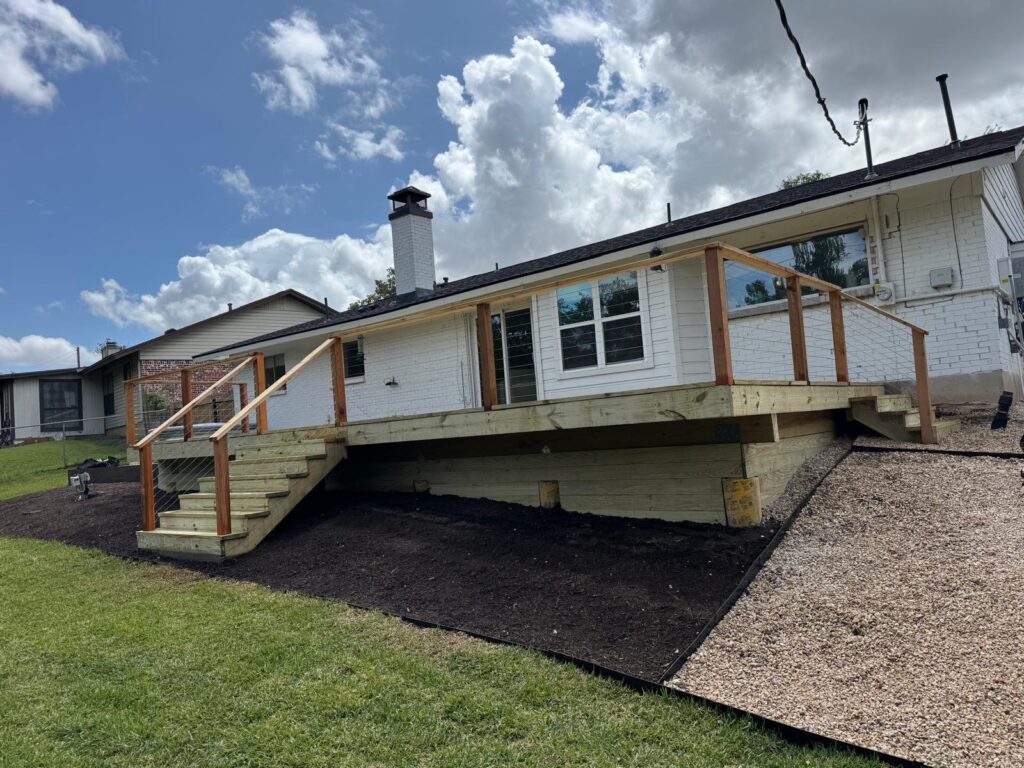
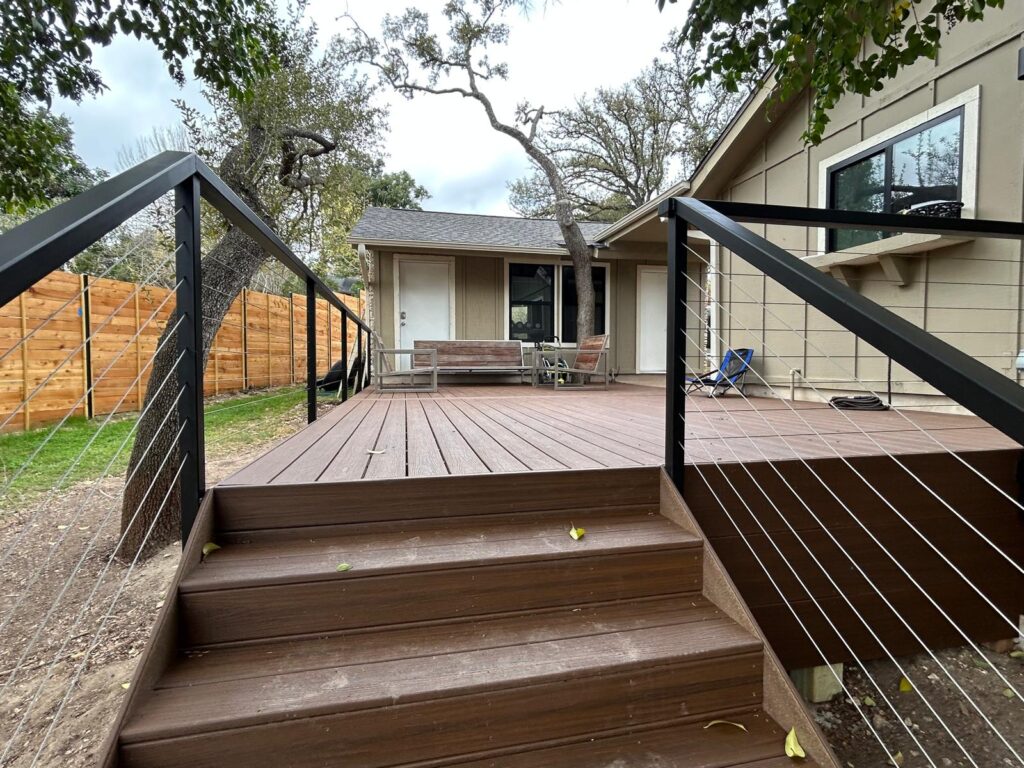
Recent Green Hill Projects
How It Works
A wood deck has a few decision points that matter more than they do with other materials. Here is how we handle each one.
We measure, check soil and slope, note sun exposure and tree cover, and compare pine and cedar so the species matches how you'll actually use the deck.
Your plan spells out joist spacing, board direction, railing style and fastener type, built to the adopted code, and we guide you through permitting where it's required.
Footings, posts, beams and joists go in first, with joist tape on top edges. Boards are gapped for drainage and fastened with galvanized or stainless hardware.
Your project manager walks the finished deck with you, explains when the new wood will be ready for stain, and leaves a resealing schedule written for Texas sun.
Built for Central Texas
Austin's sun is the biggest enemy of a wood deck. Intense UV breaks down lignin in the surface fibers, which is what turns boards gray and fuzzy, and 100°F afternoons followed by sudden downpours make wood swell and shrink over and over. We counter that with properly gapped boards, framing that sheds water instead of trapping it, and finishes with UV inhibitors. On sunny Austin decks, horizontal surfaces typically need a fresh coat of sealer every one to two years.
What happens below the boards matters just as much. Expansive clay east of MoPac swells when wet and shrinks during drought, so footing depth and placement get real attention. West of town, limestone and slopes call for different anchoring. Fasteners and connectors also have to be rated for contact with modern copper-based treated lumber, or they corrode early. We use hot-dip galvanized or stainless hardware and structural connectors matched to the lumber treatment.
FAQ
Both work well here. Pressure-treated pine is stronger, harder and less expensive, and its treatment helps it resist rot and termites. Cedar is more stable, naturally decay-resistant and better looking out of the box, but it is softer and dents more easily. Many Austin homeowners choose a treated frame with cedar decking and railings to get the best of both.
In full Austin sun, horizontal surfaces typically need resealing every one to two years, while shaded railings and vertical boards can often go longer. A quick test tells you when: sprinkle water on the boards. If it beads up, the finish is still working. If it soaks in and darkens the wood, it is time for another coat.
Standard treated lumber often arrives wet from the treatment process, and stain won't penetrate saturated wood. It needs to dry first, which can take several weeks to a few months depending on weather, shade and the lumber itself. Kiln-dried-after-treatment lumber can usually be finished sooner. Use the water-drop test: when water soaks in instead of beading, the wood is generally ready.
Modern pressure-treated lumber uses copper-based preservatives that corrode plain steel. We use hot-dip galvanized or stainless steel fasteners and structural connectors rated for treated wood, and stainless is the better choice near pools, hot tubs or sprinklers. On cedar, stainless also prevents the dark streaks that lesser fasteners can leave as they react with the wood's natural tannins.
Termites are active throughout Central Texas, which is one reason we use pressure-treated lumber for posts, beams and joists. We also keep untreated wood off the soil, leave clearance for airflow and inspection, and avoid details that trap moisture. A quick look at posts, skirting and the ground around footings each spring helps you catch problems early.
Often, yes. Many Austin-area neighborhoods, including Steiner Ranch, Circle C and Avery Ranch, have HOAs that review exterior changes such as decks, railing styles and stain colors. We'll help you pull together the layout and material details your application typically asks for, and we build to the adopted building code and guide you through permitting where it's required.
Get Started
Schedule a free on-site estimate and design consultation. We'll walk your yard, compare pine and cedar for your site, and map out a deck built to handle Texas sun.
Walk your yard with a project manager, get design ideas and a clear quote. No obligation.
Book my estimate →