Home/Services/Deck Railings/Aluminum & Metal Railing
Green Hill Remodeling installs powder-coated aluminum and metal deck railings on decks and stairs throughout Austin and nearby suburbs. Aluminum won't rust, never needs paint, and comes in picket, cable-infill and glass-panel styles. We anchor every post into properly blocked framing on wood or composite decks so the railing stays rigid. Call (737) 529-4322 for a free on-site estimate.
Aluminum and Metal Railings
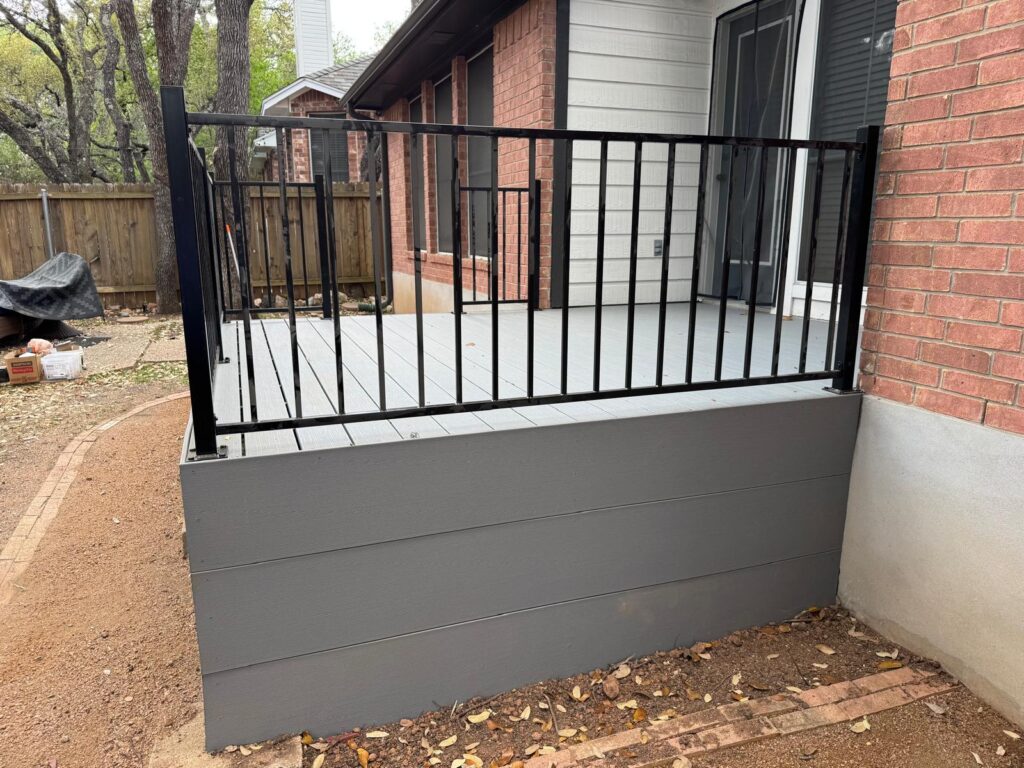
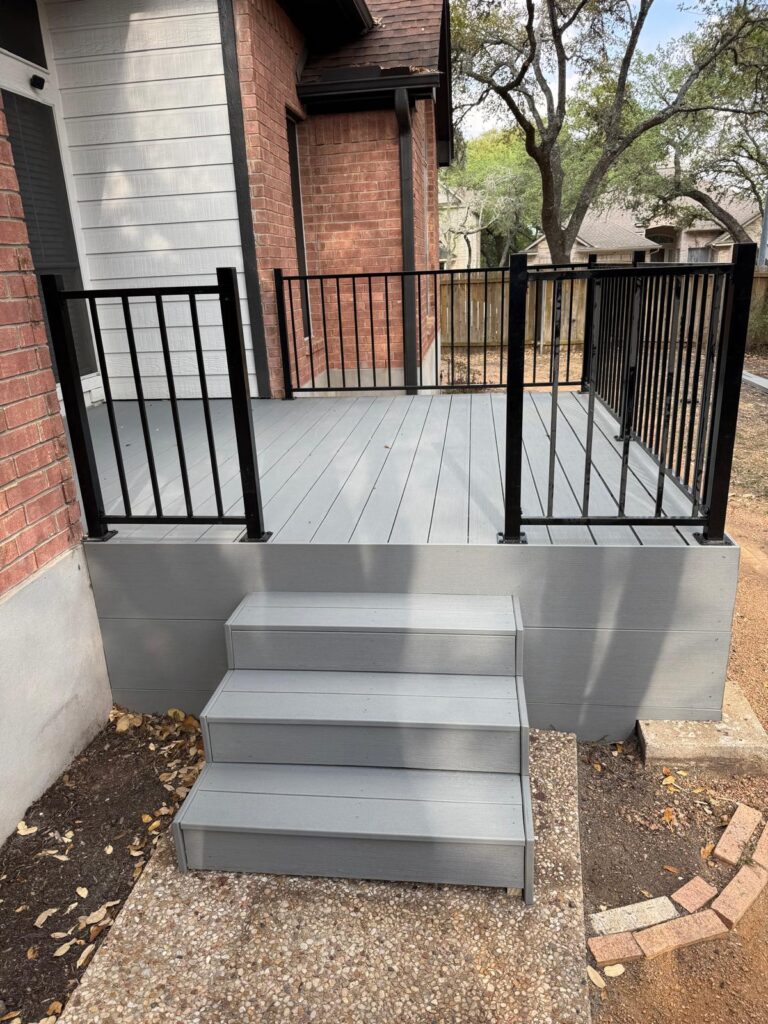
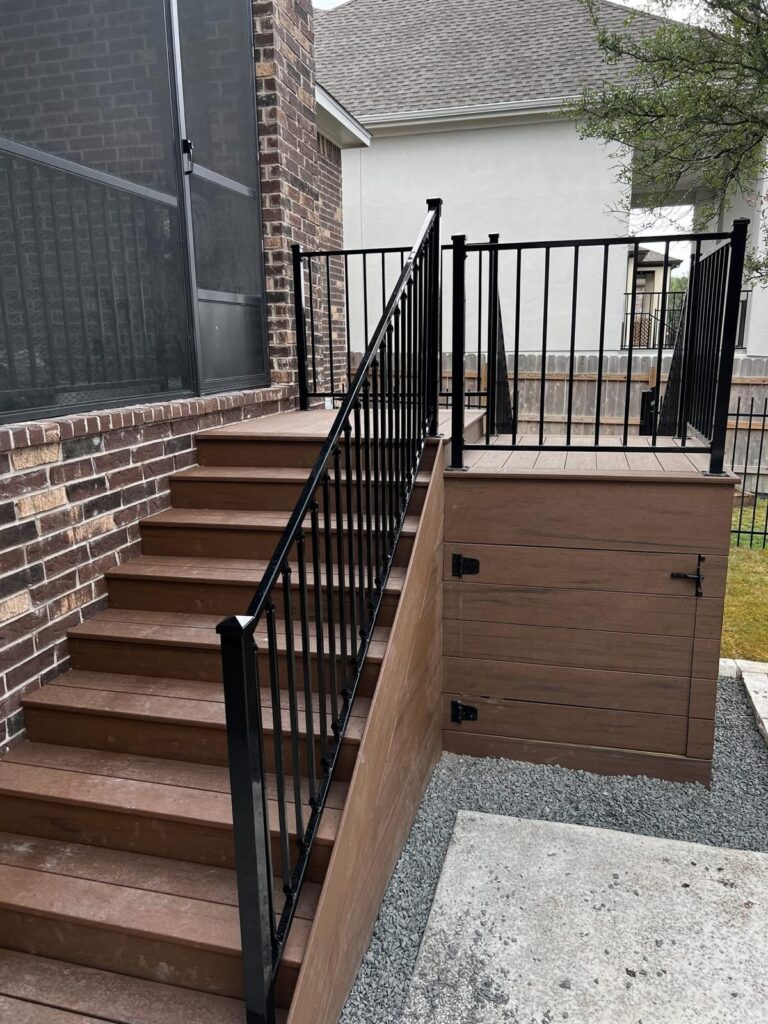
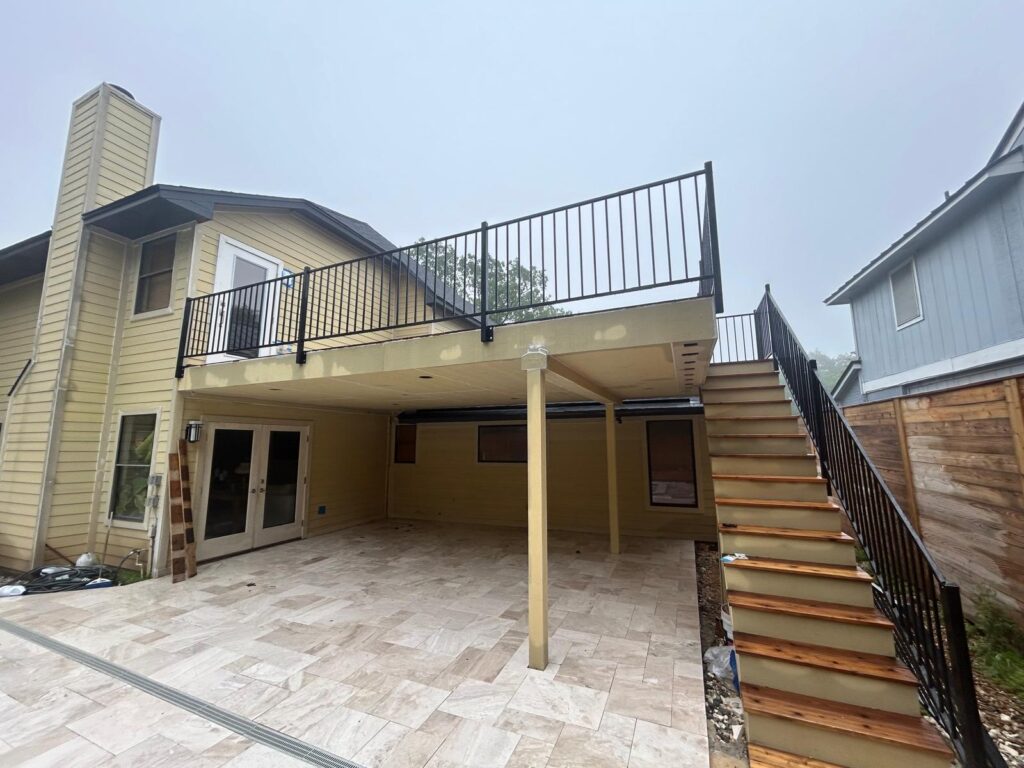
Black aluminum picket railing has become the go-to upgrade on Austin decks for good reason. It looks sharp against both gray composite and warm cedar, it shrugs off summer heat and sudden storms, and it never needs a paintbrush. On several of our raised decks and long stair runs, a slim black picket railing gave the project a finished, architectural edge that a wood railing simply couldn't match, while still letting light and breeze through.
Aluminum isn't the only metal option, but for most homeowners it's the smartest one. Steel is stronger by weight but rusts wherever its coating gets scratched, and wrought iron needs regular repainting. Aluminum forms a thin protective oxide layer on its own, so a chip in the powder coat is a cosmetic issue rather than a corrosion problem. The finish itself is baked on, which makes it far tougher than brushed-on paint.
What separates a solid metal railing from a wobbly one is the connection to the deck. Composite decking isn't structural, and a post screwed only into boards will loosen. Our crews fasten every post into framing that's been blocked and reinforced for it, following the railing manufacturer's details. With 15+ years in Central Texas, licensed and insured crews and a dedicated project manager, we treat mounting as the main event, not an afterthought.
Why Aluminum
Aluminum gives you the clean look of metal without the upkeep that comes with steel, iron or wood.
Aluminum doesn't rust like steel or iron. Even if the powder coat gets nicked, the metal underneath won't bleed orange streaks onto your decking.
The powder-coat finish is baked on at the factory, so there's no yearly sanding, staining or touch-up cycle like a wood railing demands.
Quality powder coats are formulated to resist fading and chalking under strong UV, so black stays black through long, bright Austin summers.
Aluminum is light enough to install on second-story decks without heavy equipment, yet engineered systems are tested to meet residential guard load requirements.
Rackable panels follow stair angles cleanly, so the railing on your deck and the railing down your stairs read as one continuous system.
Slim pickets and square posts suit modern farmhouse, contemporary and transitional homes, and pair well with both composite and natural wood decking.
Styles and Finishes
Most systems share the same strong aluminum frame. What changes is the infill, the color and how the posts meet your deck.
The most popular style we install: square or round aluminum balusters between top and bottom rails, spaced so openings stay under 4 in. Black is the usual pick, but bronze, white and other finishes are available.
Tempered glass panels set in an aluminum frame create a nearly invisible guard and block wind on exposed decks. Expect more cleaning, especially in pollen season, and heavier panels that need solid post connections.
Some aluminum systems accept stainless cable infill, giving you aluminum posts and rails with the open look of cable. It works well where you want views on one side and pickets near the stairs.
Choose matte or textured black, bronze, white, gray and other colors depending on the system. Textured finishes hide fingerprints, dust and minor scratches better than smooth gloss, which matters on a busy family deck.
Surface-mounted posts bolt down through the decking into blocked framing below. Fascia or side-mounted posts attach to the outside of the rim, freeing up deck space and leaving a cleaner top edge.
Many aluminum systems offer round or oval handrails that attach to the stair railing, giving a graspable grip where the IRC typically requires one on stairs with four or more risers.
Recent Green Hill Projects
How We Install It
A metal railing is only as rigid as its posts. Our process is built around getting those connections right.
We review picket, glass and mixed-infill options with you on site, check any HOA color rules, and pick a finish that suits your house and decking.
We confirm post locations land on joists or rim, then add blocking and hardware so each post connects to the structure, not just the decking.
Posts are set plumb and at consistent heights, then rail panels are cut to length, racked for stairs and fastened with the manufacturer's brackets.
We push-test every post and section, verify heights and openings, clean the finish, and walk you through simple care before we leave.
Built for Central Texas
Central Texas is hard on railings. A wood rail facing west takes full afternoon sun all summer, then gets soaked by a sudden downpour, and that cycle of heat and moisture is what splits and grays it. Aluminum sidesteps the problem entirely. It doesn't absorb water, doesn't feed termites and doesn't rot where it meets the deck. Hail can ding a powder coat, but the metal underneath won't corrode, so even a dinged section stays safe and stable.
Mounting is where local experience matters most. Composite boards from Trex and similar brands are designed as decking, not as structural anchors, so we tie every post back to the joists or rim with blocking and through-bolts. On older pressure-treated decks around Austin, we check for soft wood and termite damage before attaching anything. In HOA communities like Circle C, Avery Ranch and Steiner Ranch, we provide color and style specs so your architectural review has what it needs.
FAQ
Black aluminum does warm up in direct summer sun, as any dark surface will, but slim pickets and rails have little mass and cool off quickly once shade arrives. If you want a cooler surface to lean on, some systems accept a wood or composite top cap. Lighter finishes like white or bronze also stay a bit cooler to the touch.
Yes, and it's one of the most common pairings we build. The key is that posts must attach to the deck's framing, not the composite boards. We add solid blocking between joists at each post location, then fasten through the decking into that blocking or mount to the rim. Done right, the railing feels just as solid as it does on a wood deck.
No. The factory powder coat is the finish, and it's designed to last for years outdoors. Cleaning with mild soap and water a couple of times a year keeps it looking new. If a section gets scratched, manufacturers usually offer matching touch-up paint, and because aluminum doesn't rust, a small chip won't spread underneath the coating.
It depends on your priorities. Pickets are durable, easy to maintain and the most common choice for family decks and stairs. Glass panels maximize the view and block wind but need regular cleaning, especially through spring pollen and summer dust. Many clients use glass on the view side of the deck and pickets on the stairs and side runs.
Engineered aluminum railing systems are tested to meet residential guard load requirements when installed per the manufacturer's instructions. The weak point is usually the post connection, not the aluminum itself. On raised and second-story decks, we reinforce the framing at every post so the guard performs the way it was designed to.
Black and bronze aluminum railings are widely accepted in Austin-area HOAs, but rules vary by community and some restrict colors or styles. We can provide product brochures, finish samples and a simple drawing for your architectural review submission, which helps the review go smoothly. Check your HOA guidelines before we order materials.
Get Started
Schedule a free on-site estimate and we'll show you picket, glass and finish options that fit your deck and your HOA. Call (737) 529-4322 or request a visit online.
Walk your yard with a project manager, get design ideas and a clear quote. No obligation.
Book my estimate →