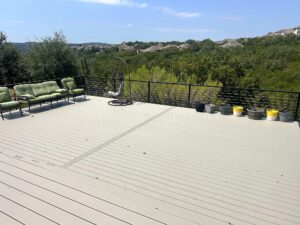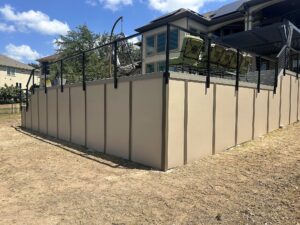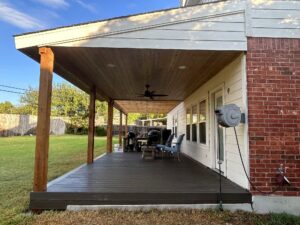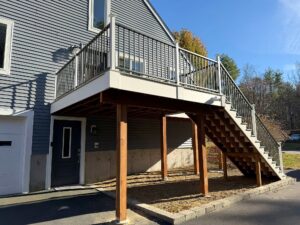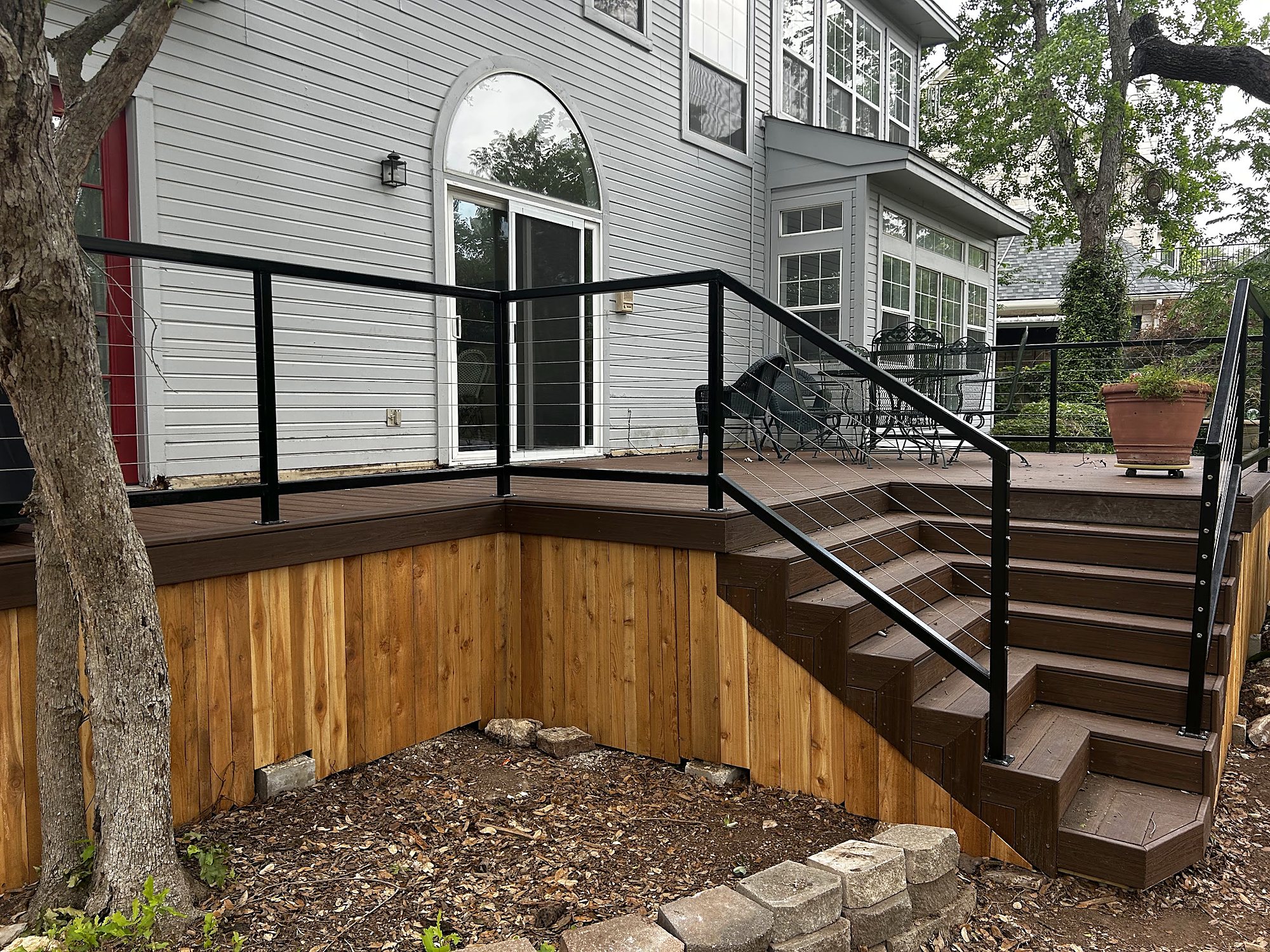
For most Austin homes, the best deck materials for Texas weather come down to two choices: capped composite boards (such as Trex) for the lowest upkeep, or quality pressure-treated pine for the lowest upfront cost. Cedar, PVC, and tropical hardwoods all have a place, but each comes with trade-offs in our heat. Just as important, every one of them depends on a frame built for Central Texas soil and sun.
Here is how each material handles triple-digit summers, hard UV, sudden storms, shifting clay, and termites, plus what to use for the framing, hardware, and railings underneath.
What Austin’s Climate Does to a Deck
A deck in Austin takes a different beating than one in Ohio or Oregon. Before comparing boards, it helps to know what they are up against:
- Heat. Long stretches of 100°F days cook deck surfaces and dry out wood, which leads to checking, cupping, and splitting.
- UV. Intense sun fades color and breaks down wood fibers and finishes. West- and south-facing decks age fastest.
- Sudden storms. Dry spells followed by heavy downpours mean boards swell and shrink, and water finds every unsealed cut end and fastener hole.
- Clay soil. Much of east Austin and the eastern suburbs sit on expansive clay that swells when wet and shrinks in drought. West of town, shallow limestone brings the opposite problem: footings that are hard to dig.
- Termites. Subterranean termites are common across Texas, and anything wooden near the ground is a target.
No board solves all five. The right answer pairs a surface material that suits how you use the deck with a frame designed for the soil it sits on.
Pressure-Treated Pine
Pressure-treated southern yellow pine is the workhorse of Texas decks. The preservative treatment protects against rot and termites, the lumber is strong, and it costs less than any other option on this list. It is also what most decks, including composite decks, use for framing.
The downside is how it handles the sun. Treated pine shrinks as it dries, and Austin summers dry it hard. Expect some checking (surface cracks), raised grain, and the occasional warped board, plus fading to gray if left unfinished. Splinters come with the territory.
Pine holds up well here if you:
- Let new lumber dry before applying a penetrating stain or sealer
- Clean and reseal on a regular schedule, especially on sunny exposures
- Seal cut ends, which soak up water fastest
- Use ground-contact rated lumber for posts and any framing close to the soil
If you like the look and feel of real wood and do not mind routine maintenance, our wood deck builds cover both pine and cedar.
Cedar
Cedar is the choice for homeowners who want natural wood with more character than pine. It has a rich color, a straighter grain, and less tendency to warp and split. Cedar heartwood contains natural oils that help it resist decay and insects, and it stays a bit cooler to the touch than many dense or dark surfaces.
That natural resistance has limits. Cedar is softer than pine, so it dents and scratches, and sapwood has far less protection than heartwood. In Austin sun, an unfinished cedar deck goes silver-gray quickly. Keeping the warm color means cleaning and applying a UV-blocking finish on a regular schedule. For framing, cedar is not a substitute for treated lumber; most cedar decks still sit on a pressure-treated frame.
Capped Composite: The Low-Maintenance Pick
Capped composite boards combine a core of wood fiber and recycled plastic with a protective polymer shell. For many homeowners, it ranks first among the best deck materials for the Texas sun when the goal is spending weekends on the deck rather than working on it. The cap resists fading and staining, the boards do not need sanding or sealing, and they will not splinter.
We install Trex, and its current decking lines are tiered by performance and warranty:
- Trex Transcend: 50-year limited residential warranty
- Trex Select: 35-year limited residential warranty with fade and stain coverage
- Trex Enhance: 25-year limited residential warranty with fade and stain coverage
Trex says its boards are highly resistant to termite damage, and composite does not rot the way wood does. One caution: the frame underneath is usually still wood, so termite and moisture protection for the framing still matters.
The heat question
Composite gets hot in full Texas sun. Trex acknowledges this on its heat-resistant decking page and recommends lighter colors, which reflect more sunlight and hold less heat, for hot, full-sun climates. Its Transcend Lineage collection uses heat-mitigating technology that Trex describes as its coolest decking. Even so, Trex advises avoiding extended skin contact with the surface on hot days, especially for young children. Shade from a patio cover or pergola makes a bigger difference than any board choice.
Composite also expands and contracts with temperature, so installers must follow the manufacturer’s gapping and joist-spacing requirements. Skipping those steps is how composite decks end up with buckled boards or uneven gaps by August. Learn more about our composite deck installation process.
PVC Decking
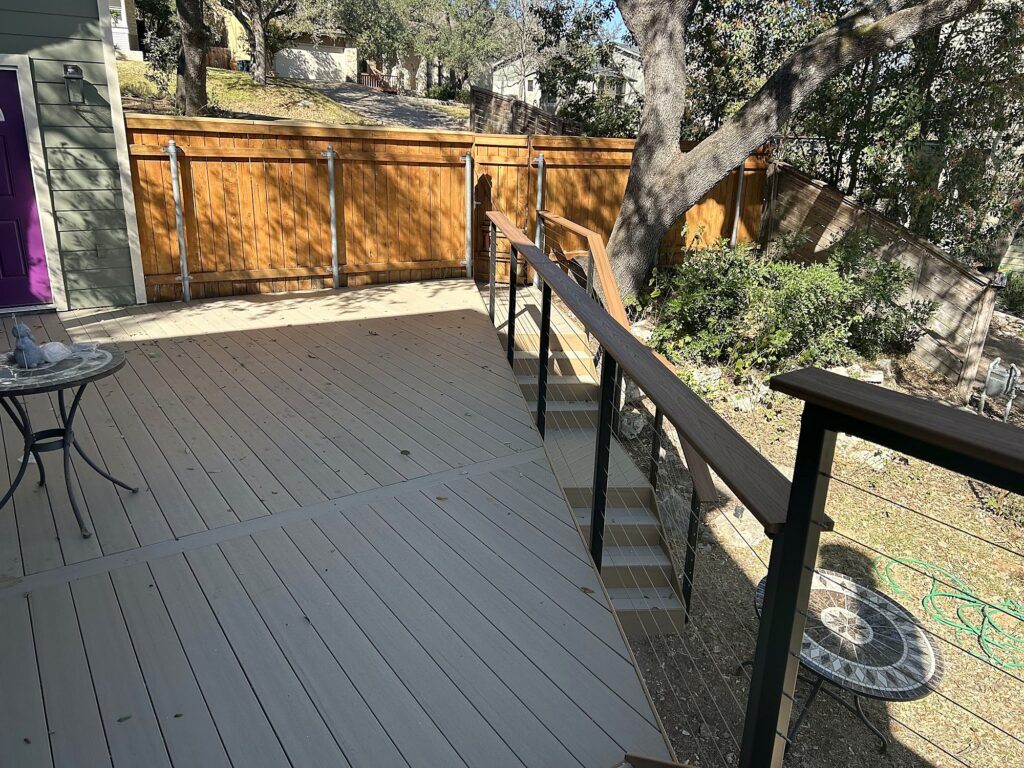
PVC (cellular vinyl) decking contains no wood fiber at all. That makes it lighter than composite and highly resistant to moisture, mold, and insects, which is why some homeowners consider it around pools and in shady, damp spots.
In Austin, the trade-offs are heat and movement. PVC can get hot in direct sun, and it typically expands and contracts more with temperature changes than composite, so installation details matter even more. It also usually costs more than composite. For most of our clients, capped composite covers the same ground, but PVC is worth discussing for specific situations.
Tropical Hardwoods: An Option Homeowners Ask About
Homeowners often ask about tropical hardwoods such as ipe. These species are extremely dense, naturally resistant to rot and insects, and very long-lived when properly installed. They also have a striking look.
The trade-offs are real. Dense hardwoods are heavy and hard to work, so every board typically needs pre-drilling and specialty fasteners. They cost more than most composites, they fade to gray without regular oiling, and they get hot in full sun. Sourcing matters too: if you go this route, ask for documentation that the wood was legally and responsibly harvested. Our crews focus on pressure-treated pine, cedar, and composite, and we are happy to talk through how a hardwood compares.
Comparing the Best Deck Materials for Texas Homes
| Material | Heat and UV | Storms and moisture | Termites | Upkeep | Best for |
|---|---|---|---|---|---|
| Pressure-treated pine | Checks and fades; surface stays relatively cool | Swells and shrinks; needs sealing | Resistant when treated | High: regular cleaning and sealing | Lowest upfront cost; framing |
| Cedar | Fades to gray fast without UV finish | Good if finished and kept clean | Heartwood resists; sapwood less so | High: regular finishing | Natural wood look |
| Capped composite (Trex) | Fade-resistant cap; gets hot, lighter colors help | Does not rot; needs proper gapping | Highly resistant (per Trex) | Low: occasional washing | Long-term low maintenance |
| PVC | Gets hot; more thermal movement | Excellent moisture resistance | Not a food source | Low | Pool areas, damp shade |
| Tropical hardwood | Grays without oil; gets hot | Very durable | Naturally resistant | Medium: oiling to keep color | Premium natural wood |
Framing, Hardware, and Railings
The boards are what you see, but the frame decides how long the deck lasts. A composite surface with a 50-year warranty does you little good on a frame that is failing at year 15.
Framing on Austin clay
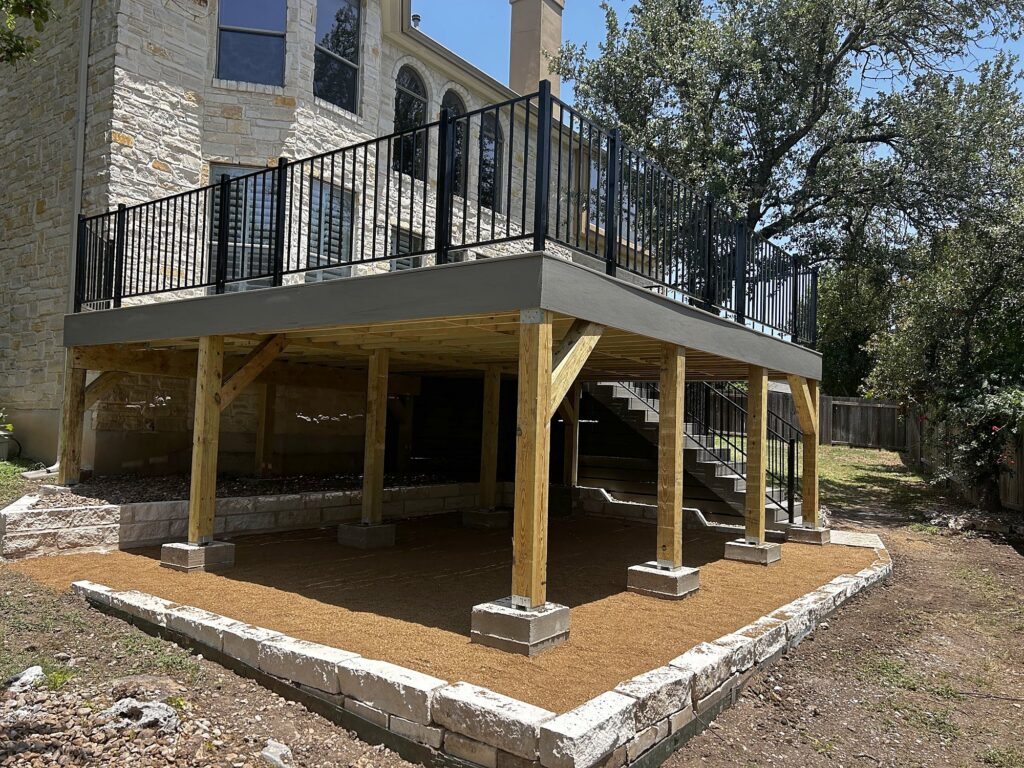
Footing size and depth should match your soil and your local code, not a generic plan. On expansive clay, proper footings help keep the deck level as the ground moves through wet and dry seasons. Use ground-contact rated treated lumber for posts and low framing, keep air moving under low decks, and consider joist tape on top of joists to shed water at fastener points. Steel deck framing systems are another option for homeowners who want a frame that will not rot or attract termites.
Fasteners and hardware
Modern preservative treatments are corrosive to plain steel. Per the IRC, fasteners and connectors in contact with treated lumber typically need to be hot-dip galvanized or stainless steel, and manufacturers specify which coatings their hangers require. Near a pool or hot tub, stainless steel is the safer choice. On composite, hidden fastener systems give a clean surface with no visible screw heads. For decks around water, see our pool deck page.
Railings
Railings take the same sun and storms as the deck surface. Powder-coated aluminum will not rust, rot, or need painting. Stainless steel cable keeps the view open, which is popular on Hill Country lots. Composite railings match composite decking and skip the painting cycle, while wood railings need the same care as a wood deck. Compare the options on our deck railing installation page.
How to Choose the Right Material
Start with how you want to spend your time and money:
- Tightest budget: pressure-treated pine, with a plan for regular sealing
- Real wood look: cedar, finished and maintained
- Lowest maintenance over the long run: capped composite in a lighter color, ideally with some shade
- Constant water exposure: composite or PVC with stainless hardware
- Replacing a tired wood deck: new composite boards may work over a sound frame, but only after the framing is inspected
Even the best deck materials for Texas decks only perform as well as what is under them. Whichever surface you choose, insist on a frame, footings, and fasteners designed for Central Texas conditions.
Ready to Pick Your Deck Material?
Ready to see these materials in person and get a plan for your yard? Schedule a free on-site estimate or call Green Hill Remodeling at (737) 529-4322. We have built wood and composite decks across the Austin area for more than 15 years, and 0% down financing is available.
Frequently Asked Questions
Composite does get hot in direct Texas sun, as does nearly every decking surface. You can reduce the problem by choosing lighter colors, considering Trex's heat-mitigating Transcend Lineage line, and adding shade with a patio cover, pergola, or nearby trees. Keep outdoor rugs or shoes handy on peak afternoons, and watch young children and pets on bare boards.
Lifespan depends far more on care and construction than on the lumber itself. A treated pine deck that is sealed regularly, has good drainage and airflow, uses ground-contact posts, and is built with corrosion-resistant hardware will outlast one left bare in full sun. Watch for soft spots, loose railings, and rusted connectors, and repair them early.
Pressure-treated pine is stronger, cheaper, and better for framing and ground contact. Cedar looks better, moves less, and is more pleasant underfoot, but it is softer and needs regular UV-blocking finish in Austin sun to keep its color. Many homeowners choose a treated pine frame with cedar decking and railings for the best of both.
Trex says its composite boards are highly resistant to termite damage, and composite does not offer termites the food source that bare wood does. The catch is the frame: most composite decks sit on treated lumber joists and posts. Keeping soil, mulch, and firewood away from the framing and using properly treated lumber still matters.
Around pools, capped composite or PVC in a lighter color is usually the best fit. Both resist moisture and do not splinter under bare feet. Look for a textured, slip-resistant surface, use stainless steel fasteners and hardware near chlorine or salt water, and plan for proper drainage so water does not pool on the deck or around the footings.