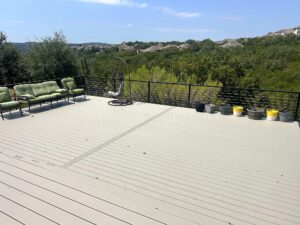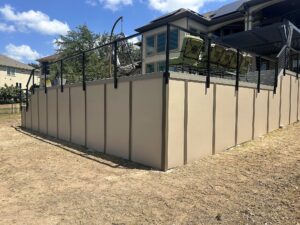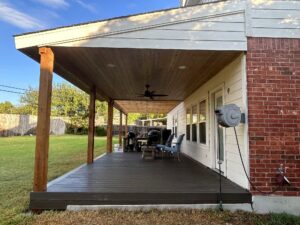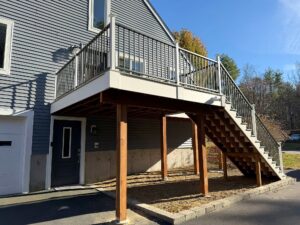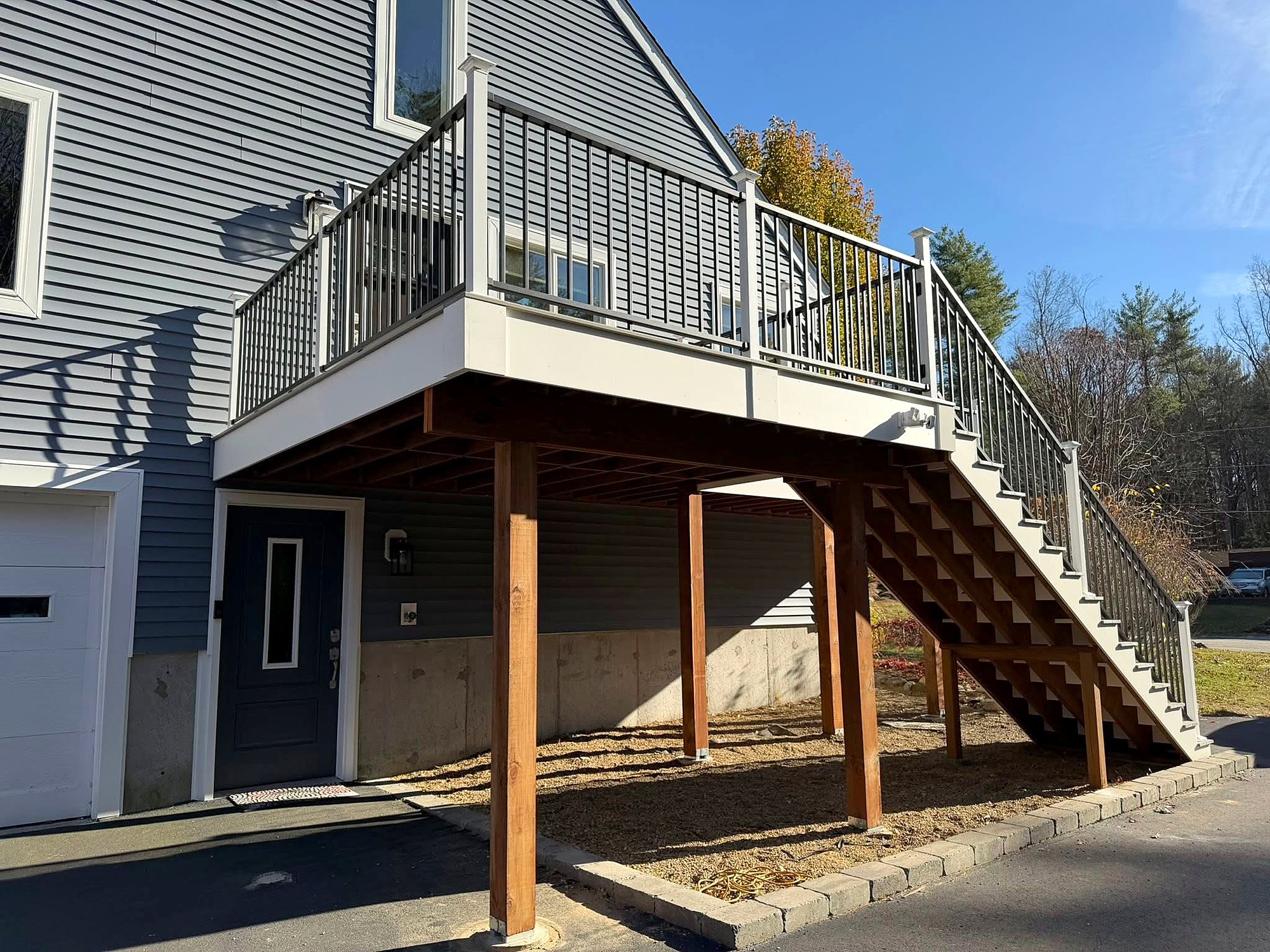
Most decks in Austin need a residential building permit. The City of Austin only exempts a small, freestanding deck that is 200 square feet or less, no more than 30 inches above grade at any point, not attached to the house, not used as an exit from the home, and not in a flood hazard area. If your project misses any one of those conditions, plan on a deck permit in Austin and confirm the details with the Development Services Department (DSD).
Below we walk through the deck permit questions Austin homeowners deal with most often: which decks qualify for the exemption, what the city reviews, how inspections work, why HOA approval is a separate step, and what an unpermitted deck can cost you when you sell.
When You Need a Deck Permit in Austin
DSD publishes a list of work exempt from building permits. For one- and two-family homes and townhouses, a new deck is exempt only if it meets all of these conditions:
- No more than 200 square feet in area
- No more than 30 inches above grade at any point
- Not attached to a dwelling or townhouse
- Does not provide egress from the dwelling
- Not located within a flood hazard area
Notice the words “at any point.” On a sloped Hill Country lot, a deck that sits 12 inches off the ground near the house can easily be 36 inches up at the far corner. That far corner is what counts.
What “attached” and “egress” mean in practice
An attached deck is usually fastened to the house with a ledger board bolted to the rim joist. That connection affects the structure of the home, so an attached deck needs a permit no matter how low or small it is. A deck “provides egress” when a door from the house opens onto it and it serves as a way out of the home. If you step out of the back door onto the deck, assume it does not qualify for the exemption until DSD tells you otherwise.
Exempt does not mean anything goes
The city is clear that exempt work must still comply with building codes, city codes, and other ordinances. Exempt work also does not cover trades. If you add deck lighting, outlets, or a ceiling fan, an electrical permit may still be required. And a permit may still be needed if the property is in a floodplain, even for work that is otherwise on the exempt list.
Common Austin deck scenarios
| Project | Permit likely? | Why |
|---|---|---|
| Freestanding 12×14 platform, 18 inches high, outside the floodplain | Likely exempt | 168 sq ft, under 30 inches, not attached |
| Low deck bolted to the house with a ledger | Yes | Attached to the dwelling |
| Freestanding 16×16 ground-level deck | Yes | 256 sq ft is over the 200 sq ft limit |
| Second-story or multi-level deck | Yes | Over 30 inches and usually attached |
| Replacing deck boards only | Usually exempt | Non-structural repair limited to existing boards |
| Replacing railings, joists, or posts | Likely | The repair exemption excludes guardrails and handrails; structural work is not covered |
| Adding a roof or patio cover over the deck | Yes, separate review | Covered structures are not “uncovered decks”; ask DSD which application applies |
Use the table as a starting point, not a ruling. The city’s list is the authority, and your lot can change the answer.
What the City Reviews on a Deck Permit
Austin handles uncovered decks through a residential “Pool and/or Uncovered Deck” web form linked from the Residential Plan Review page. Based on the current form, a typical submittal includes:
- The completed application, signed by the property owner or backed by an owner’s authorization letter.
- A plot plan showing where the deck sits on the lot.
- Architectural drawings, including a floor plan and elevations.
- Structural drawings: framing, bracing, and foundation (footing) plans. The form lets you submit without them, but warns you will get a rejection comment at the end of the first review cycle.
- An Austin Build + Connect (AB+C) portal account, which is required to manage the permit and pay fees.
The form also asks you to check the property for expired permits, including ones left behind by previous owners. Those have to be addressed during review, which can mean a separate application and extra fees.
Depending on the lot, other reviews may apply. DSD notes that a floodplain review applies if the property is within the 100-year floodplain or within 100 feet of it, and a tree review applies when trees 19 inches or larger are on or next to the property. Zoning items such as setbacks and impervious cover can also come up. How a deck counts toward impervious cover depends on how it is built, so check with DSD or a reviewer for your specific lot rather than relying on rules of thumb.
As for timing, the Residential Plan Review page lists a target review time for pool and uncovered deck applications. Targets change and corrections add rounds, so check the page for the current figure before you set a build date.
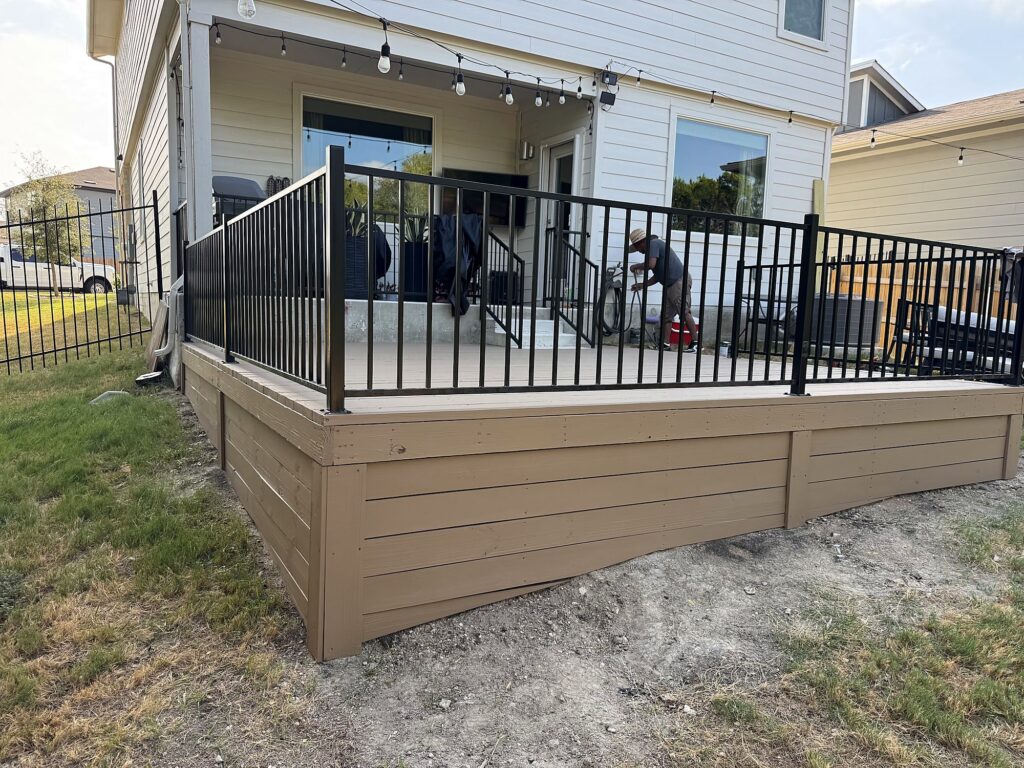
Deck Inspections in Austin
Once the permit is issued, inspections are scheduled through the AB+C portal. A deck project typically sees a foundation or footing inspection, a framing inspection before the decking covers the structure, and a final. Confirm the exact sequence for your permit, since it can vary with the design.
Austin’s residential framing inspection checklist includes a deck section. Inspectors look at whether the deck’s placement, setbacks, size, and materials match the approved plans, and whether the deck is positively attached and built to carry its design loads. Other items inspectors commonly check on decks include:
- Footing size and depth, and post-to-footing connections
- Ledger attachment and flashing where the deck meets the house
- Joist hangers, beam connections, and corrosion-resistant fasteners
- Guards: per the IRC, guards are typically required where a walking surface is more than 30 inches above the grade below
- Stair rise, run, and handrails
Austin currently uses the 2024 International Residential Code with local amendments, so specific dimensions should come from the adopted code and your approved plans. Also keep the permit active. Per DSD’s homeowner guidance, a permit expires on the 181st day without a scheduled or passed inspection, and each passed inspection extends it.
Raised decks get the most scrutiny. If you are planning a multi-level or second-story deck, expect engineered framing details and close attention to lateral support and guard heights. Stairs deserve the same care; our page on deck stairs covers what goes into a safe set.
HOA Approval Is a Separate Step
A city permit and HOA approval are two different things, and you usually need both. The city reviews code and zoning. Your HOA reviews whatever its deed restrictions and design guidelines cover, which can include materials, colors, railing styles, height, and where the deck sits on the lot.
The City of Austin’s homeowner permitting resources tell homeowners to identify deed restrictions and HOA requirements before starting a project. A practical order of operations:
- Pull your HOA’s architectural guidelines and submittal form.
- Get a design and material selections you are happy with.
- Submit to the HOA architectural committee.
- Apply for the city permit (some homeowners run both at once to save time).
- Build only after you have both approvals in hand.
An HOA approval letter does not replace a city permit, and a city permit does not override HOA rules.
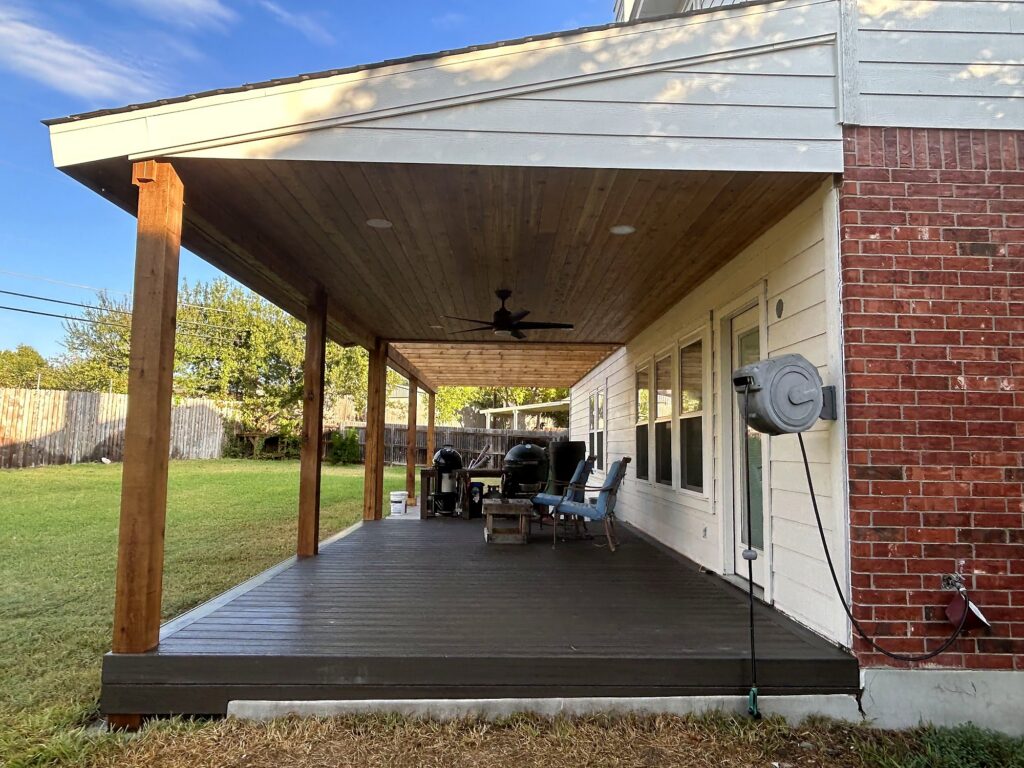
What Happens With an Unpermitted Deck at Resale
An unpermitted deck rarely causes trouble on a quiet Saturday. It causes trouble when you sell, refinance, or file a claim. The city’s homeowner resources put it plainly: unpermitted work can affect your ability to refinance, get a loan, or sell your home, and some insurers will not cover claims for work done without permits.
Here is how it usually surfaces:
- Seller’s disclosure. The standard Texas seller’s disclosure form asks whether the seller is aware of alterations or repairs made without necessary permits. If you know, you have to say so.
- Buyer’s inspection. Inspectors routinely flag missing ledger flashing, undersized footings, and loose guards. Buyers can also look up a property’s permit history in the city’s AB+C public search.
- Future permits. Expired or missing permits on a property must be addressed when the next permit is filed, including permits left by a previous owner.
- Fees and enforcement. The city can charge an investigation fee on work started without a permit, in addition to the regular permit fee, and work without a permit can be cited. Check DSD’s current fee schedule for amounts.
Fixing an unpermitted deck after the fact can mean drawings, an application, and possibly opening up finished work so an inspector can see the framing. Sometimes the cleaner answer is a rebuild. If your existing deck is showing its age anyway, a deck repair assessment can tell you whether the structure is worth keeping.
Round Rock, Cedar Park and Other Nearby Cities
Everything above covers deck permit rules inside Austin city limits. Round Rock, Cedar Park, Georgetown, Leander, Pflugerville, Kyle, Buda, Lakeway, Bee Cave, and other nearby cities each run their own building departments, with their own permit triggers, forms, and inspection procedures. Homes in unincorporated parts of Travis, Williamson, or Hays County fall under different rules again.
Do not assume Austin’s exemption applies across the city line. Call your city’s building department, or check its website, before you settle on a design. If you are not sure which jurisdiction your address falls under, the taxing entities listed on your property tax statement are a good clue. You can see the communities we build in on our service areas page.
Questions to Ask Your Deck Builder About Permits
Permitting is where a lot of deck projects stall, so settle it before you sign. Ask any contractor you are considering:
- Will this design need a permit in my city, and why?
- Who prepares the drawings and who submits the application?
- Who schedules and attends inspections?
- How will the deck connect to the house, and how is the ledger flashed?
- Is the schedule built around permit review and inspections, or does it assume they happen instantly?
Clear answers to these are a good sign you are working with someone who builds custom decks in Austin the right way. When in doubt on any rule in this article, the final word belongs to the City of Austin Development Services Department, reachable at 512-978-4000 during business hours.
Ready to Plan a Permitted Deck?
Ready to build a deck that passes inspection and holds up at resale? Request a free on-site estimate or call Green Hill Remodeling at (737) 529-4322. We are licensed and insured, and a dedicated project manager will walk you through design, materials, and what your project needs before work starts.
Frequently Asked Questions
Austin's permit fees come from the Development Services Department's current fee schedule, and the total depends on the project and the reviews it triggers, such as floodplain or tree review. Drawings and any engineering are separate costs. Because fees are updated, check the DSD fee schedule or ask a reviewer for your project rather than relying on a number you saw online.
Yes. DSD notes that no state license is required to act as the general contractor on a residential building permit. You register through the city's Contractor Registration process, set up an Austin Build + Connect account, submit the application, pay fees, and schedule every inspection yourself, including the final. Electrical work for deck lighting has its own rules.
Usually not. Austin exempts a non-structural exterior deck repair limited to the existing deck boards, as long as it does not include guardrails or handrails. Once you replace joists, beams, posts, footings, or railings, you are into structural or guard work that generally needs a permit. If you are unsure where your project falls, ask DSD before starting.
A ground-level deck can skip the permit only if it is freestanding, 200 square feet or smaller, no higher than 30 inches anywhere, not an exit from the home, and outside a flood hazard area. Bolt it to the house or make it bigger and it needs a permit. Even exempt decks must meet code and any HOA rules.
DSD publishes a target review time for pool and uncovered deck applications on its Residential Plan Review page. Actual time depends on how complete your submittal is, whether floodplain or tree review applies, and how many correction rounds are needed. Submitting full structural drawings up front avoids the most common rejection and keeps the process moving.