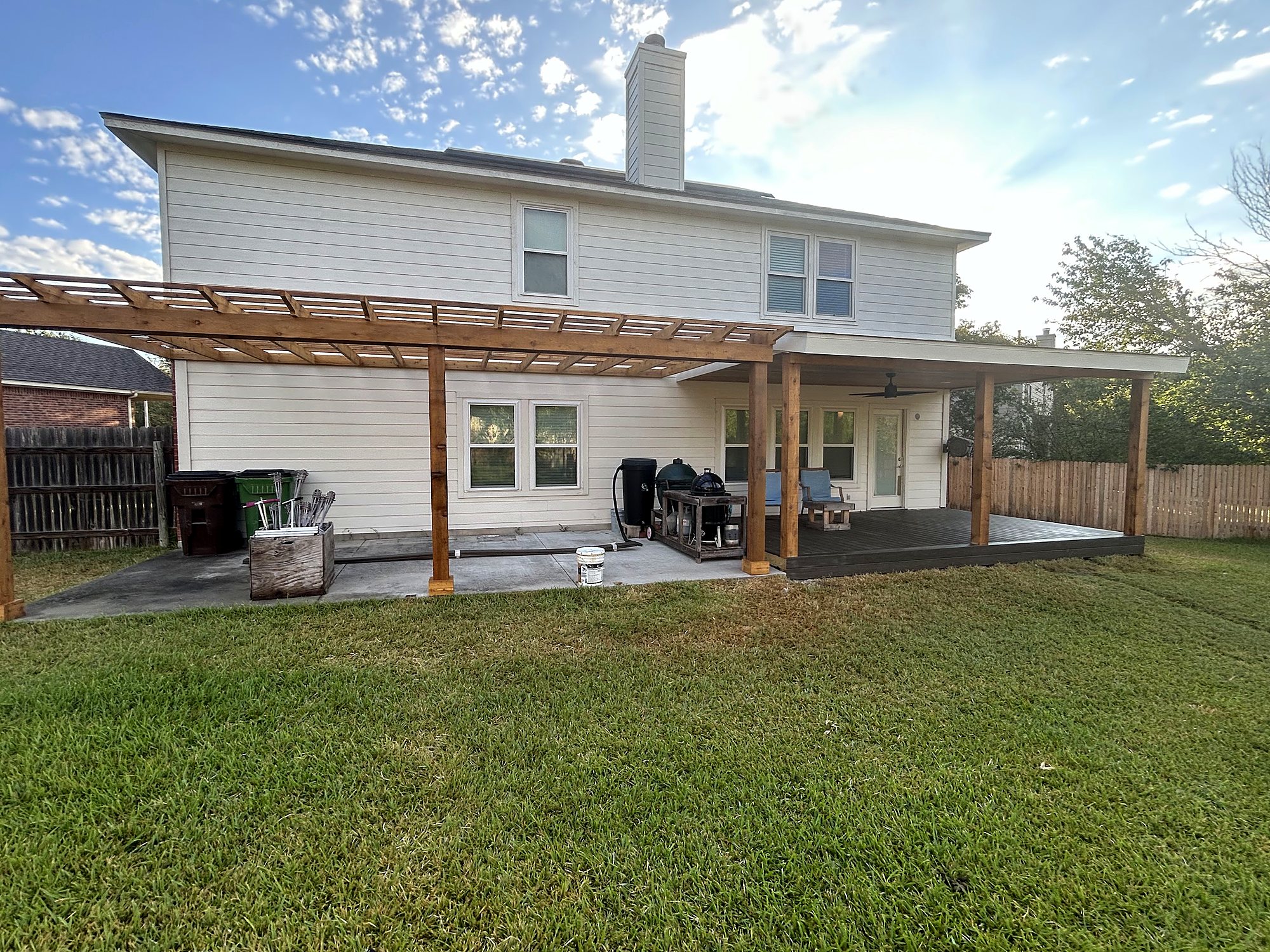
The best deck shade ideas for Austin start with one question: do you only need shade, or do you need shade plus rain protection? An open wood pergola filters the sun but lets rain through, a solid patio cover or pavilion blocks both, and a louvered aluminum pergola lets you switch between the two with the turn of a motor. Add-ons like shade sails, retractable canopies and ceiling fans fill the gaps for less money and commitment.
Below we compare each option on how much shade it actually delivers, how it handles a Central Texas downpour, what it means for permits, and which decks it suits best.
Why Austin Decks Need a Real Shade Plan
Austin sits at roughly 30 degrees north latitude. Around the summer solstice, the midday sun climbs to more than 80 degrees above the horizon, which means it is almost straight overhead. Any solid or slatted roof directly above the deck handles midday well.
The problem is late afternoon. As the sun drops in the west-northwest on summer evenings, it slides under roofs and beats straight into the seating area right when you want to use the deck. A west-facing deck can feel hotter at 6 p.m. than at noon, even under a roof.
In winter, the noon sun sits much lower, closer to 35 to 40 degrees. That is the season you want some sun on the deck, which is a big argument for adjustable or open-top options. If you want to check the exact sun path for your address, NOAA’s free solar calculator shows sunrise, sunset and sun angle for any date.
The takeaway: overhead cover solves midday heat, but a west or southwest exposure usually also needs something on the side, such as a screen, a deeper overhang, a shade sail or a roll-down shade.
Open Wood Pergola: Filtered Shade, No Rain Protection
A traditional pergola is a frame of posts, beams and rafters topped with spaced slats. It is the most architectural way to add shade for a deck and the easiest to blend with a wood or composite deck.
How much shade you get depends on the design, not just the structure:
- Slat spacing and depth. Taller, closer slats cast more shade. A loose, decorative top may only give light dappling.
- Orientation. Running the top slats north-south blocks more of the low morning and evening sun; east-west slats do more at midday.
- Layering. Shade cloth, a canvas slide-wire canopy or climbing vines on top can push coverage much higher.
An open pergola does nothing for rain. Some homeowners add clear polycarbonate panels to fix that, but at that point the structure is effectively a roof, which changes how it needs to be engineered and permitted. Our pergola installation team builds in cedar, pressure-treated pine and aluminum, and can size posts and beams for a future cover if you think you may want one.
Attached Solid Patio Cover: Full Shade and Rain Cover
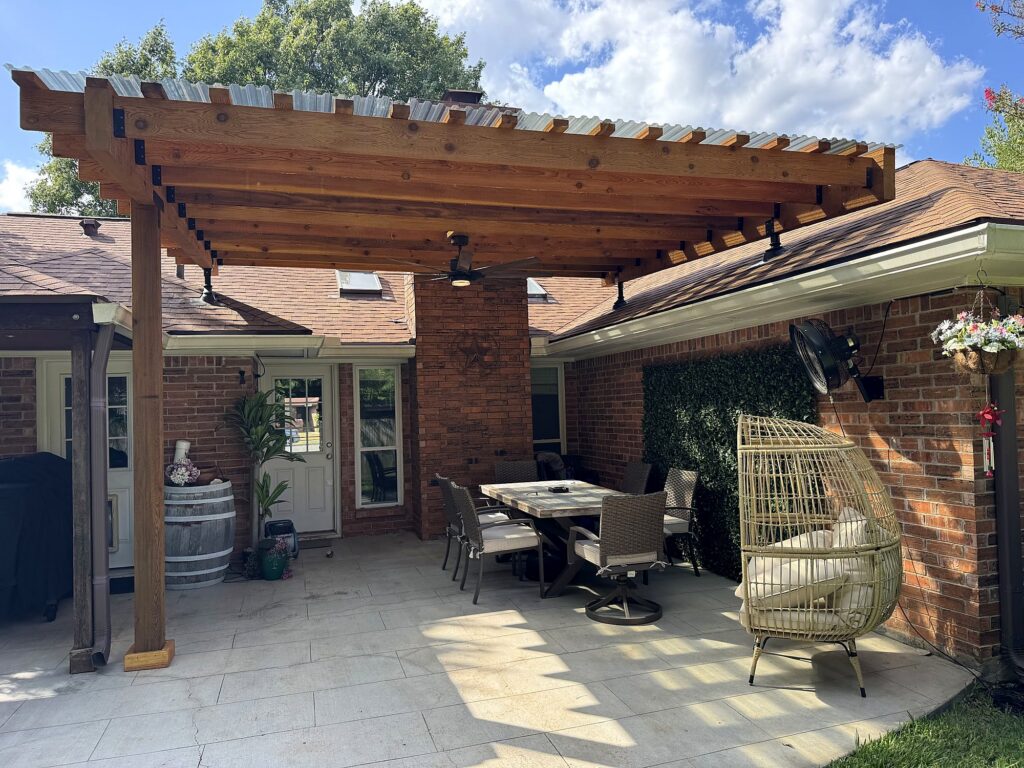
A patio cover is a solid roof, usually attached to the house on one side and carried by posts and a beam on the other. It is the most practical choice if you want to use the deck in a summer thunderstorm, protect outdoor furniture, or mount lights, speakers and a fan overhead.
What to know before you choose one:
- Tie-in to the house. The cover has to connect to the existing wall or roofline with proper flashing. Roof pitch, gutter lines and window heights all limit how it can attach.
- Heat under the roof. A solid roof stops direct sun, but a low ceiling can trap heat. Higher ceilings, light-colored roofing and a ceiling fan make a noticeable difference.
- Less winter sun. The space under a patio cover, and often the room behind it, will be darker year round.
In the pergola vs. patio cover decision, the cover wins on rain and full shade, while the pergola wins on airflow, winter light and a lighter look against the house.
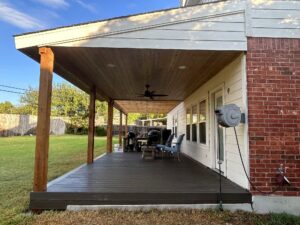
Patio covers can be framed in wood and roofed to match the house, which is the most seamless look. See our patio cover options for styles we build. If mosquitoes are as much of a problem as sun, the same structure can be enclosed later as a screened porch.
Freestanding Pavilion: A Roof Away from the House
A pavilion is a fully roofed structure that stands on its own posts and footings, often with a gable or hip roof. It works well over a detached deck, an outdoor kitchen or a pool deck, where attaching to the house is not possible or not wanted.
Because it does not depend on the house wall, a pavilion can face any direction and sit where the view or the breeze is best. It also gives you full rain protection and a ceiling for fans and lighting. The tradeoffs are size, more posts and footings, and a stronger visual presence in the yard. A pavilion over a deck generally needs its own foundation designed for the roof load and wind, rather than resting on deck framing.
Louvered Aluminum Pergola: Adjustable Shade and Rain Control
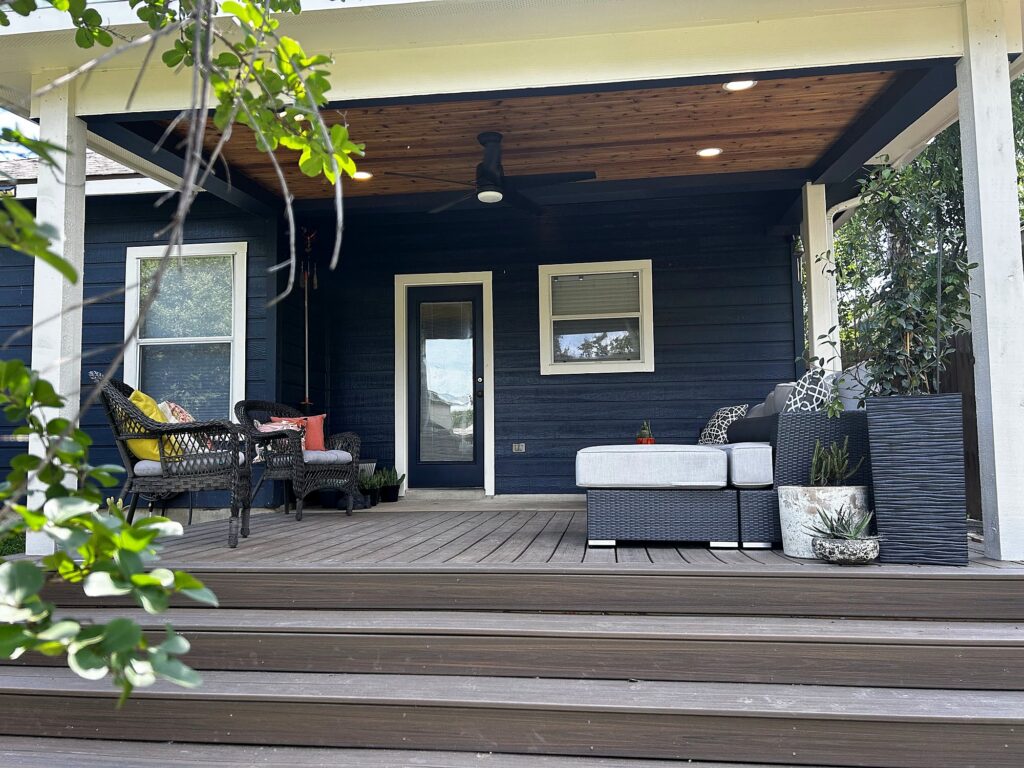
A louvered pergola has an aluminum frame with rotating roof blades. Open them and you get light and airflow like a pergola; close them and the blades interlock to shed rain into built-in gutters, typically running down through the posts.
For Austin, this is the most flexible option. You can angle the louvers to block the summer sun while still venting heat, then open them fully on a mild winter afternoon. Many systems are motorized and can add integrated lighting, rain sensors and side screens.
A few things to weigh:
- Aluminum does not rot, warp or need staining, so upkeep is mostly cleaning leaves and debris from the blades and gutters.
- Closed louvers handle rain well, but most are not as watertight as a shingled roof in wind-driven rain. Check the manufacturer’s ratings.
- Motorized units need an electrical circuit, which is worth planning at the start.
Learn more about our louvered pergola installations, including freestanding and house-attached versions.
Shade Add-Ons: Sails, Canopies, Shade Cloth and Fans
Not every deck needs a permanent structure. These add-ons can stand alone or close the gaps a pergola or cover leaves behind.
Shade sails
Tensioned fabric triangles or rectangles anchored to posts, the house or a pergola frame. They are good at blocking low western sun when angled correctly. They need strong anchor points, because wind loads on a tight sail are significant, and most should come down before severe storms.
Retractable canopies and awnings
A fabric canopy on slide wires inside a pergola, or a wall-mounted retractable awning, lets you open the deck to the sky when you want sun. They are not meant for heavy rain or high wind.
Shade cloth
Knitted shade cloth is sold in different densities. Stretched over pergola rafters, it is one of the simplest ways to turn filtered shade into real shade. It breathes, so it lets hot air escape, but it does not stop rain.
Ceiling fans and side screens
Under any solid or louvered roof, an outdoor-rated ceiling fan moves air and makes the space feel cooler. Roll-down solar screens on the west side are often the missing piece for evening comfort.
Deck Shade Ideas Compared
Here is how the main deck shade ideas stack up side by side. Shade levels are general; the final result depends on design, orientation and materials.
| Option | Shade | Rain protection | Adjustable | Upkeep | Permit likelihood (Austin) |
|---|---|---|---|---|---|
| Open wood pergola | Partial, filtered | None | No (unless canopy added) | Periodic sealing or staining | Depends on size, height and attachment |
| Attached patio cover | Full overhead | Full | No | Low; roof and gutter care | High |
| Freestanding pavilion | Full overhead | Full | No | Low to moderate | High |
| Louvered aluminum pergola | Partial to full | Good when closed | Yes | Low; clean blades and gutters | Likely |
| Shade sail | Partial, targeted | Minimal | Removable | Seasonal; replace fabric over time | Usually low, but check anchors on structures |
| Retractable canopy or awning | Partial to full when open | Light rain only | Yes | Fabric and hardware care | Varies |
Permits: Why a Roof Changes the Conversation
As a rule, the more a shade structure behaves like a roof, the more likely it is to need a building permit and engineered framing. Roofed structures collect wind uplift and, if attached to the house, tie into the building envelope.
The City of Austin publishes a list of work exempt from building permits. For one- and two-family homes, it exempts a one-story detached accessory structure of no more than 200 square feet and no more than 15 feet tall, with other conditions such as no plumbing and not in a flood hazard area. Pergolas and patio covers are not listed as their own exempt category, and attached structures are not covered by that detached exemption.
In practice, plan on a permit for an attached patio cover or a pavilion, and expect that many pergolas, especially attached ones, will need one as well. Rules also differ in Round Rock, Cedar Park, Georgetown and other nearby cities, and HOAs often have their own approval process. For a definitive answer on your lot, check with the City of Austin Development Services Department or your city’s building office.
How to Choose the Right Shade for Your Deck
Use these questions to narrow it down:
- Which way does the deck face? West and southwest decks almost always need side protection in addition to overhead cover.
- Do you need to use it in the rain? If yes, choose a patio cover, pavilion or louvered pergola.
- Do you want winter sun? Open pergolas and louvered roofs keep that option; solid roofs do not.
- Can the deck carry it? Adding a roof to an existing deck often means new posts and footings. If you are planning a new custom deck, design the shade structure at the same time.
- What is your HOA and permit situation? Check early, before you settle on a design.
Many of the most comfortable Austin decks combine options: a louvered pergola or patio cover overhead, a fan below, and a roll-down screen or shade sail on the west.
Ready to stop baking on your deck? Green Hill Remodeling designs and builds pergolas, louvered pergolas, patio covers and pavilions across Austin and the surrounding cities. Request a free on-site estimate or call (737) 529-4322, and we will look at your sun exposure and recommend the shade option that fits your deck and budget.
Frequently Asked Questions
A patio cover gives more shade because its roof is solid, and it also keeps rain off. A pergola gives filtered shade and lets light and air through, which many people prefer in spring and fall. If you want both behaviors, a louvered aluminum pergola can open like a pergola and close like a cover.
Often yes, but the existing deck framing usually was not designed for a roof. A roof adds weight and wind uplift, so most covers need their own posts and footings sized by the builder or an engineer. A contractor should inspect the deck's condition and footings first, and a permit is typically required.
When the louvers are closed, most louvered pergolas shed rain through integrated gutters that drain down the posts. They handle normal rain well, but they are generally not as watertight as a shingled roof in strong, wind-driven storms. Check the specific system's ratings and consider side screens for exposed sides.
Overhead cover alone rarely solves it, because the evening sun comes in low from the west. Add vertical protection on that side: a roll-down solar screen, an angled shade sail, privacy slats, or a deeper roof overhang. Trees and tall planters help too. Combining a roof with one of these usually works best.
Shade sails can last for years in Austin if they are anchored to properly sized posts or structural framing and tensioned correctly. They catch a lot of wind, though, so most manufacturers recommend taking them down before severe weather. Never anchor a sail to gutters, fascia or a light pergola that was not designed for the load.