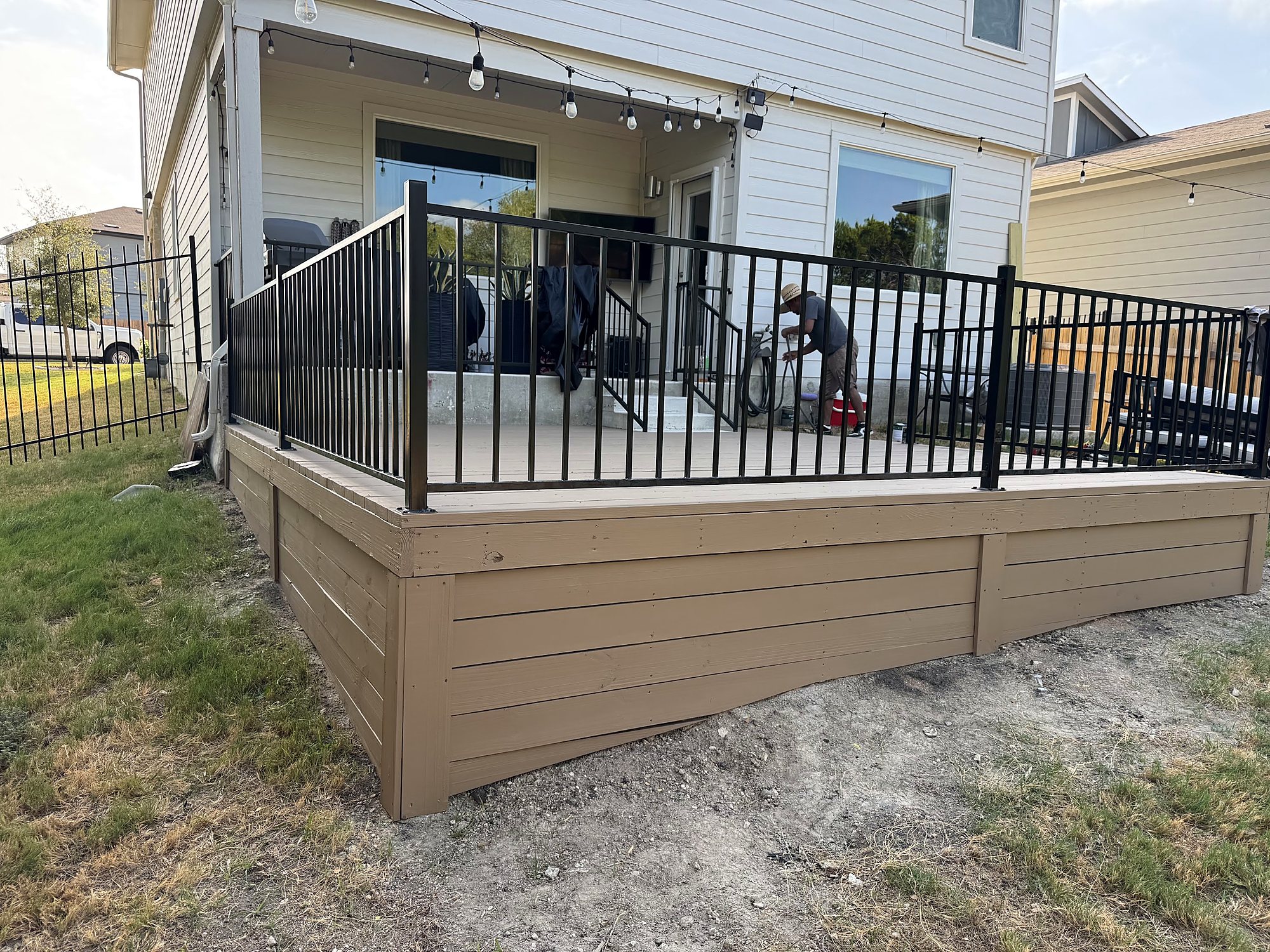
You should schedule a deck safety inspection if you see a gap where the deck meets the house, soft or spongy boards, a railing that moves when you lean on it, rusted hardware, or posts that lean or crack. Any one of those signs can mean the structure is losing strength. A deck that is more than 10 to 15 years old, or that you inherited with a house, deserves a professional look even if nothing seems wrong.
This guide walks through the warning signs, a simple self-check you can do in an afternoon, and how to tell whether a problem is a repair or a replacement.
Why a Deck Safety Inspection Matters
Decks look simple, but they are structures that hold people several feet in the air. Most failures do not happen without warning. They come from slow problems such as water getting behind the ledger board, fasteners corroding, or wood rotting at the post bases, until a crowded party or a heavy hot tub finds the weak point.
The North American Deck and Railing Association (NADRA) estimates that about 30 million U.S. decks have exceeded their useful life and need repair or replacement, according to its Check Your Deck campaign.
Austin adds its own stresses. Long stretches of intense sun dry and crack wood, heavy storms soak framing that never fully dries in shaded spots, and the region’s expansive clay soils can move footings as they swell and shrink. A deck that was built well can still drift out of shape over time.
Deck Safety Warning Signs to Look For
These are the signs that most often point to a structural problem. If you find any of them, treat the deck as suspect until someone qualified has looked at it.
1. Ledger separation
The ledger is the board that attaches the deck to the house. Look for a gap between the ledger and the house wall, pulled-out fasteners, or a ledger held on with nails only. Ledger failure is one of the most serious deck defects, because it can let the whole deck pull away from the house.
2. Missing or failed flashing
Flashing is the metal or membrane that keeps water from running behind the ledger. If you see none, or you see staining, rot or soft siding where the deck meets the house, water may be damaging both the deck and the house framing.
3. Rot and soft spots
Press a screwdriver into joists, beams, post bases and the ledger. Sound wood resists; rotted wood lets the tip sink in or breaks away in soft, stringy pieces. Pay extra attention to spots that stay damp: under planters, near downspouts and at the ends of joists.
4. Loose or wobbly railings
Push firmly on railing posts and the top rail at several points. A guard should feel solid. Movement often means loose bolts, rotted post bases or posts attached with too few fasteners, and a failing railing is a fall hazard even if the deck itself is fine.
5. Corroded fasteners and connectors
Look at joist hangers, post bases, bolts, nails and screws. Heavy rust, flaking metal or white powdery corrosion means the hardware is losing strength. Modern treated lumber is corrosive to plain steel, so older or bargain hardware can fail faster than the wood around it.
6. Cracked or leaning posts and footings
Check that posts are plumb and sit squarely on their footings. Warning signs include deep vertical cracks, posts buried directly in soil and rotting at grade, cracked or tilted concrete footings, and posts that have shifted off their bases.
7. Stair problems
Stairs often age faster than the deck. Look for cracked or split stringers, treads that flex or are loose, uneven step heights, missing handrails, and stringers resting on soil or loose pavers.
8. Guards and stairs below current code
An older deck may have been built to an earlier standard. Per the International Residential Code, guards are typically required where a walking surface is more than 30 inches above grade, should generally be at least 36 inches tall, and should not have openings that let a 4-inch sphere pass through. Stairs typically need a graspable handrail when they have four or more risers. Austin currently uses the 2024 IRC with local amendments, so a builder or the City of Austin Development Services Department can confirm what applies to your deck.
9. Bounce, sway or sagging
Walk the deck and shift your weight side to side. Noticeable bounce, sagging boards or a deck that sways laterally can mean undersized joists, missing bracing or connections that have loosened.
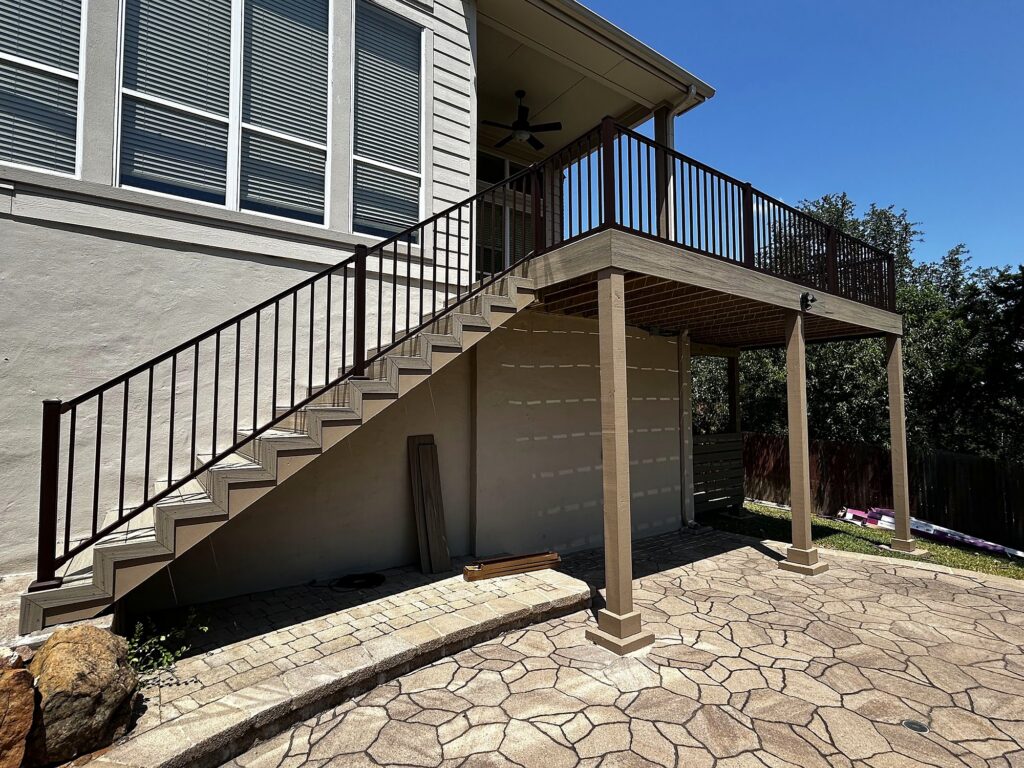
A Simple Homeowner Deck Self-Check
You do not need special tools to spot most early problems. NADRA publishes a free 10-point consumer deck checklist that covers items like corroding fasteners, decaying materials, loose railings and lighting. It is a visual guide, not a substitute for a professional inspection. Here is a quick routine based on the same ideas:
- Start at the house. Look under the deck at the ledger. Check for gaps, staining, rot and how it is fastened.
- Probe the wood. Use a screwdriver on the ledger, joist ends, beams and post bases.
- Inspect the hardware. Look for rust, missing nails in hangers and loose bolts.
- Check the posts and footings. Sight down each post for lean and look for cracked or sunken footings.
- Test every railing. Push firmly outward on posts and the top rail.
- Walk the stairs. Feel for flex, loose treads and a solid handrail.
- Walk the surface. Note soft boards, popped screws, splinters and trip hazards.
- Look at hazards around the deck. Keep grills and fire pits away from combustible surfaces, clear the stairs, make sure stair lighting works, and watch for dead tree limbs overhead.
Spring, before the first big gathering of the season, is a good time to do this every year, and again after a major storm.
When to Call for a Professional Deck Safety Inspection
Some issues are fine to monitor. Others need a pro now. Call for a deck safety inspection if:
- You found any of the structural warning signs above, especially at the ledger, posts or footings.
- The deck is older than 10 to 15 years and has never been looked at closely.
- You are buying or selling a home with a deck.
- You plan to add weight, such as a hot tub, outdoor kitchen or roof structure.
- The deck is elevated or second-story, where a failure has more serious consequences.
- You are planning a resurfacing project and want to know whether the framing underneath is worth keeping.
If a railing is loose or the deck pulls away from the house, keep people off the affected area until it has been checked. Our deck repair team can evaluate the framing, hardware, railings and stairs and explain what is safe, what needs attention and what can wait.
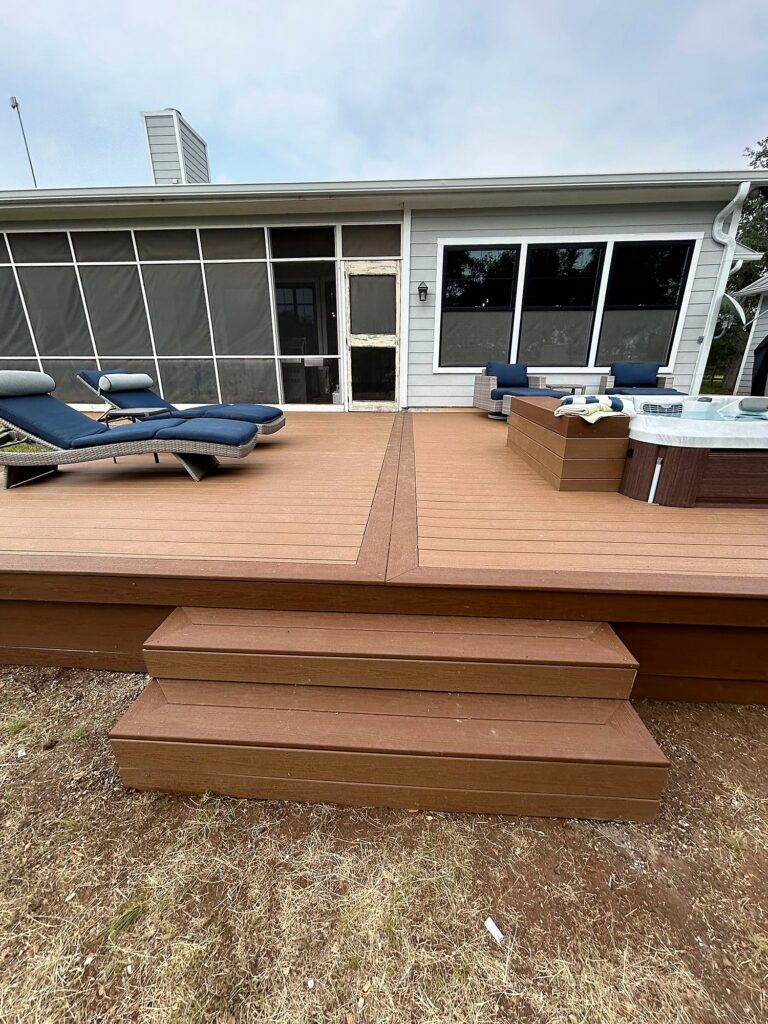
Repair or Replace? How to Decide
A deck safety inspection usually ends in one of three answers: it is sound, it needs targeted repairs, or the structure is near the end of its life. This table shows how common findings tend to fall.
| Finding | Often repairable when | Points toward replacement when |
|---|---|---|
| Rot | Limited to a few boards or one joist end | Spread through the ledger, multiple joists or beams |
| Ledger issues | Fasteners or flashing can be upgraded on sound wood | The ledger or house rim behind it is rotted |
| Railings | Posts are sound and just need new fasteners or blocking | Posts are rotted or the guard design is far below current standards |
| Hardware corrosion | Individual hangers or bolts can be swapped | Corrosion is widespread and the wood around it is damaged |
| Posts and footings | One or two posts can be replaced or re-supported | Many footings have moved or the posts are buried and rotting |
| Stairs | Treads or one stringer need replacing | Stringers, landing and handrail all need rebuilding |
A useful rule of thumb: if the framing is solid, upgrading the surface and railings can give an older deck many more years. If the framing is compromised, putting new boards on top only hides the problem.
When framing is sound but the boards are worn, many Austin homeowners switch to low-maintenance composite with a wood-to-composite deck replacement. If the guards or stairs are the weak points, rebuilding them with new deck railings and properly built deck stairs is often the most important safety upgrade you can make.
Permits for Deck Repairs in Austin
Not every repair needs a permit, but structural work usually does. The City of Austin’s list of work exempt from building permits includes non-structural deck repair limited to existing deck boards, and it specifically excludes guardrails and handrails from that exemption. Replacing joists, beams, posts, the ledger, stairs or railings will often require a permit. Check with the City of Austin Development Services Department, or the building office in your city, before starting work, and ask your contractor who will pull the permit.
Ready to find out if your deck is safe? Green Hill Remodeling is licensed and insured, with more than 15 years of experience building and repairing decks across Austin and the surrounding area. Schedule a free on-site estimate or call (737) 529-4322, and we will walk your deck with you, point out what we find, and give you clear options.
Frequently Asked Questions
Do your own visual check every year, ideally in spring before heavy use, and after any major storm. A professional inspection makes sense every few years for older decks, any time you see structural warning signs, and before big changes like adding a hot tub, roof or outdoor kitchen. Elevated decks deserve closer attention.
Failure at the connection between the deck and the house is widely cited as a leading cause. When a ledger is nailed instead of bolted, or water gets behind it because flashing is missing, the wood and fasteners weaken until the deck can pull away. Loose or rotted railing posts are another common source of injuries.
Only if the framing underneath is sound. New boards on rotted joists, a failing ledger or shifting footings cover up the real problem. Have the framing checked first. If it passes, resurfacing with new wood or composite and upgrading the railings can be a cost-effective way to extend the deck's life.
A general home inspector will usually note obvious deck issues, but the review may be brief and limited to what is visible. For an older, elevated or questionable deck, a contractor who builds and repairs decks can look more closely at the ledger, hardware, footings and railings and explain specific repair options.
An existing deck generally is not required to be rebuilt just because codes changed. When you repair or replace parts like railings or stairs, though, the new work typically must meet the code in effect now. Even when not required, upgrading low or widely spaced railings is a smart safety improvement.