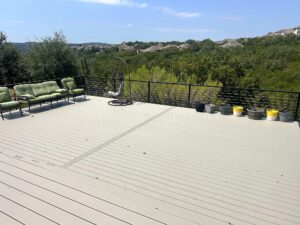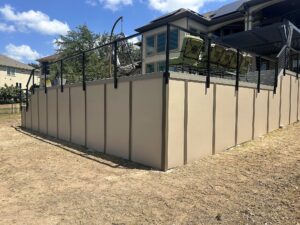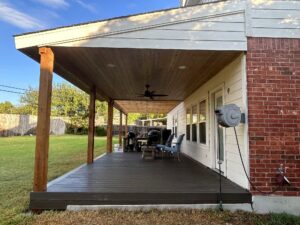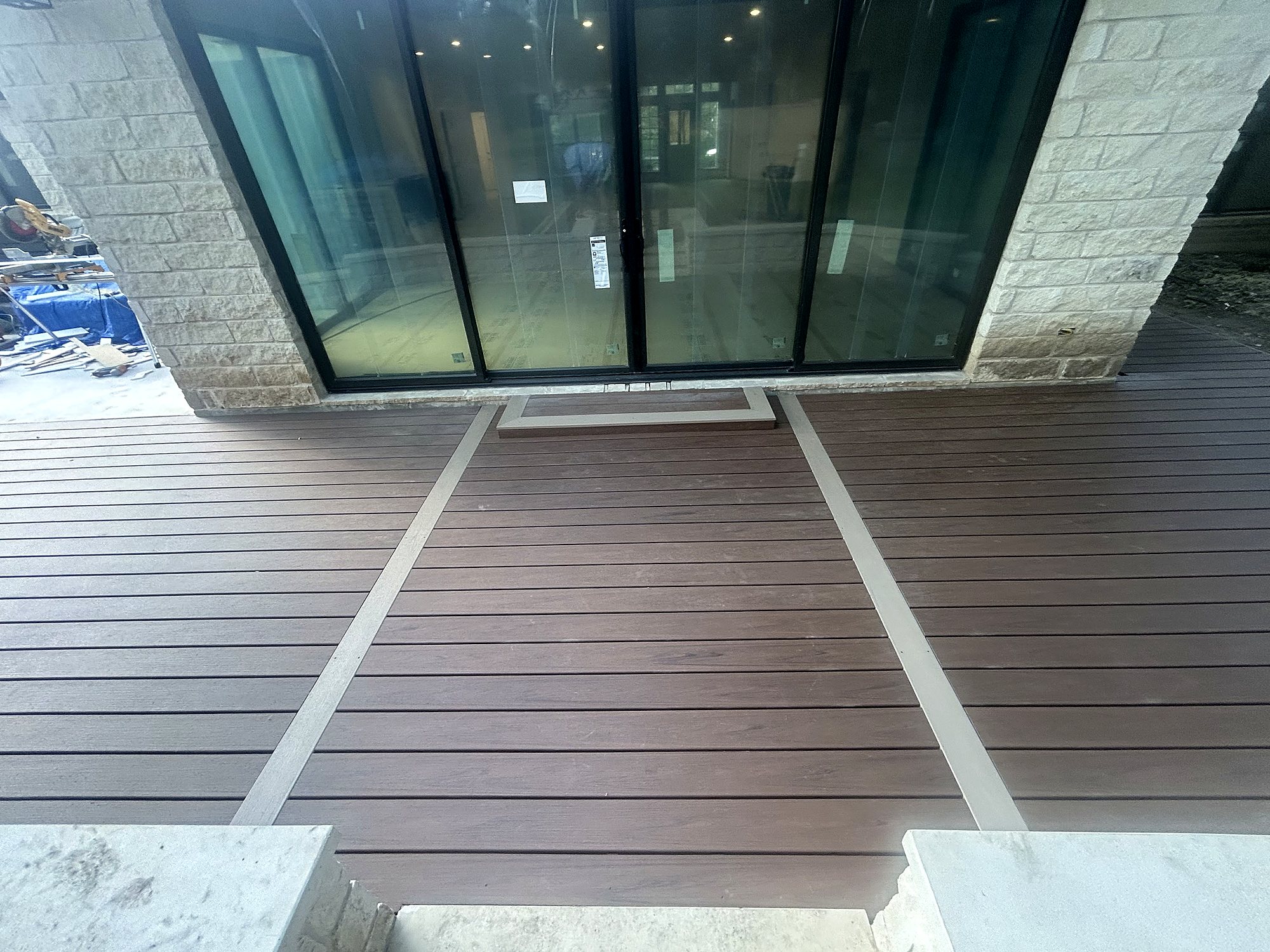
A good deck maintenance checklist for Texas follows the seasons: a deep clean and inspection in spring, UV and heat care in summer, debris removal and storm checks in fall, and light freeze prep in winter. Wood decks need more of that work, including regular staining or sealing, while composite decks mostly need cleaning and an eye on the frame underneath. A few hours each season can add years to your deck.
Why Texas Decks Need a Seasonal Deck Maintenance Checklist
Central Texas is tough on outdoor structures in its own way. Summer sun dries out and grays wood fast. Spring and fall bring heavy downpours that soak framing. Live oaks, pecans, and cedar elms drop debris most of the year. And while hard freezes are rare, they do happen, as February 2021 showed.
Spreading the work across the year keeps each task small and catches problems while they’re still cheap to fix. Use the lists below as your deck maintenance checklist, and adjust for your deck’s material, shade, and age.
Spring: Clean and Inspect
Spring is the most important season on the calendar. In Austin, live oaks shed most of their old leaves and drop their pollen tassels in late winter and spring, so your deck is likely to need a thorough cleanup by April.
Spring cleaning checklist
- Move furniture, planters, and grills, and sweep the whole surface
- Clear live oak leaves, tassels, and pollen from between the boards with a putty knife or gap tool
- Wash with a deck cleaner made for your material and a soft-bristle brush
- Rinse thoroughly so cleaner residue doesn’t dry into a film
- Check under planters and mats for trapped moisture or discoloration
- Clean gutters that drain near or onto the deck
Spring inspection checklist
- Probe boards, joists, and posts with a screwdriver; soft wood that gives easily may be rotting
- Look at the ledger where the deck meets the house for staining, rot, or gaps
- Shake every railing post and handrail; nothing should wobble
- Check stair stringers and treads for cracks, rot, or loose connections
- Look for rusted joist hangers, bolts, and screws
- Reset or replace popped nails and loose screws
- Note any new sagging, bounce, or areas that are out of level
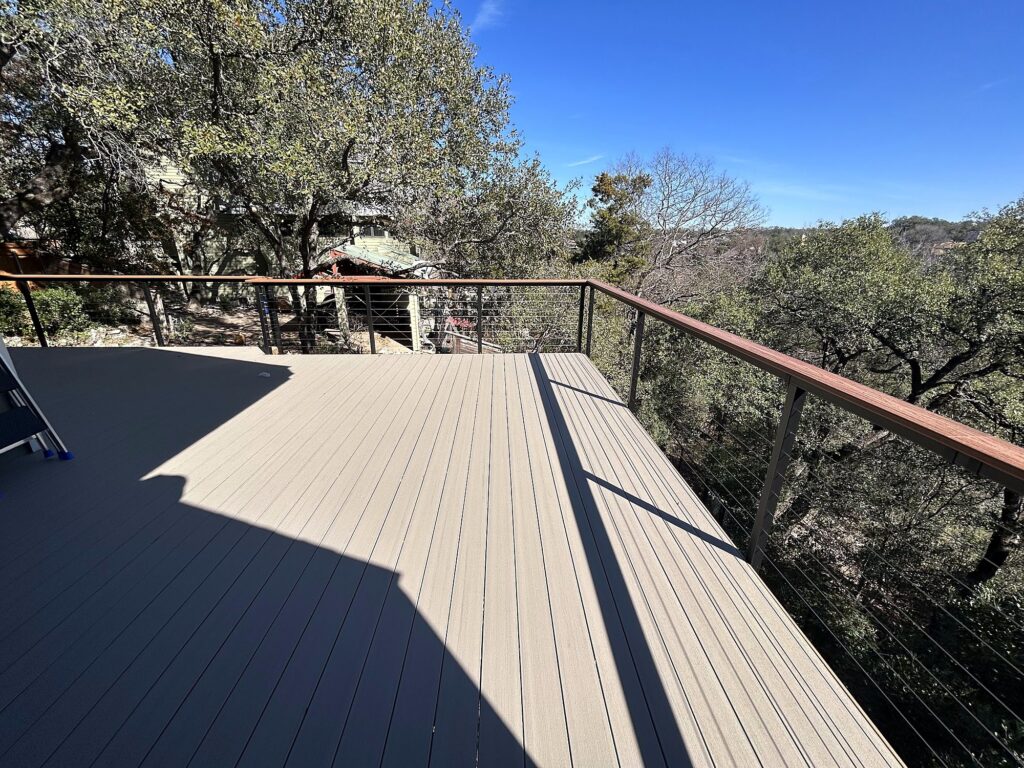
Summer: UV and Heat Care
Summer is when Austin’s sun does its damage. The goal is to protect wood finishes, keep heat-related wear down, and control water from sprinklers and pools.
- Do the water test on wood decks. Sprinkle water on the boards. If it soaks in instead of beading, the finish is worn and it’s time to reseal.
- Stain or seal on a mild day. Follow the product label for temperature limits and dry time, and avoid applying finish in direct midday sun.
- Use a grill mat. Grease and dropped coals can stain or scorch both wood and composite.
- Put planters on feet or risers. This lets water drain and air move underneath.
- Aim sprinklers away from the deck. Daily spray keeps wood wet and can leave hard-water spots on composite.
- Rinse pool decks often. Splash, chlorine, and sunscreen residue build up quickly on pool decks.
- Add shade where you can. A pergola, shade sail, or patio cover cuts UV exposure and keeps the deck usable on hot afternoons.
Dark composite boards can get hot to the touch in direct summer sun. Keep outdoor rugs or shade in high-traffic spots if kids and pets go barefoot.
Fall: Leaves, Acorns, and Pre-Storm Checks
Fall in Central Texas brings acorns from live oaks, leaves and husks from pecans and cedar elms, and some of the year’s heaviest rain events. Wet debris left on a deck holds moisture against the surface and can leave tannin stains.
Fall cleanup checklist
- Sweep or blow off leaves, acorns, and pecan husks every week or two during heavy drop
- Clear debris packed between boards so water can drain
- Remove leaf piles from under the deck and around posts
- If your deck has deck skirting, keep vents and access panels clear so air can move underneath
- Wash off any tannin stains before they set
- Do the semi-annual clean that Trex recommends for composite decks (spring and fall)
Pre-storm checklist
- Trim dead or overhanging limbs above the deck
- Confirm downspouts discharge away from the deck and its footings
- Check that the ground under the deck drains and doesn’t pond
- Secure or store lightweight furniture, umbrellas, and cushions before high wind
- Re-check railing and stair connections
- Look at the ledger flashing after the first big rain for signs of water getting behind it
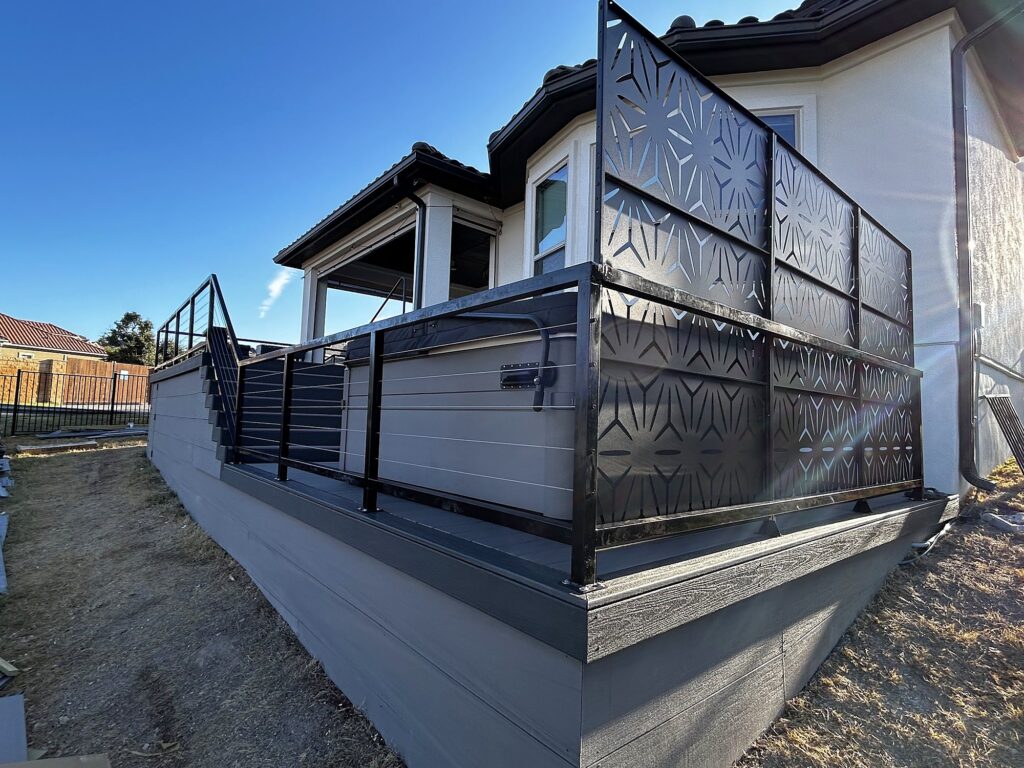
Winter: Freeze Prep
Austin’s first freeze typically arrives around late November or early December, according to National Weather Service climate data, and hard freezes are usually short. Winter maintenance here is light, but a little prep avoids headaches.
- Disconnect and drain hoses; protect outdoor spigots near the deck
- Bring in or cover pots that can crack and stain the boards
- Keep a plastic shovel on hand for rare snow or sleet; Trex says never to use a metal shovel on its decking
- Follow your decking manufacturer’s guidance on de-icers. Trex’s care guide says calcium chloride or rock salt can be used to melt ice on its decking; rinse the residue off once temperatures rise
- On wood decks, check the stain or de-icer label before using salt; sand is a gentler option for traction
- Use the quiet season to schedule repairs or a resurfacing project before spring
Wood vs. Composite: What Changes
The seasons are the same, but the workload is not. Here’s how the main tasks compare.
| Task | Wood deck | Composite deck |
|---|---|---|
| Cleaning | Spring and fall, plus spot cleaning | Spring and fall soap-and-water cleaning |
| Staining or sealing | Reapply when water stops beading | Not needed |
| Sanding | Before refinishing, or to remove splinters | Not recommended |
| Pressure washing | Low pressure, wide tip, with caution | Only within manufacturer limits |
| Board replacement | Cracked, cupped, or rotted boards | Rare; mostly impact damage |
| Frame inspection | Yearly | Yearly (most composite decks sit on wood framing) |
If you’re tired of the stain-and-seal cycle, a composite deck cuts most of the surface maintenance. The frame inspection stays on the list either way.
Cleaning Dos and Don’ts
More decks are damaged by aggressive cleaning than by neglect in a single season. Here’s what manufacturers and experienced builders recommend.
Do
- Start with a broom, a hose, warm soapy water, and a soft-bristle brush
- Use a cleaner made for your material, and test any new product in an out-of-sight spot first
- Clean grease and food spills promptly; Trex says spills must be cleaned within seven days to keep its stain warranty in effect
- Remove hard-water spots on composite with white vinegar, as Trex suggests, then rinse
- Rinse thoroughly and let the deck dry before sealing wood
Don’t
- Don’t use a wire brush or metal scraper on composite
- Don’t exceed your manufacturer’s pressure-washer limits. For Trex Transcend, Enhance, and Select, the Trex care and cleaning guide allows no more than 3,100 psi with a fan tip held no closer than 8 inches, and it does not recommend pressure washers on early-generation Trex decking
- Don’t use a narrow or zero-degree tip on wood; it can gouge the surface and raise the grain
- Don’t use bleach or acid-based products casually on composite; Trex notes they can lighten the surface
- Don’t leave dirty rinse water to dry on the boards
For other composite brands, look up the manufacturer’s own care guide. Using a method it doesn’t allow could affect your warranty.
When to Call a Pro
Routine cleaning is a homeowner job. These are not:
- Soft or rotting joists, beams, or posts
- Any problem at the ledger, or a deck pulling away from the house
- Noticeable bounce, sway, or sagging
- Posts or footings that have shifted after heavy rain or drought
- Loose railings that don’t tighten up with new fasteners
- Rusted or failing connectors
- Widespread board damage where resurfacing may make more sense than repairs
Our deck repair team can inspect the structure and give you clear options, from targeted fixes to new surfaces on a sound frame.
Ready to Get Your Deck in Shape?
Green Hill Remodeling builds, repairs, and resurfaces wood and composite decks across Austin and nearby cities, with a dedicated project manager on every job. Request a free on-site estimate or call (737) 529-4322.
Frequently Asked Questions
Plan on a full cleaning twice a year, in spring and fall, which is also what Trex recommends for its composite decking. Between those, sweep regularly and clear debris from the gaps, especially during live oak leaf drop in spring and acorn and pecan season in fall. Pool decks and shaded decks prone to mildew may need more frequent rinsing.
There's no fixed schedule, because sun exposure and the product you use make a big difference. Many wood decks in full Texas sun need fresh stain or sealer every one to three years. The simplest test is to sprinkle water on the boards: if it soaks in instead of beading up, it's time to clean and reseal.
Sometimes, within the manufacturer's limits. Trex allows a pressure washer of no more than 3,100 psi with a fan tip held at least 8 inches away for Transcend, Enhance, and Select, but does not recommend pressure washing early-generation Trex boards. Other brands set their own rules, so check the care guide before you start.
It depends on the material. Trex's care guide says calcium chloride or rock salt can be used to melt ice on its decking; rinse the residue off once it warms up. On wood decks, salt can be hard on some finishes and metal hardware, so read the stain and de-icer labels first. Sand is a safe choice for traction.
Spring and fall usually work best. Temperatures are milder, which gives stain time to soak in before it dries, and you can plan around dry weather. Clean the deck first and let it dry fully. Avoid applying stain in direct midday summer sun, and always follow the temperature and recoat guidance on the product label.