Wood & Cedar Pergolas in Austin, TX

Home/Services/Pergolas/Wood & Cedar Pergolas

Quick Answer

Green Hill Remodeling builds custom wood pergolas in Austin from cedar and pressure-treated lumber, set over decks, patios and pool areas. We size and space the rafters and purlins for the shade you want, finish the timber with a penetrating stain, and can add shade cloth or polycarbonate panels for more cover. Call (737) 529-4322 for a free on-site estimate.

Timber Pergolas

Wood Pergolas With Real Shade and Careful Craftsmanship

Few backyard structures have the presence of a timber pergola. Heavy posts, shaped rafter tails and a grid of purlins overhead give a deck or pool area structure and a sense of place, and the shadow pattern shifts across the floor all day. Wood also lets us tailor every dimension on site, from post size to beam overhang, so the pergola fits your yard instead of a catalog footprint.

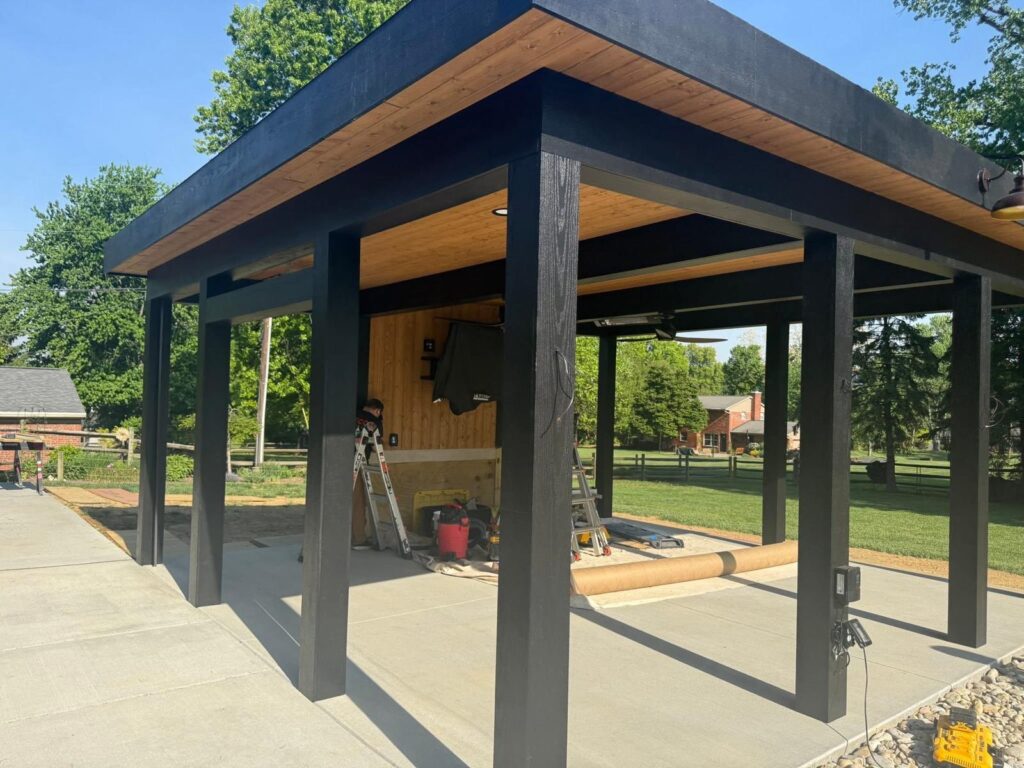
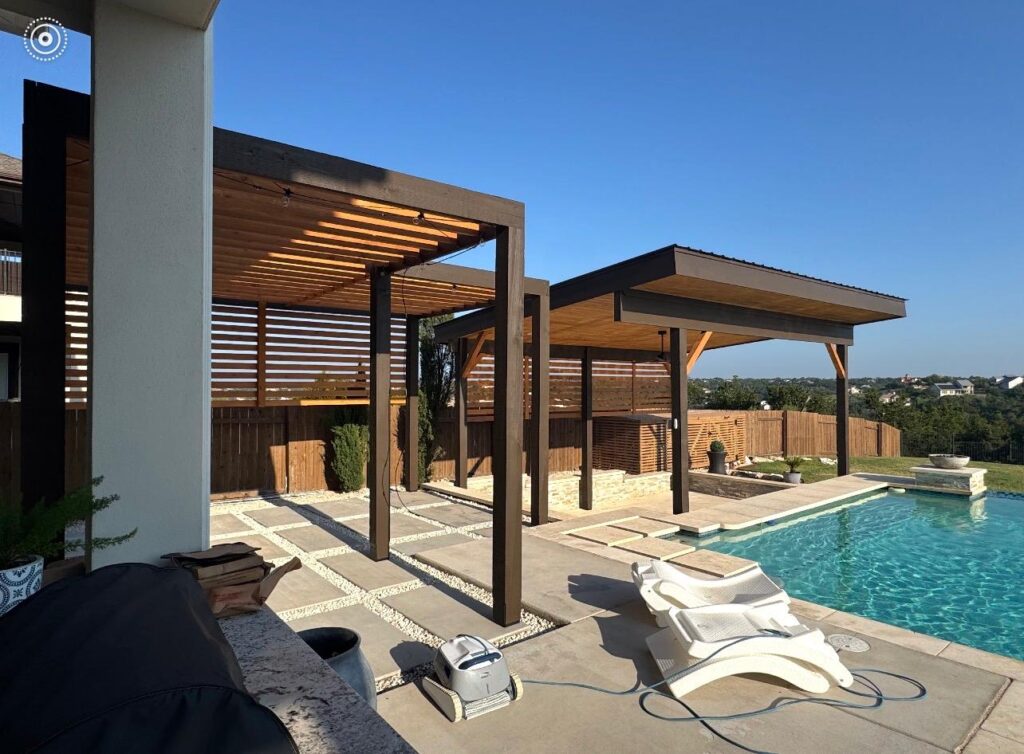
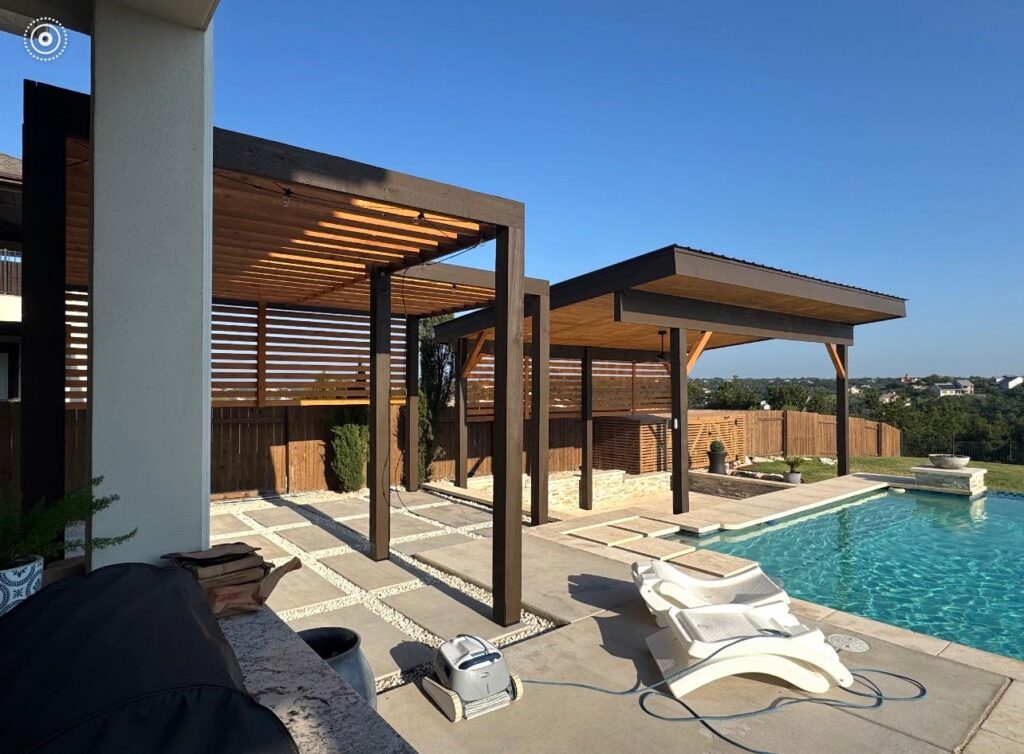
Our recent wood pergolas around Austin include stained timber frames built over decks and freestanding pergolas set beside pools, where they define a shaded lounge zone without blocking the view of the water. We choose the stain color to tie the structure to the decking, fence or house trim, so the whole backyard reads as one design rather than a collection of separate projects.

A good wood pergola comes down to decisions you can't see in a photo: which species to use, how deep the footings go, how beams are notched and bolted, and how the top is spaced for shade. Green Hill Remodeling brings 15+ years of outdoor carpentry to those details, along with a dedicated project manager, a licensed and insured crew, and free design consultations.
15+Years Building
5★Rated Service
100%Licensed & Insured
Patio cover in Austin, TX by Green Hill Remodeling

Why Choose Wood

The Case for a Timber Pergola

Wood is still the most flexible pergola material, and when it's detailed correctly it holds up well to Central Texas weather.

Warm, Natural Character

Real grain and color give a wood pergola a warmth that metal can't match, and it settles into the landscape rather than standing apart from it.

Built to Your Exact Size

Every post, beam and rafter is cut on site, so we can fit odd-shaped decks, follow a pool's edge or step around a live oak.

Shade You Can Tune

Rafter depth, purlin spacing and top-slat direction all change how much shade lands on the floor. We set them to match your yard's sun path.

Easy to Add On

Wood readily accepts shade cloth, polycarbonate panels, fans, string lights, swings and climbing vines without proprietary brackets or special-order parts.

A Species for Every Goal

Cedar resists rot and insects naturally and takes stain beautifully, while pressure-treated pine delivers strength and value. We'll help you weigh both honestly.

Refinishable, Not Disposable

Weathered wood can be cleaned, lightly sanded and restained to look fresh again, which keeps a well-built pergola looking good year after year.

Materials and Add-Ons

Wood Species, Shade Layouts and Coverings

The species you pick and how you top the pergola shape its look, its shade and its upkeep. Here's how the main options compare.

Cedar

Naturally resistant to decay and insects, lighter than pine and less prone to twisting. Cedar takes semi-transparent stain beautifully and is the go-to for exposed beams and visible rafter tails, though it costs more than treated lumber.

Pressure-Treated Pine

Treated southern yellow pine is strong, economical and available in ground-contact ratings where wood meets soil or concrete. It can check and twist as it dries, so we select straight stock and let it dry before staining.

Other Species

Cypress, rough-sawn Douglas fir timbers and tropical hardwoods come up from time to time. Each has trade-offs in availability, weight, stability and UV resistance, and we'll tell you plainly whether one makes sense for your project.

Rafter and Purlin Layout

Rafters are typically spaced 12 to 24 inches apart, with purlins or top slats a few inches apart above them. Closer spacing, deeper boards and a north-south slat direction all block more of Austin's low afternoon sun.

Shade Cloth

UV-stabilized shade cloth stretched across the top adds substantial shade without turning the pergola into a roof. It comes in several densities and colors, lets rain pass through instead of pooling, and can come down for winter sun.

Polycarbonate Panels

Tinted or heat-reflective polycarbonate turns a pergola into a rain-shedding cover that still lets light through. Panels need a slight pitch for drainage and sturdier framing, and covering the top can change permitting requirements.

Recent Green Hill Projects
Outdoor living space built by Green Hill Remodeling in Austin, TX
Custom deck installation in Austin, TX by Green Hill Remodeling

From Lumber to Shade

How We Build Your Wood Pergola

A timber pergola is only as good as its layout, footings and joinery. Here's how we handle each stage.

Design and Sun Mapping

We study where shade is needed and when, then set post locations, beam heights, overhangs and top-slat direction. You see the layout and stain options before anything is ordered.

Lumber and Hardware Selection

We pick straight, well-graded cedar or treated stock, choose fasteners and connectors rated for the lumber's treatment chemistry, and plan cuts so rafter tails and beam ends match.

Footings and Frame

Posts go on concrete footings or reinforced deck framing, then beams are notched or through-bolted and braced. Rafters and purlins are laid out on consistent centers for an even shadow line.

Finish and Add-Ons

Once the wood is dry enough to accept a finish, it gets a penetrating stain and sealer. Shade cloth, polycarbonate, fan boxes or lighting go in, and we review upkeep with you.

Built for Central Texas

Wood That Stands Up to Austin Sun, Storms and Termites

Central Texas is hard on exposed wood. Months of 100°F heat and intense UV dry out the surface, gray the color and open small checks along the grain, while sudden downpours soak end grain and flat tops. That's why we seal cut ends, use hardware rated for treated lumber, cap or bevel beam tops where water would sit, and recommend a penetrating, UV-blocking stain over a film-forming paint that tends to peel in the heat.

Termites and trapped moisture are the other threats. Keeping wood off bare soil, using ground-contact-rated lumber where it meets concrete, and mounting posts on standoff bases all reduce the risk. Footings are sized for the ground underneath, whether that's shifting clay east of MoPac or rocky Hill Country limestone. For upkeep, plan on restaining every two to three years on surfaces that bake in afternoon sun, and somewhat less often where the wood stays shaded.

  • Cut ends sealed to slow checking and moisture uptake
  • Corrosion-resistant fasteners matched to treated lumber
  • Post bases held up off concrete to prevent rot
  • Top slats oriented to block low western sun
  • Penetrating UV-blocking stain instead of peel-prone paint
  • Footings sized for clay or set into limestone

FAQ

Wood & Cedar Pergolas Questions, Answered

Is cedar or pressure-treated wood better for a pergola?

Cedar is lighter, more stable and naturally resistant to rot and insects, and it looks best stained in a natural tone. Pressure-treated pine is stronger for the money and very durable when maintained, but it shrinks and can twist as it dries. If the pergola is a showpiece, cedar usually wins; for a large or budget-minded project, treated pine is a solid choice.

How much shade does a wood pergola give?

An open-top pergola gives partial, moving shade, and how much depends on the layout. Deeper rafters, closer purlins and the right slat direction for your yard all increase coverage. For near-full shade, adding shade cloth or polycarbonate panels on top is the most practical option. We'll explain how different spacing will perform at the times of day you use the space most.

How often does a wood pergola need to be stained?

In Austin, plan on cleaning and restaining every two to three years, especially the top surfaces that take direct sun. Shaded posts usually hold their finish longer. A quick test is to sprinkle water on the wood: if it soaks in rather than beading up, it's time. Regular upkeep is far easier than restoring a badly weathered pergola.

Can I stain pressure-treated wood right away?

Usually not. Pressure-treated lumber often arrives wet from the treatment process and needs to dry before stain will penetrate, which can take a few weeks or more depending on the weather. Staining too soon leads to blotchy color and poor adhesion. Cedar and kiln-dried treated lumber can generally be finished much sooner, and we'll recommend the right timing for your project.

Can you add a roof or shade cloth to a wood pergola?

Yes. Shade cloth is the lighter option: it blocks much of the sun, lets rain through and can be removed. Polycarbonate panels create a rain-shedding cover that still lets light in, but they need a slight pitch, solid framing and possibly a different permit path. Adding either one to an existing pergola depends on whether the frame can carry the extra load.

Will a wood pergola attract termites?

Any wood near soil can attract termites in Central Texas, so the details matter. We keep wood out of direct soil contact, use treated lumber or naturally resistant cedar, and mount posts on metal bases above concrete footings. Those steps, plus keeping mulch and leaf litter pulled back from the posts, greatly reduce the risk. A routine termite inspection of your home is a good time to check the pergola too.

Get Started

Let's Design a Wood Pergola That Fits Your Yard

Book a free on-site estimate and design consultation. We'll talk species, shade and stain colors, and show you how the pergola will sit on your deck or patio. Call (737) 529-4322.

✓ Free on-site estimatesLicensed & insured15+ years in Central Texas(737) 529-4322View all services →