Screened Porch Builders in Austin, TX

Home/Services/Patio Covers/Screened Porches

Quick Answer

A screened porch is a roofed outdoor room enclosed with insect screen, so you can sit outside through mosquito season without bug spray. Green Hill Remodeling builds screened porches in Austin on raised decks or patios, attached or freestanding, with stained wood framing, standard or pet-resistant screen, knee walls and screen doors, or converts your existing covered patio. Call (737) 529-4322.

Screened Porches

An Outdoor Room the Mosquitoes Can't Reach

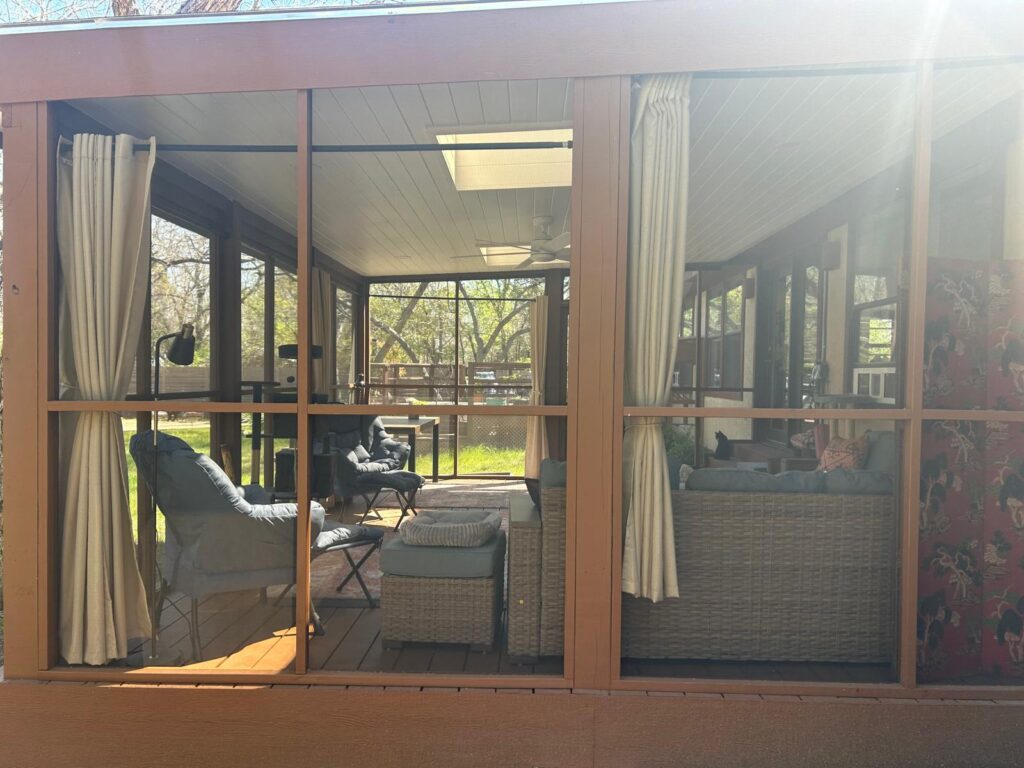
In Central Texas the mosquitoes arrive with the warm weather and stick around well into fall, right when evenings are finally pleasant enough to sit outside. A screened porch solves that without giving up the breeze, the sound of rain or the view of the yard. With a ceiling fan turning overhead, it can easily become the room you use most from spring through late fall.

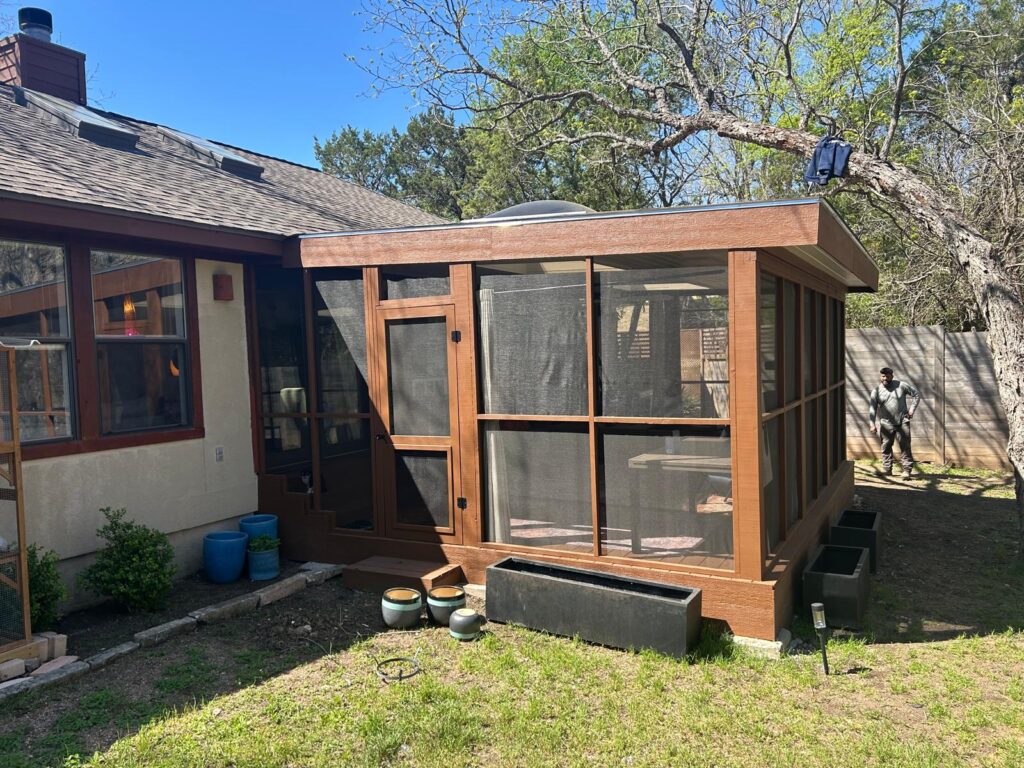
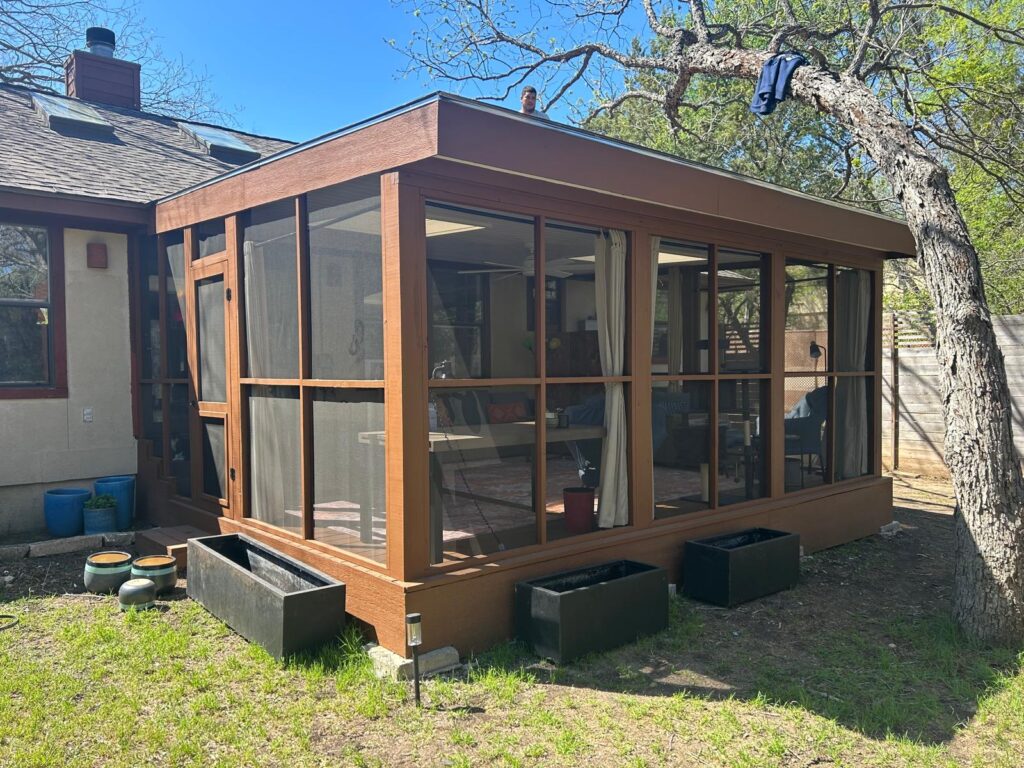
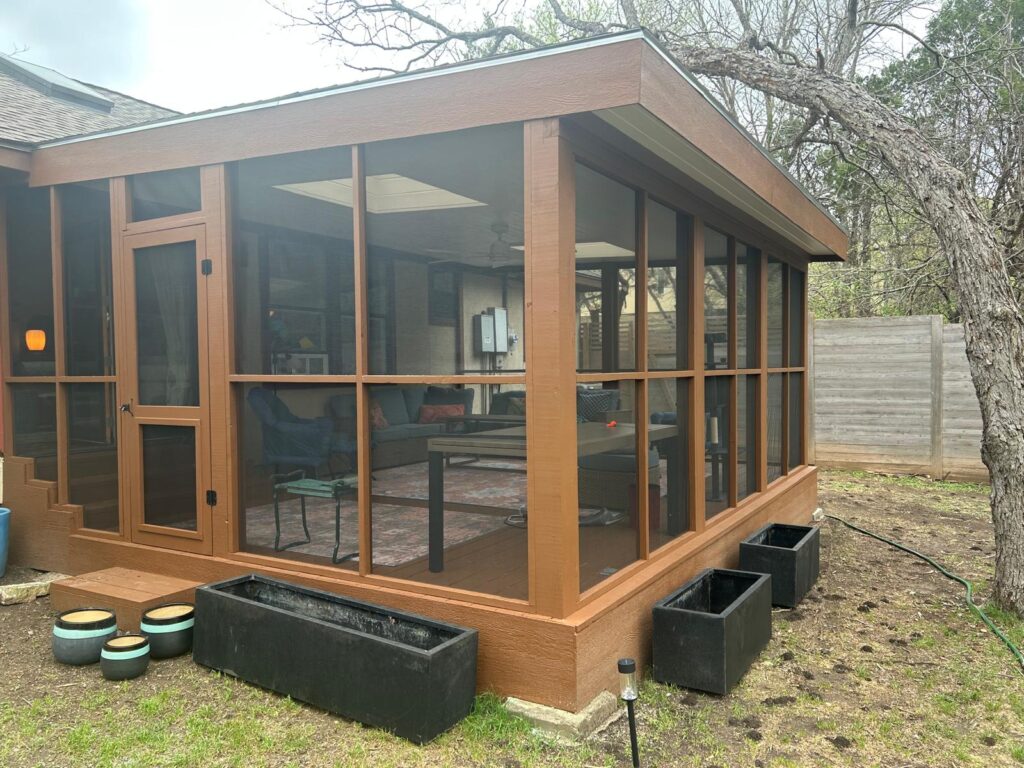
We build screened porches as complete rooms, not screen stapled between posts. Recent projects include attached and freestanding screened rooms framed in stained wood, built on raised decks with full screen doors and proper thresholds. Each one starts with a roof designed like any well-built patio cover, then adds a framed wall system laid out for screen panels, doors and, where it makes sense, a solid knee wall at the base.

The details decide whether a porch stays bug-free. Gaps between deck boards, a door that doesn't close on its own, or screen that sags and pulls loose will let insects in within a season. We plan the floor, framing layout, screen type and doors together, so the finished room is tight and durable, and easy to re-screen years from now if a panel ever gets damaged.
15+Years Building
5★Rated Service
100%Licensed & Insured
Custom outdoor living project in Austin, TX by Green Hill Remodeling

Why Screen It In

What a Properly Built Screened Porch Delivers

A screened porch should feel like part of the house while still letting the outdoors in. Here's what a carefully detailed one gives you.

Evenings Without Mosquitoes

Fine-mesh screen keeps out mosquitoes, flies and wasps, so dinner outside in August doesn't end with citronella candles and itchy ankles.

Breeze Without the Bugs

Screen walls let air move freely, and a ceiling fan overhead adds the steady airflow that makes humid Austin evenings comfortable.

A Front-Row Seat to the Rain

A solid roof and well-sized gutters let you sit out during a summer thunderstorm while the furniture stays mostly dry under cover.

Pet-Friendly Options

Heavy-duty pet screen resists claws and paws, and a knee wall or kick plate protects the lowest panels where dogs press and scratch.

Easy to Re-Screen

Panels set in spline or removable trim mean a torn section can be replaced without rebuilding the frame or disturbing the rest of the porch.

Usable Space Most of the Year

A screened room works as a dining area, reading nook or play space for much of the year, without the complexity of a fully enclosed addition.

Options & Materials

Screened Porch Options and Materials

Screen type, wall height, doors and flooring all affect how the porch looks, how it holds up to pets and kids, and how well it keeps insects out.

Standard Fiberglass Screen

The go-to for most porches. Fiberglass mesh, commonly 18x16, is flexible, won't dent or corrode, keeps out mosquitoes and flies, and offers clear visibility out to the yard.

Pet-Resistant Screen

A heavier vinyl-coated polyester mesh that stands up to claws and paws far better than standard fiberglass. It's slightly less transparent, so many homeowners use it on the lower panels only.

Knee Walls

A solid wall at the base of the screen, often around two to three feet tall, finished in stained wood or siding. Knee walls protect screen from kicks and pets and make the room feel more finished.

Screen Doors

Full-view wood or aluminum screen doors with closers, sturdy hinges and kick plates. We plan the swing, landing and steps so the door closes on its own and seals at the threshold.

Bug-Tight Flooring

Composite or wood decking with insect screen installed beneath the boards, or a solid surface such as a sealed concrete slab. Either way, floor gaps are closed off so bugs can't come up from below.

Attached or Freestanding

Attach the screened room to your home under an extended roofline for easy access from the kitchen, or build it as a freestanding screened pavilion out in the yard or on a raised deck.

Recent Green Hill Projects
Deck and outdoor remodeling project in the Austin, TX area
Backyard deck and outdoor living space in Austin, TX by Green Hill Remodeling
Deck and outdoor remodeling project in the Austin, TX area

Our Process

How We Build Your Screened Porch

Whether we start from bare ground, a raised deck or an existing covered patio, the sequence is planned so the finished room stays bug-tight.

Consultation and Layout

We look at your existing deck, patio or cover, discuss how you'll use the room, and plan door locations, furniture layout, screen type and whether you want knee walls.

Structure and Roof

New or reinforced footings, posts and the roof go in first, built to the adopted building code. On conversions, we confirm the existing cover can accept a framed wall system.

Framing, Floor and Doors

Wall framing is laid out to suit screen panel widths, the floor is sealed against insects, and doors are hung with closers and thresholds that close the bottom gap.

Screening and Final Walkthrough

Screen is stretched and set into spline or trim, stain and finishes are completed, and your project manager walks the porch with you to check every panel and door.

Built for Central Texas

Screened Porches Built for Texas Summers

Central Texas mosquito season typically runs from spring into late fall, and the Asian tiger mosquito, common around Austin, bites during the day, not just at dusk. That makes a screened porch useful for far more hours than most people expect. It also means small gaps matter. We screen under decking or seal the slab edge, close the joints where framing meets the house and roof, and choose a mesh fine enough for the insects on your property.

Heat and safety shape the build as well. Ceiling fans are planned from the start, because moving air does as much for comfort as shade does. On raised decks, remember that screen is not a guard: where the floor is more than 30 inches above grade, the IRC typically requires a guard at least 36 inches tall, so we build a railing or knee wall that meets guard requirements inside the screen line. Stained framing is sealed against UV and moisture to hold up through Texas summers.

  • Insect screen installed beneath decking before the boards go down
  • Code-compliant guards where the floor sits over 30 inches above grade
  • Self-closing screen doors with kick plates and sealed thresholds
  • Framing spaced to suit screen widths and prevent sagging panels
  • Fan-rated blocking set before the ceiling is finished
  • Joints at the house wall and roofline sealed against insects

FAQ

Screened Porches Questions, Answered

Can you screen in my existing covered patio?

Often, yes. If your cover has sound posts and a roof in good condition, we can add a framed wall system, screen panels and a door between the existing posts. We check whether the posts are plumb, whether the slab is level, how the cover meets the house and where gaps could let insects in, then design the conversion around what's already there.

What's the difference between standard and pet-resistant screen?

Standard fiberglass screen is lightweight, economical and offers the clearest view. Pet-resistant screen is a much heavier vinyl-coated polyester designed to resist tearing from claws and paws. It's slightly less see-through, so a common approach is pet screen on the lower panels and standard screen above, often combined with a knee wall for extra protection.

Will a screened porch keep out no-see-ums?

Standard 18x16 mesh keeps out mosquitoes and most flying insects, but very small biting midges can sometimes slip through. If they're a problem on your property, which is more common near creeks and ponds, a finer mesh is available. It slightly reduces airflow and visibility, so we usually recommend it only where it's genuinely needed.

Do I need a knee wall?

Not always, but it helps. A knee wall protects the lowest and most vulnerable screen from kids, pets, furniture and lawn equipment, and it gives the room a more built-in look. On a raised deck, it can also serve as the required guard if it's built to the right height and strength. Some homeowners prefer full-height screen for the view, especially at ground level.

How do you keep bugs from coming up through the deck floor?

Gaps between deck boards are one of the most common ways insects get into a screened porch. On deck-based porches, we install insect screen across the joists before the decking goes down, so the floor still drains and breathes but stays sealed. On concrete slabs, we seal the joint between the wall framing and the concrete instead.

Do screened porches need a permit or HOA approval?

Because a screened porch includes a roof and framed walls, it often requires a building permit, and HOAs in neighborhoods like Steiner Ranch, Circle C and Avery Ranch generally review exterior changes before work starts. We build to the adopted building code and guide you through permitting where it's required, and we can help you put together what your HOA committee typically asks for.

Get Started

Ready for a Bug-Free Outdoor Room?

Schedule a free on-site estimate and design consultation. We'll look at your deck, patio or existing cover and map out a screened porch that fits how you live. Call (737) 529-4322.

✓ Free on-site estimatesLicensed & insured15+ years in Central Texas(737) 529-4322View all services →