Home/Services/Composite Decking/Wood to Composite Replacement
Wood-to-composite deck replacement means removing your aging wood deck entirely, framing included, and rebuilding it with new footings, new joists, composite decking and new railings. It's the right call when the structure is rotted, unsafe or poorly laid out. Green Hill Remodeling handles demo, haul-off and the full rebuild across Austin. Call (737) 529-4322 for a free on-site estimate.
Full Tear-Out and Rebuild
A wood deck in Central Texas lives a hard life. Summer heat bakes it, storms soak it, live oak leaves hold moisture against it, and termites look for any soft spot near the ground. After enough years, the problems stop being cosmetic. Posts rot at grade, joists sag, ledger connections loosen and railings wobble. At that point new boards alone won't fix anything, and the smartest investment is a deck built from the footings up.
Full replacement means we remove everything, haul it off, and rebuild with new footings, new pressure-treated framing sized and spaced for composite, and a composite surface with matching railings and stairs. Because nothing from the old structure carries over, you're free to change the footprint, height, shape and stair location. Many homeowners treat replacement as the moment to finally get the deck they wanted in the first place, instead of the one a previous owner built.
With 15+ years of deck construction behind us in Austin, Round Rock, Georgetown, Kyle and the Hill Country, we know what a failing deck looks like and what a lasting one requires. A dedicated project manager runs your job from demo day to final walk-through, and our licensed, insured crews build to the adopted building code. Free on-site estimates and design consultations come with every project, and financing is available.
Why Replace With Composite
Swapping wood for composite isn't just a material change. It resets the clock on the entire structure, from footings to handrails.
New footings, posts, beams and joists mean no hidden rot, no mystery repairs and a frame built specifically to support composite decking.
Wood needs regular sanding, staining and sealing to survive Texas weather. Composite needs periodic washing, which frees up weekends once spent on upkeep.
New guards, handrails and stairs are built to current IRC requirements for height, opening size and stair geometry, replacing wobbly rails and uneven steps.
Starting over lets you widen the deck, add a second level, relocate the stairs or reshape the footprint to fit how you actually use the yard.
Capped composite resists the fading, checking and splintering that intense Central Texas sun inflicts on bare or stained wood decking year after year.
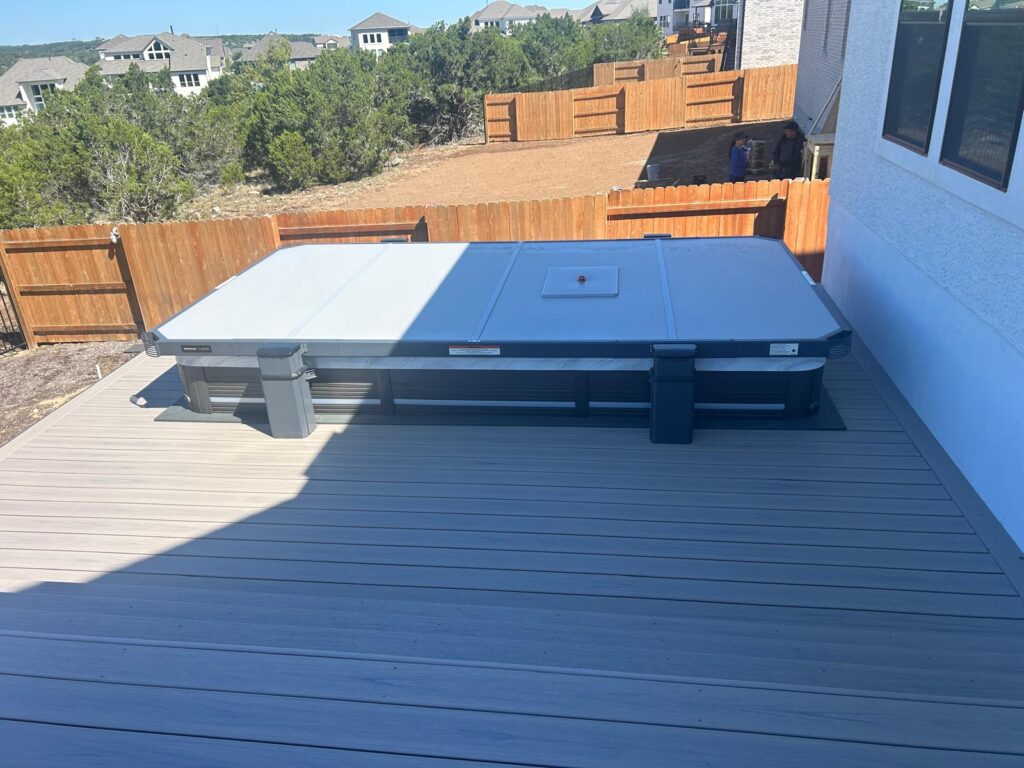
Composite boards won't rot or splinter and resist termites, which matters for kids, pets and bare feet heading to the pool or hot tub.
Replacement Options
Each replacement is designed around your yard, your house and how you live outside. These are the main decisions we make together.
We remove decking, railings, stairs, framing and old footings where needed, protect landscaping and siding during tear-out, and haul all debris away so the site is clean before the new build starts.
Footings are sized for your soil, whether that's shifting clay or Hill Country limestone. Framing is pressure-treated lumber spaced for composite, finished with joist tape and a properly flashed ledger.
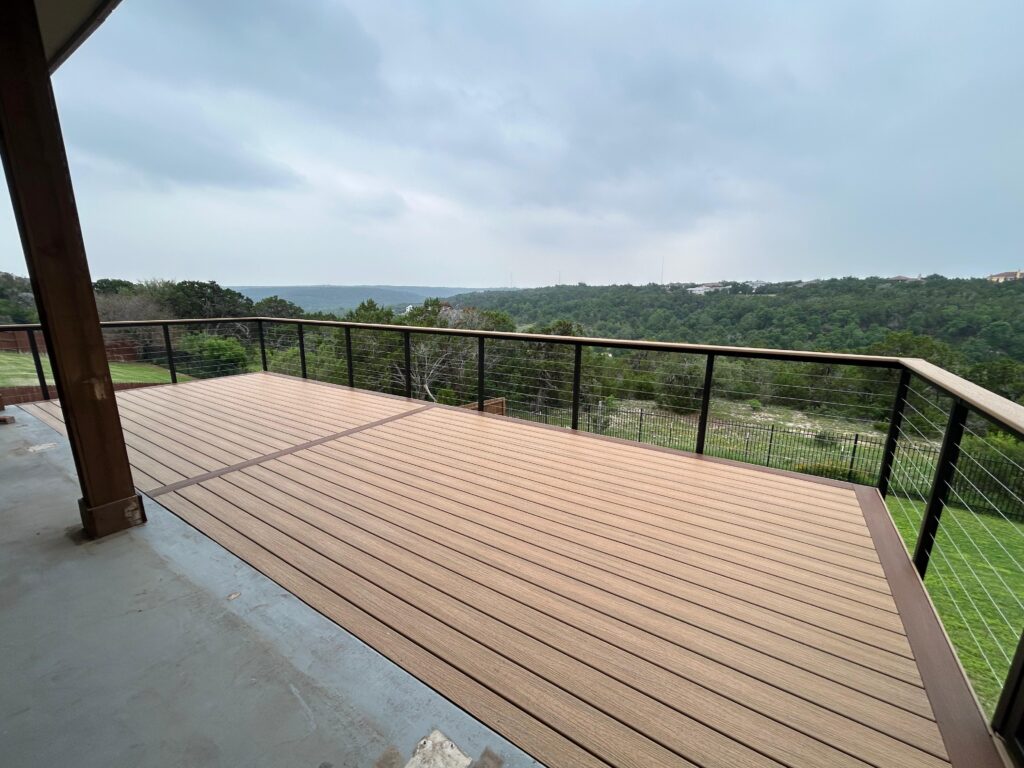
Choose from Trex Transcend, Enhance and Select, among others. Lines differ in color depth, grain texture and cap performance, and we bring samples so you can see them in your own backyard light.
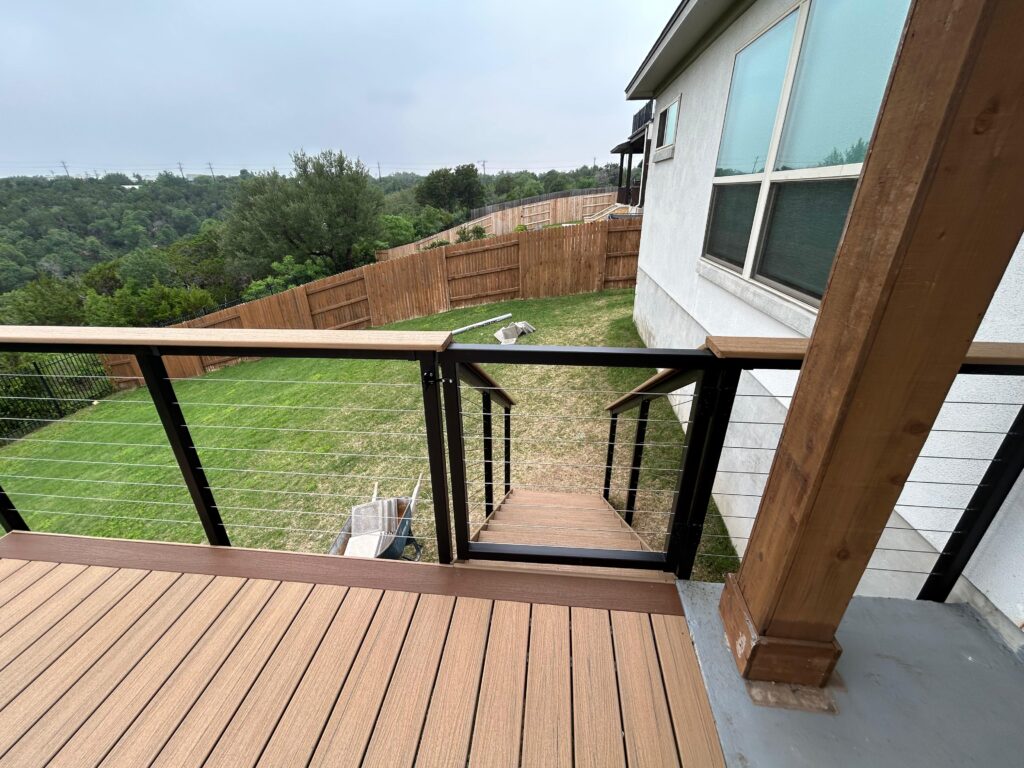
Composite railings to match the boards, powder-coated aluminum for a slim profile, or cable rail to keep the view open. Every guard is built to the height and opening rules of the IRC.
Multi-level decks, wider stairs with landings, built-in benches, picture-frame borders, angled corners and room planned for a future shade structure. Replacement is the easiest moment to change the deck's shape.
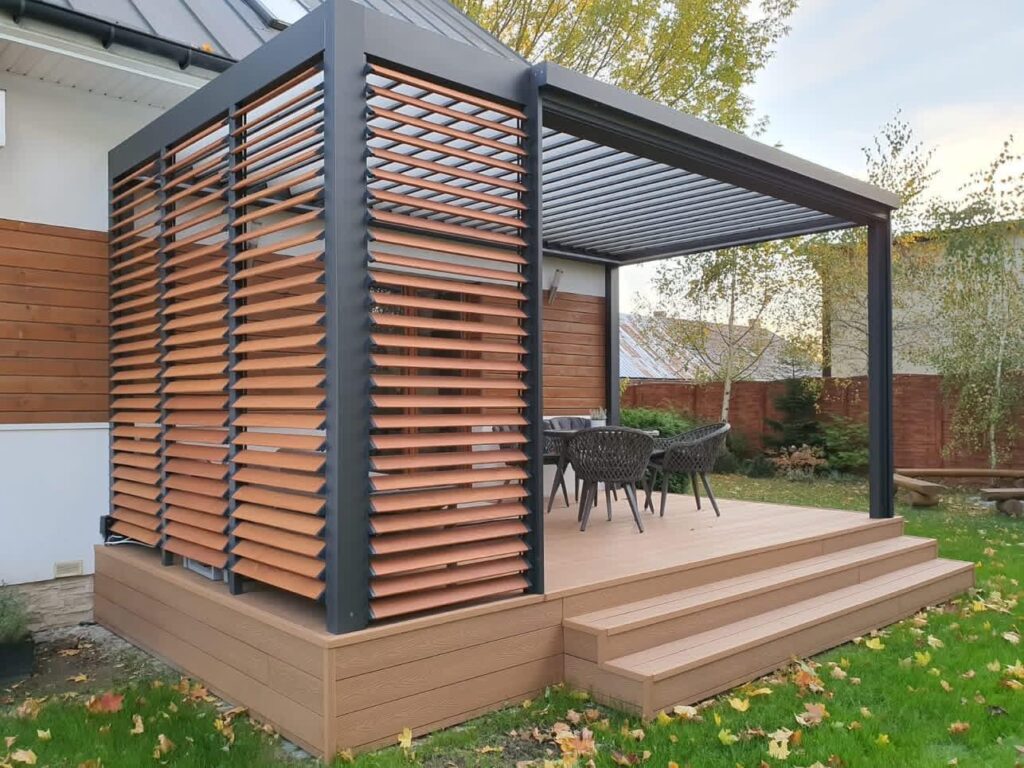
Pair the new deck with a pergola, louvered aluminum pergola or patio cover. Planning it during replacement lets us size footings and framing for the added load from the start.
Recent Green Hill Projects
Our Process
A replacement project has more moving parts than a resurfacing job. Here's how we keep it organized from start to finish.
We evaluate the existing deck, soil, slope and house attachment, then design the new layout with you, including size, levels, stairs, railings and composite colors.
We build to the adopted building code and guide you through permitting where it's required, plus HOA submittals in neighborhoods like Steiner Ranch, then set a schedule with your project manager.
The old deck comes out and is hauled off. New footings, posts, beams and joists go in, with joist tape on every joist and a flashed, properly fastened ledger.
Decking, borders, stairs and railings are installed to manufacturer specifications. Your project manager walks the finished deck with you and covers care basics before closing out the job.
Built for Central Texas
Wood decks around Austin tend to fail for the same handful of reasons: posts buried in soil or concrete that trapped water and rotted at grade, footings that moved with expansive clay, ledgers nailed to the house with no flashing, and joists softened by years of moisture under shade trees. Termite damage usually shows up closest to the ground. Recognizing those patterns tells us exactly what to do differently when we build the new structure.
On replacement builds, we size footings for local soil and slope, set posts on proper bases above grade, fasten ledgers with code-approved bolts or structural screws behind flashing, and tape every joist top. Framing is spaced for composite from day one, so boards stay flat through August heat. The capped composite surface then handles UV, hail-season storms and leaf litter far better than wood, giving you a deck that ages slowly rather than quickly.
FAQ
Warning signs include soft or spongy spots, posts rotting at the ground, sagging joists, a ledger pulling away from the house, rusted hardware, wobbly railings and termite damage. If more than a few framing members are compromised, or the deck has moved out of level, full replacement is usually more sensible than patching. We'll inspect and give you a straight recommendation.
A wood deck in Central Texas generally needs cleaning plus re-staining or sealing every couple of years, along with periodic board replacement and fastener resets as it ages. Composite typically needs only washing with soap and water a few times a year to remove pollen, leaves and dirt. Over a decade or more, that difference adds up to many weekends and refinishing bills.
Composite usually costs more than pressure-treated wood to install, but it removes most recurring staining, sealing and board-replacement expenses. Over the life of the deck, many homeowners find the total cost gap narrows considerably. Boards come with a manufacturer-backed warranty, and financing is available if you'd like to spread out the investment.
Demolition and haul-off are part of the project. Decking, railings, framing and hardware are removed and taken away, and we protect nearby siding, windows and landscaping during tear-out. Where old footings can't be reused for the new layout, we remove or abandon them properly so they don't interfere with the new structure.
Yes, and it's the best time to do it. Since the structure is rebuilt from scratch, we can enlarge the deck, add levels, move stairs, add a landing or plan for a future pergola. Changes may affect setbacks, HOA approval or permitting, and we'll walk you through those considerations during design.
Any decking gets warm in direct summer sun, and composite can run hotter than wood. Lighter colors generally stay cooler than dark ones, and some product lines are designed specifically to reduce heat buildup. Shade from a pergola, patio cover or mature trees makes a big difference, and we'll bring samples so you can compare before you commit.
Get Started
Get a free on-site estimate and design consultation for your new composite deck. Call (737) 529-4322 or request a visit, and we'll start by assessing your existing structure.
Walk your yard with a project manager, get design ideas and a clear quote. No obligation.
Book my estimate →