Home/Services/Custom Deck Building/Pool & Hot Tub Decks
Green Hill Remodeling designs and builds pool and hot tub decks in Austin with surfaces chosen for bare feet and wet traffic, stainless hardware that stands up to chlorine, open drainage and airflow beneath the boards, and framing sized for the weight of a filled spa. Call (737) 529-4322 to book a free on-site estimate.
Pool & Hot Tub Decks
A deck beside a pool or wrapped around a hot tub takes more abuse than any other outdoor surface at your home. It gets wet several times a day, bakes in full sun, catches splashed chlorine or salt water, and carries people who are barefoot and often in a hurry. Designing for that reality is what separates a pool deck that feels great from one that turns into a summer hazard.
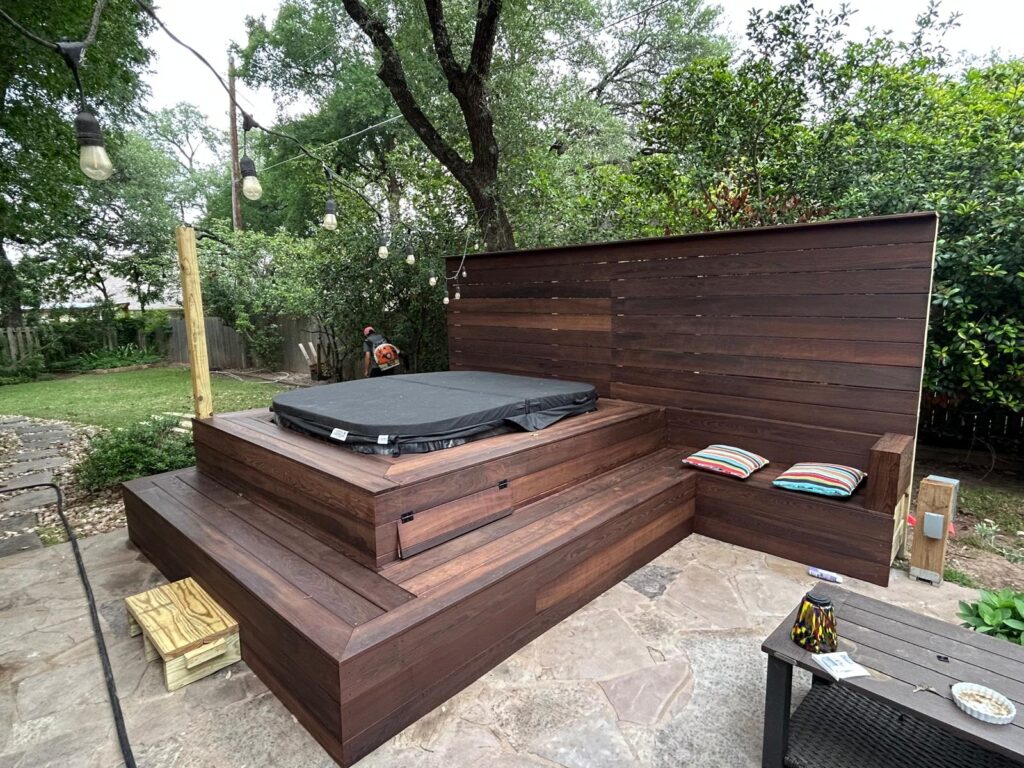
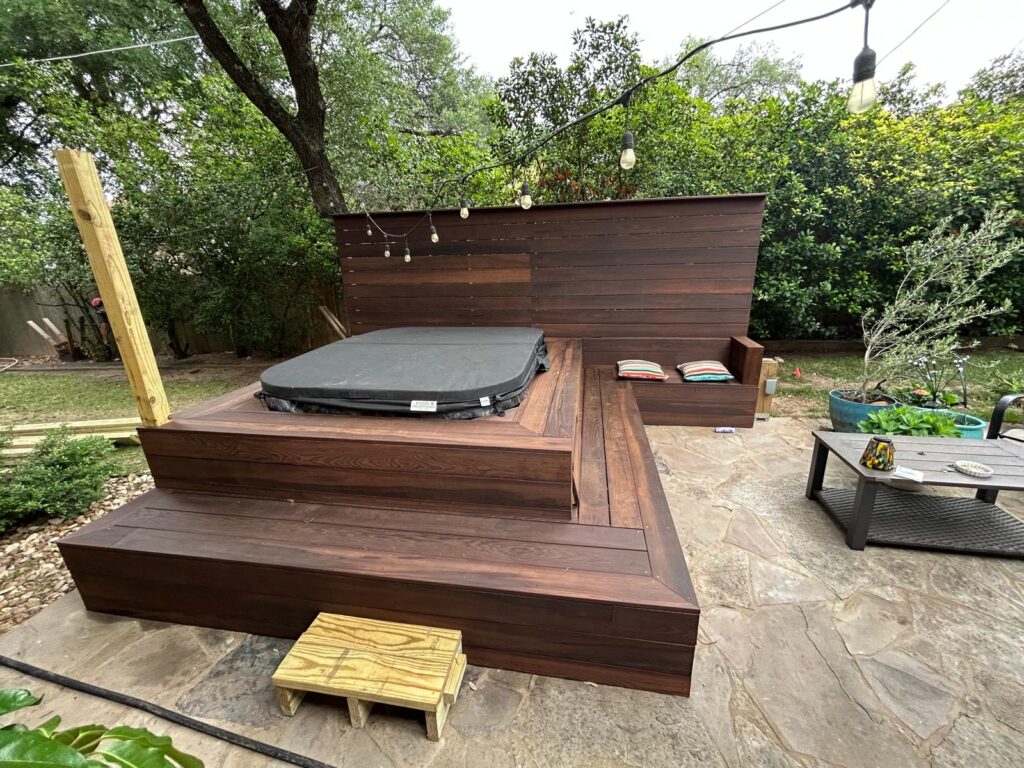
Our work includes wood decks built alongside in-ground pools and raised hot-tub surrounds with built-in steps and a privacy wall to screen the spa from neighbors. Each one started with the same questions: How hot will the surface get by late afternoon? Where does the water go? How heavy is the spa once it's full of water and people, and what does the framing below need to carry it?
Answering those questions early keeps the project on track and avoids surprises at inspection. A dedicated project manager coordinates access, equipment locations and clearances with your pool or spa company, and with your electrician on anything that needs power or bonding. You get one point of contact and a deck that works with your pool or spa instead of fighting it.
Designed for Wet, Hot Use
Pool and spa decks need a different checklist than a standard backyard deck. These are the priorities we design around.
We steer you toward lighter colors and materials that stay more comfortable in direct sun, and plan shade where afternoon exposure is unavoidable.
Board gaps, framing layout and the grade below are planned so splash and rain water leave the surface quickly instead of pooling.
Textured composite and well-maintained wood give better grip on wet boards, and we avoid glossy finishes that turn slick next to the water.
Stainless steel fasteners and connectors resist the corrosion that chlorine, saltwater systems and constant moisture cause in ordinary coated hardware.
Hot tub zones get dedicated structural support, because a filled spa concentrates far more weight than a typical deck is designed to carry.
Privacy walls, slatted screens and smart layout choices block sightlines from neighbors so you can relax in the spa without feeling on display.
Pool & Spa Deck Options
Every yard and every pool is different. These are the configurations and materials we build most often for Austin homeowners.
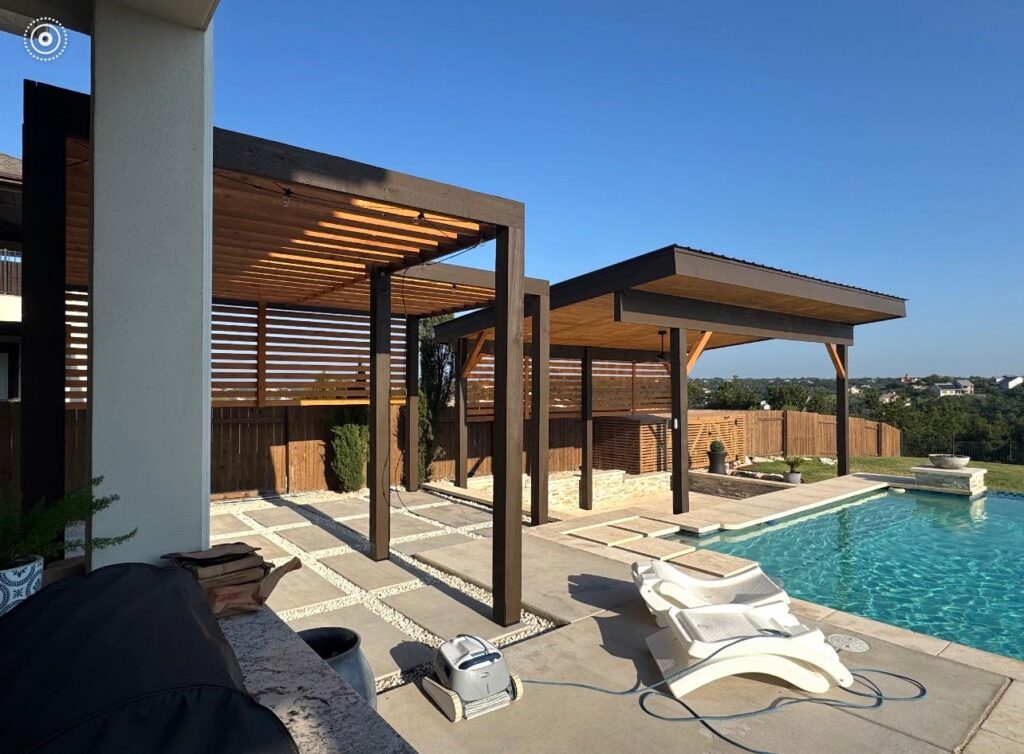
A wood deck set beside an in-ground pool for lounging and shade. We pair pressure-treated framing with treated pine or cedar surfaces, stainless hardware, and a sealing routine that accounts for daily splash and chlorine.
Capped composite lines such as Trex Transcend, Enhance and Select resist moisture and won't splinter. Lighter colors stay noticeably cooler in the sun, and textured grain patterns help with footing when the boards are wet.
The spa sits on its own supported base while the deck rises around it, so you step down into the water instead of climbing over the side. Steps, benches and a ledge for towels can be built in.
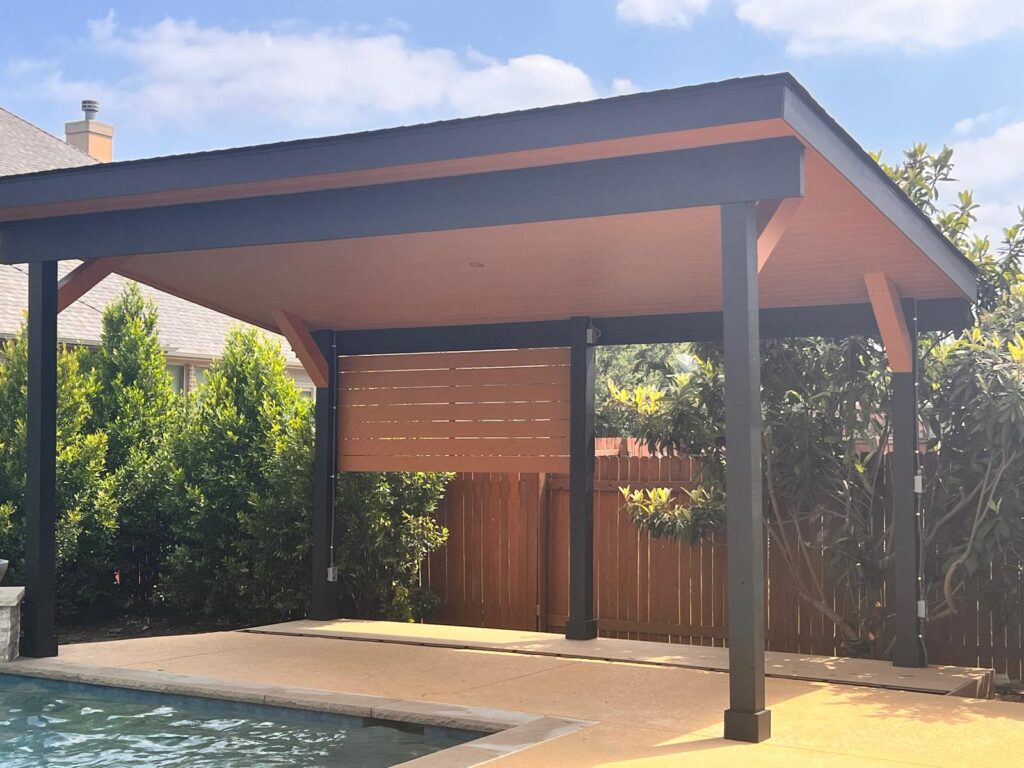
Slatted wood or composite walls on one or more sides of a spa or pool deck add privacy, cut wind and create a backdrop for lighting, while still letting air move through.
A pergola, louvered aluminum pergola or patio cover over part of the deck gives you a cooler place to sit between swims and shields the surface from the harshest afternoon sun.
Where a pool or spa deck sits more than 30 in. above grade, guards are required per the IRC. We build them in metal, cable, wood or composite, with steps sized to typical code dimensions.
Recent Green Hill Projects
Our Process
Water, weight and heat shape every step. This is how we take a pool or hot tub deck from first conversation to finished surface.
We look at the pool edge, equipment location, drainage paths, sun angles and any pool barrier fencing, then talk through how you'll actually use the space.
For a hot tub, we confirm its filled weight from the manufacturer's specifications and size footings, beams and joists to carry it, built to the adopted code.
Framing, decking and stainless hardware go in while we coordinate access, clearances and utilities with your pool contractor, spa dealer and electrician as needed.
Before handoff, we confirm water runs off the surface, steps feel solid when wet, and you know how to clean and care for the deck around chlorine.
Built for Central Texas
A pool deck in Austin may see 100°F afternoons for weeks at a time, and surface temperatures on dark boards can climb far higher than the air. That's why color and material choice matter more poolside than anywhere else. Lighter composite tones, natural wood and partial shade from a pergola or patio cover all make a real difference to bare feet. Comparing samples in direct sun before you choose is worth the few minutes it takes.
Moisture is the other half of the equation. Constant splash, sudden downpours and humid air trapped under a deck close to water can rot wood framing and degrade fasteners when air can't circulate. We leave room for ventilation beneath the boards, keep skirting open enough to breathe, and use stainless hardware in splash zones. We also keep the deck from creating a climbable route over any required pool barrier, and flag metal railings near the water so your electrician can address bonding.
FAQ
Usually not without changes. A typical residential deck is designed per the IRC for a 40-pound-per-square-foot live load, while a filled hot tub with people in it often exceeds 100 pounds per square foot. We review your framing, footings and the spa's specifications, then recommend added beams, posts and footings, or setting the tub on its own base with the deck built around it.
Color matters more than almost anything else. Lighter boards reflect more sunlight, so light-toned composite and natural wood typically feel more comfortable than dark composite in full sun. Some composite lines are marketed with heat-reducing technology, which helps. Adding shade from a pergola or patio cover over part of the deck is the most reliable way to keep a cool spot.
Both can work. Composite resists moisture, won't splinter and never needs staining, which makes it popular around water. Wood often stays cooler, costs less up front and is easier to repair, but frequent splashing means it needs consistent sealing. We'll walk you through how each option fits your pool, your sun exposure and the amount of upkeep you want.
We start with boards that have a textured surface and avoid glossy coatings that become slick when wet. Correct board gaps help water drain instead of sitting on the surface. On wood decks, regular cleaning matters too, since algae and mildew in shaded, damp corners are a common cause of slippery boards. A gentle wash each season goes a long way.
Over time they can, mainly through the hardware. Chlorinated and salt water speed up corrosion in ordinary coated screws and connectors, which weakens connections and leaves rust stains on the boards. We use stainless steel fasteners and connectors in splash zones. Rinsing the deck with fresh water now and then and keeping wood sealed also reduces chemical wear on the surface.
Yes. We have built raised hot-tub surround decks with steps and a privacy wall, and a wall is a natural fit for any spa deck. It can be solid or slatted in wood or composite, sized to block specific sightlines while still letting air flow. If you live in an HOA community, plan on submitting the design for their review before construction.
Get Started
Book a free on-site estimate. We'll look at your pool or spa, check sun and drainage, and design a deck that's comfortable, safe and built to carry the load.
Walk your yard with a project manager, get design ideas and a clear quote. No obligation.
Book my estimate →