Home/Services/Deck Railings/Cable Railing
Green Hill Remodeling designs and installs stainless steel cable railings on new and existing decks across Austin and the Hill Country. We use marine-grade 316 cable, plan posts and spacing so tensioned cables stay within the 4-in. sphere rule the IRC typically requires, and pair them with wood, composite or metal top rails. Call (737) 529-4322 for a free on-site estimate.
Cable Railing in Austin
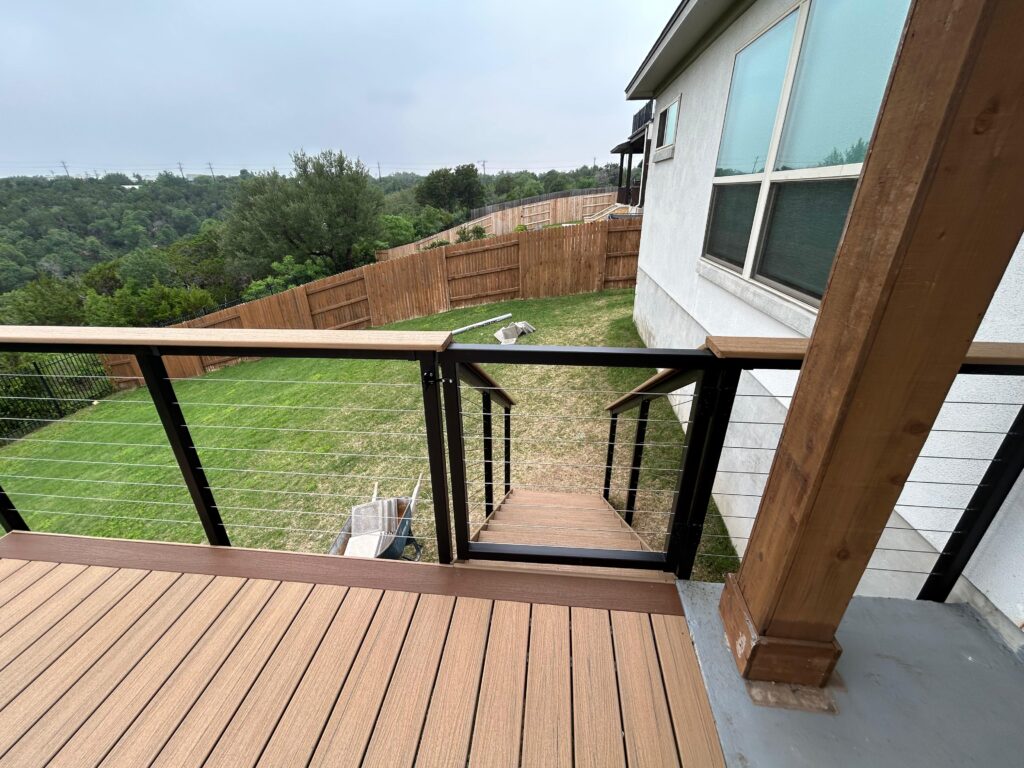
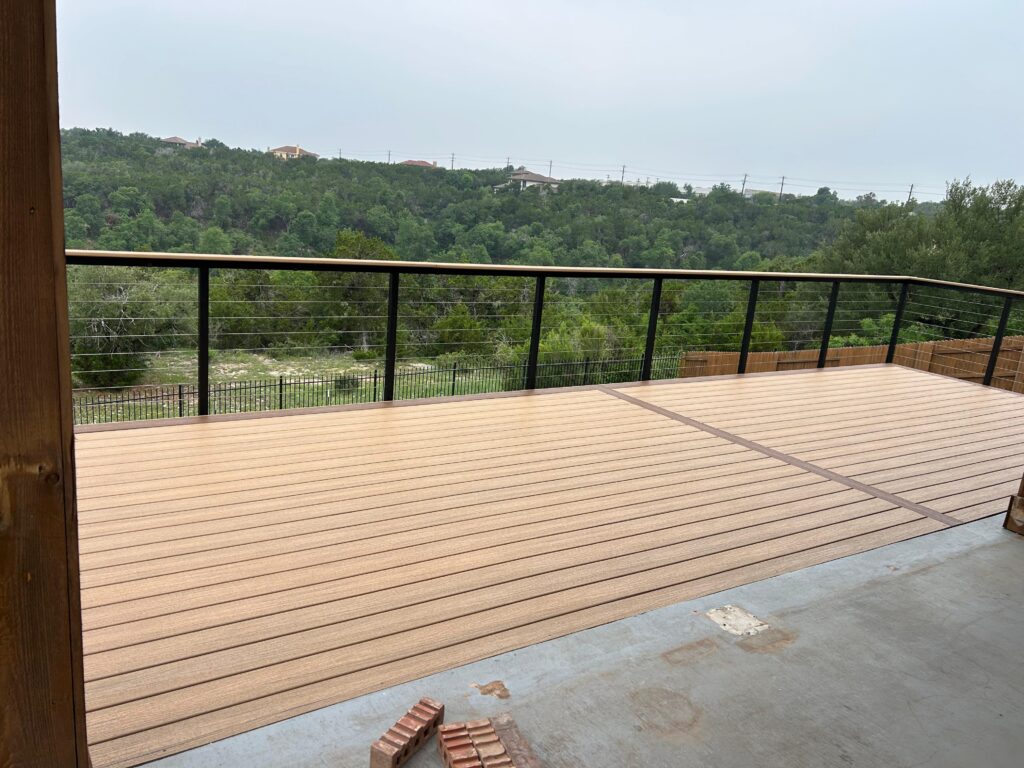
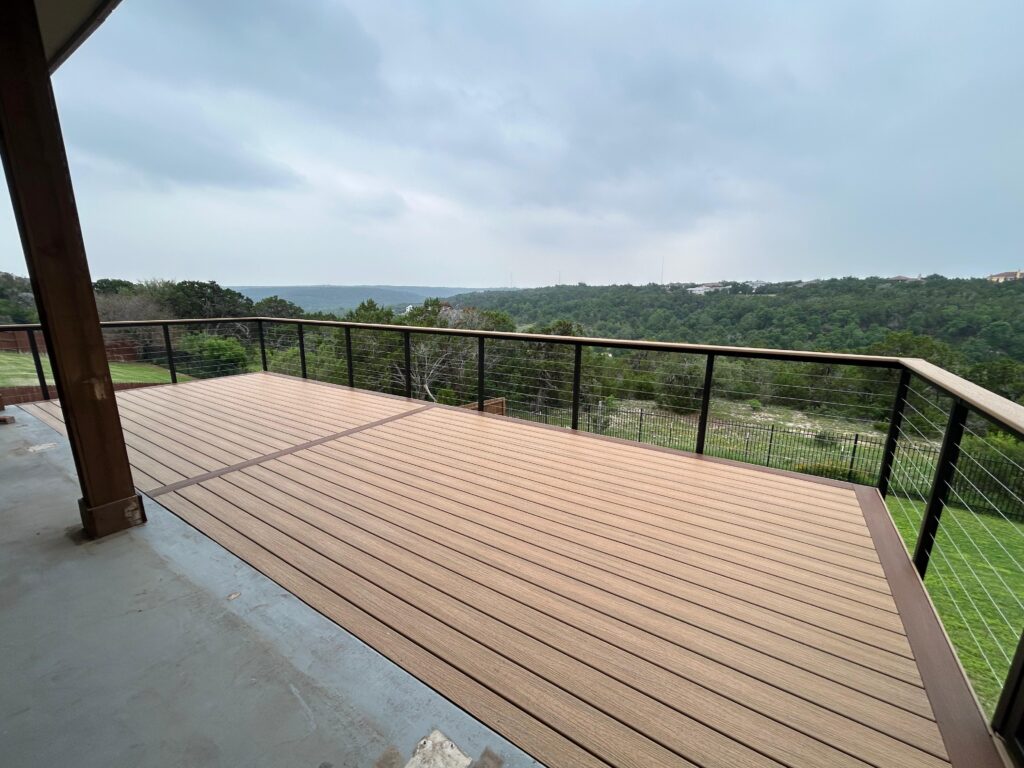
Cable railing exists for one reason: so the railing disappears and the view doesn't. On a raised composite deck facing the hills west of Austin, a run of thin horizontal cables between black posts lets you see the tree line from a chair, not just from standing at the edge. Several of our recent projects look exactly like that, with charcoal composite boards, slim black posts and taut stainless cable framing a Hill Country view that pickets would have chopped into strips.
The look is simple; the engineering behind it isn't. Every cable pulls on its end posts with real force, and a dozen cables add up fast. If the posts flex or the framing behind them is weak, the cables loosen, sag and open gaps wider than code allows. That's why we treat a cable railing as a structural system: post layout, blocking, hardware and tension get planned together before a single hole is drilled.
Green Hill has spent 15+ years building decks and railings around Central Texas, and every cable job gets a dedicated project manager from layout to final tension check. We build to the adopted building code and guide you through permitting where it's required, plus any HOA review in neighborhoods like Steiner Ranch or Lakeway. You get a railing that looks clean on day one and still passes the sphere test years later.
Why Cable
Cable is the most open guard you can put on a deck, and done right it's also one of the most durable.
Thin stainless cables leave far more open sightline than pickets or balusters, so lake, hill and backyard views read clearly even from a seated position.
We default to 316 stainless cable and fittings, which resist corrosion and brown tea staining better than 304 in humid, stormy Central Texas weather.
Cable spacing, post layout and tension are planned together so a 4-in. sphere can't pass between cables when pushed, as the IRC typically requires.
Stainless cable and powder-coated metal posts don't warp, split or fade through 100-degree summers and intense UV, so the railing stays straight and crisp.
No staining or painting. An occasional rinse to clear pollen and live oak debris, plus a periodic tension check, keeps the system looking sharp.
Cable runs work on composite, cedar or pressure-treated decks, with top rails in matching wood, composite or metal to tie the whole design together.
Cable Railing Options
Every cable railing is a combination of a few key choices. Here's how we help you make each one.
Type 316 contains molybdenum, which gives it noticeably better corrosion resistance than 304. For exposed decks, pool areas and anywhere chlorine, sprinklers or fertilizer are nearby, 316 is the grade we recommend. 304 shows surface staining sooner outdoors.
Most residential systems use 1/8-in. or 3/16-in. 1x19 stainless cable, typically run about 3 in. on center. Stiffer cable deflects less, and tighter spacing adds margin against the 4-in. sphere test. We follow the system manufacturer's spacing exactly.
Black powder-coated aluminum or steel posts give the slim look most clients want, while wood posts with metal hardware suit rustic builds. End and corner posts carry the cable load; intermediate posts or spacers keep spans within the manufacturer's maximum.
A wide composite or cedar cap rail gives you a place to set a drink and adds stiffness. Metal top rails match the posts for a minimal profile. Either way, the top rail ties the posts together and helps hold tension.
Swaged threaded terminals, push-on lock fittings and hidden tensioners each trade off looks against adjustability. We choose hardware that lets you re-tension cables later without cutting or replacing a run.
Cable can follow a stair slope using pivoting fittings at the posts. Angled runs need careful hardware selection so cables stay tight and evenly spaced from the top landing down to the bottom tread.
Recent Green Hill Projects

How We Install It
Cable rewards careful planning. These four steps are how we get a tight, compliant run every time.
We stand on the deck, or where it will be, and map post locations around your sightlines so posts land outside the views you care about most.
We confirm the framing can take the cable load, add blocking and through-bolted connections at end and corner posts, and verify post spacing against manufacturer limits.
Posts go in plumb, the top rail goes on, then cables are threaded through drilled posts or spacers and fitted with tensioners at each end.
We tension cables in sequence from the middle out, then push a 4-in. sphere between cables at mid-span to confirm spacing holds before handoff.
Built for Central Texas
Hill Country lots are where cable railing earns its keep. Homes in Lakeway, Bee Cave, Dripping Springs and Westlake often sit on limestone slopes with second-story decks high above grade, which means guards are required and the view is the whole point. Those same sites bring wind, afternoon storms and hail. Metal also moves slightly between a cold January morning and a 105-degree August afternoon, so we specify posts and fittings that absorb that movement without letting cables go slack.
East of MoPac, expansive clay soils can shift footings and rack a deck frame over time, and a racked frame loosens cable faster than anything else. That's why we pay close attention to the framing that anchors each run. HOAs in Steiner Ranch, Circle C and Avery Ranch frequently review railing changes, so we prepare drawings and product specs for your submission. We also recommend a quick tension check after the first summer, once everything has settled.
FAQ
Yes, when it's designed and installed correctly. Austin uses the IRC with local amendments, which typically requires guards at least 36 in. tall where a deck is more than 30 in. above grade, with openings that won't pass a 4-in. sphere. Cable systems meet that through tight spacing, proper post layout and correct tension. We build to the adopted code and guide you through permitting where it's required.
For most Austin decks we recommend 316. Its added molybdenum gives better resistance to corrosion and the brown tea staining that shows up on 304 after a few seasons outdoors, especially near pools, hot tubs, sprinklers or fertilized lawns. 304 can be acceptable under a covered porch, but on an exposed deck the upgrade to 316 is usually worth it.
Cables can lose some tension as the system settles, particularly in the first months. A well-built railing with solid end posts and quality tensioners holds up well, and re-tensioning takes minutes with the right tool. We recommend a check after the first summer, then periodically. Sagging that keeps coming back usually points to flexing posts, which is why we reinforce the framing up front.
Often, yes. We first inspect the framing where end and corner posts will attach, because those points take the cable load. If the rim joist and blocking are sound, we can usually swap pickets for cable. If the framing is undersized or deteriorated, we'll explain what needs reinforcement or whether rebuilding that section makes more sense.
A compliant cable railing keeps openings small enough that a 4-in. sphere can't pass through, the same standard pickets must meet. Some parents worry about kids climbing horizontal cables; if that's a concern, we can talk through picket or glass-panel options for that section. Very small dogs can slip through almost any 4-in. opening, so mention pets during the design visit.
Rinse the cables and fittings with fresh water a few times a year to remove pollen, dust and pool splash, and wipe any light surface staining with a stainless cleaner. Clear live oak leaves away from post bases. Check tension once a year by feeling for slack at mid-span. That's it; there's nothing to stain, seal or paint.
Get Started
Book a free on-site estimate and design consultation. We'll walk your deck, map posts around your view and explain cable, post and top rail options. Call (737) 529-4322.
Walk your yard with a project manager, get design ideas and a clear quote. No obligation.
Book my estimate →